

Opportunities have been lost in the past five years or so in Minnesota's so-called "fight" against invasive species. This isn't the Department of Natural Resources' fault necessarily. The agency is reactive by nature, and its leaders know well the political dangers of trying to regulate without sufficient public support. And until recently, the public hasn't much cared about invasive species.
But public meetings held statewide by the DNR have demonstrated that Minnesotans now fully realize the threat that zebra mussels and Asian carp, among other evil critters and plants, pose to, among other things, lakeshore owners' property values.
Monday's news conference headlined by Gov. Mark Dayton, at which he announced support for increased boat registration fees and nonresident fishing license fees to intensify the fight against invasive species, was a sign the state is finally getting serious about, at least, the further spread of zebra mussels.
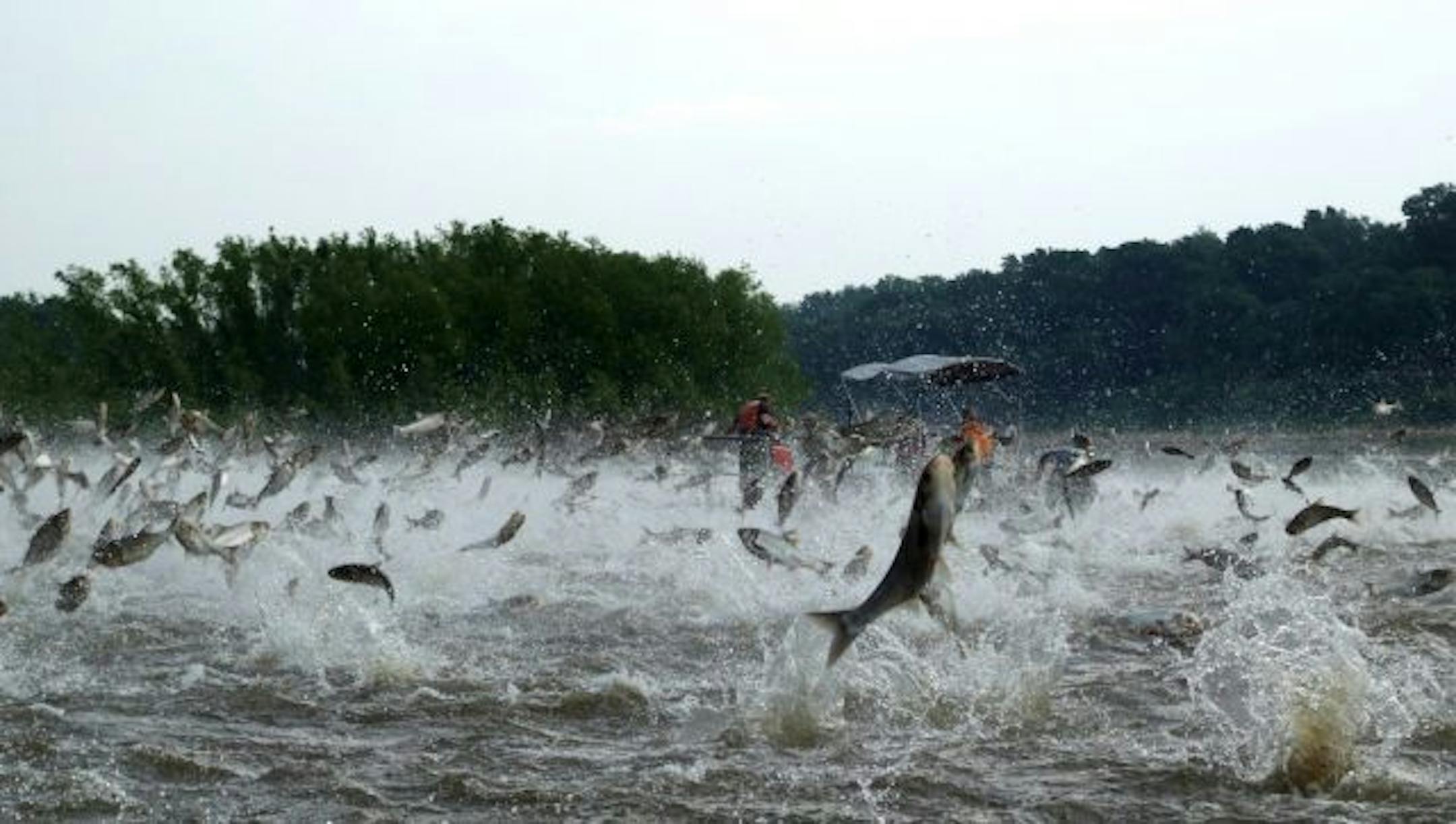
Asian carp are another kettle of fish. The fact is, the DNR and the various federal agencies that oversee these Mississippi River monsters have in recent years enjoyed a weird sort of work relationship in which one waits for the other to make the first substantive move, all the while knowing that move won't be taken. So little has been accomplished.
At the governor's news conference Monday, Luke Skinner, the DNR's invasive species kingpin, said that while individual Asian carp have been found in Minnesota's portion of the Mississippi River and in the St. Croix River, reproducing populations aren't here yet.
Skinner is a highly capable public official, a smart guy, and the state is lucky to have him. But in truth no one knows exactly how far north in the Mississippi reproducing populations of Asian carp swim. They're notoriously evasive of fishing nets and often dodge even the electro-fishing inventory efforts of fisheries managers. So, while baby Asian carp may in fact be confined to Iowa portions of the Mississippi, they could be finning in Minnesota's river waters also. No one can be sure.
A good idea then, as President Ronald Reagan would say, to trust by verify. And it seems now, this spring, finally, the DNR, together with the National Park Service and perhaps the U.S. Fish and Wildlife Service, will conduct special DNA tests in the Mississippi from the Twin Cities to the Iowa border to determine the presence or absence of Asian carp.
That's the first step that must be taken to get Minnesota up to speed. Here are four more:


