

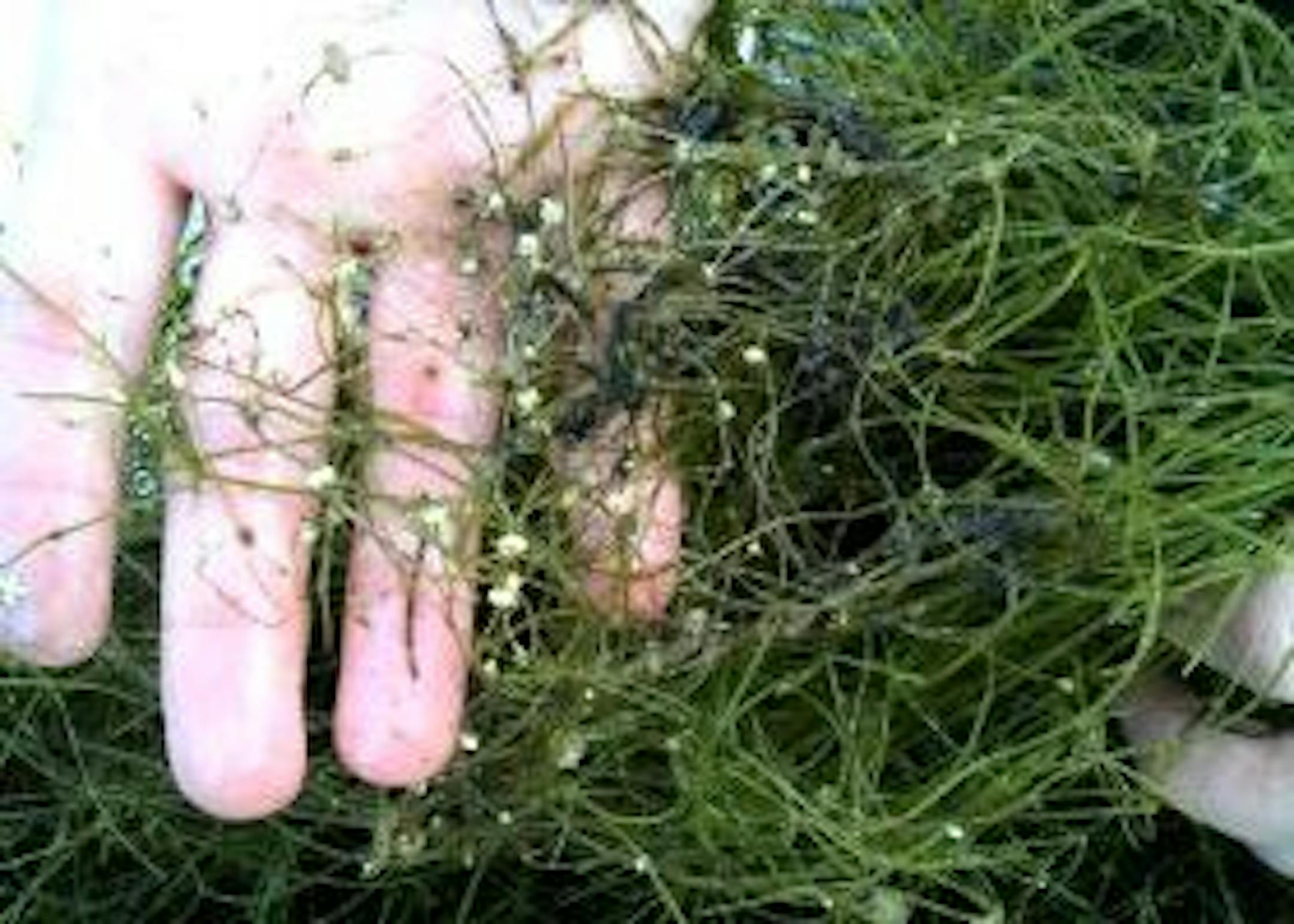
Medicine Lake in Plymouth has become the first Twin Cities lake to be infested with starry stonewort, an invasive algae.
The infestation, found in 14 acres of the 924-acre lake, is the first confirmation of starry stonewort in Minnesota this year. The plant, which can form dense mats that interfere with recreational use and compete with native plants, has now infected 12 Minnesota lakes. It was first detected in the state in 2015 in Koronis Lake, which adjoins Mud Lake, in Stearns County.
A Three Rivers Park District watercraft inspector at Medicine Lake recognized starry stonewort on a boat propeller and notified the Minnesota Department of Natural Resources. DNR invasive species specialists confirmed widespread growth of starry stonewort in the area around the public access on the northern part of the lake.
The DNR and Three Rivers Park District will treat the area with an herbicide and increase watercraft inspections throughout the open water season, said Heidi Wolf, supervisor of the DNR's invasive species unit. A decontamination unit is available at the access.
This winter, officials will discuss long-term options to manage the problem. So far, starry stonewort has never been eradicated from a U.S. lake. Treatment, however, can reduce its spread.
Starry stonewort looks similar to other native plants and can be difficult to identify. Specialists used a microscope to examine the algae from Medicine Lake and found the tiny star-shaped bulbils that help identify it. Those bulbils are most abundant and visible in August.
The invasive algae is most likely spread when fragments of it haven't been cleaned from watercraft and equipment.
To stop the spread, the DNR suggests that people clean aquatic plants and animals from their watercraft, drain the water by removing drain plugs and keep the plugs out while transporting the watercraft, and put unwanted bait into the trash.


