

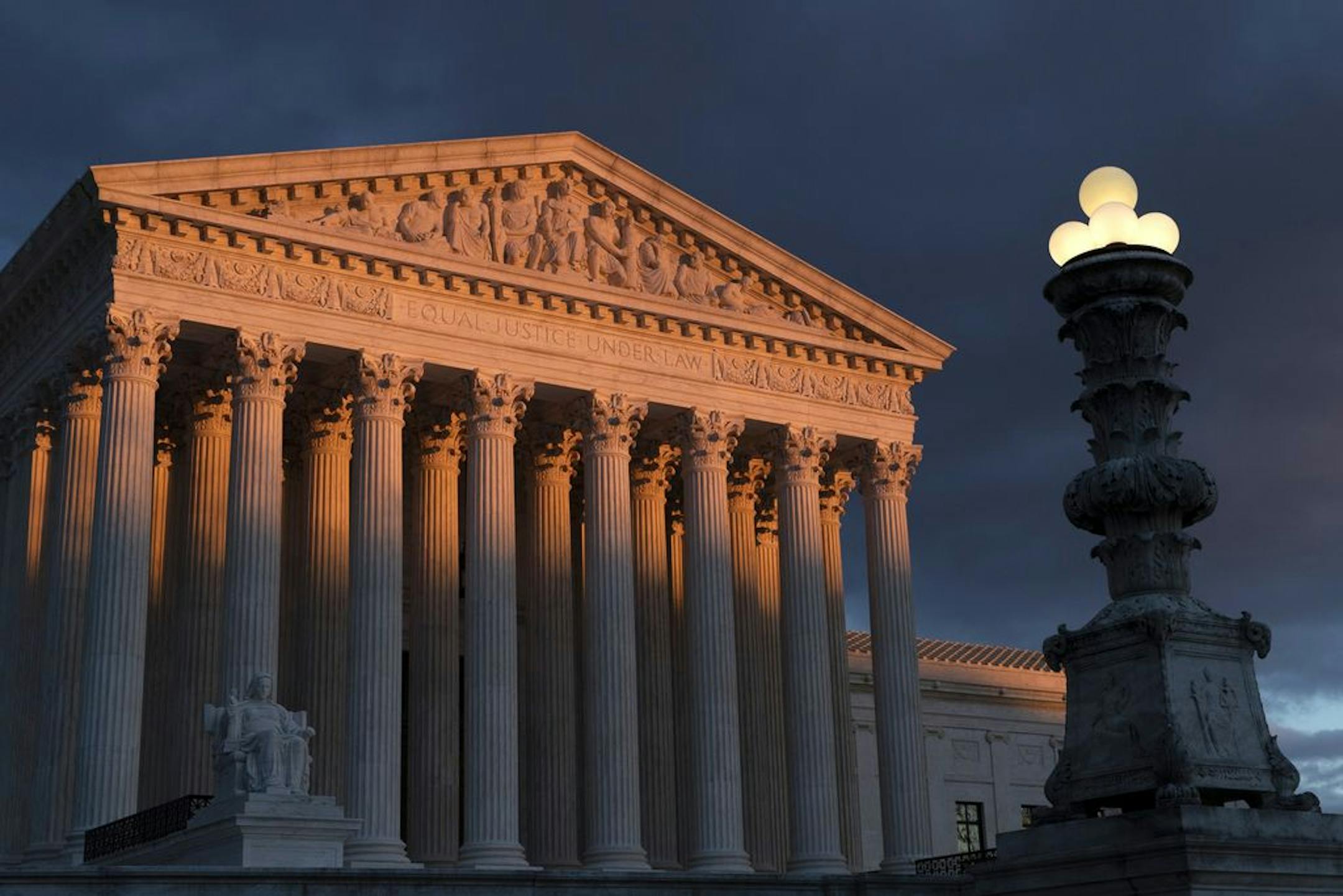
The U.S. Supreme Court ruled last week that jury verdicts in cases of serious crime must be unanimous in every state. It's superficially amusing that the justices' decision was not so. But what's fascinating to court-watchers, and relevant to all Americans, is how the 6-3 decision came down.
The case took longer than usual to reach denouement. There were unexpected alliances, although three of the justices in the majority concurred only in part and offered their own thoughts. Finally, there was much discussion about how precedents are set and under what conditions they should be overturned.
All of which shows that what a case is about is not all it's about.
The immediate issue was straightforward enough. The court has long held that the Sixth Amendment prohibits non-unanimous verdicts in federal trials and that federal protections under the Bill of Rights generally apply to the states as well. But it also had ruled in 1972 that federal and state criminal cases could be treated differently.
In only two states is that directly pertinent: Oregon, which allows non-unanimous verdicts, and Louisiana, which did until recently. (It was a Louisiana case that came before the court.) That those states' practices had undisputed racial origins provided heft for the majority opinion by Justice Neil Gorsuch, a conservative who was joined by liberal Justices Ruth Bader Ginsburg and Stephen Breyer. But Gorsuch also focused on the significance of the 1972 ruling, in which Justice Lewis Powell tipped a 4-4 balance with reasoning the court has since held at arm's length. Though Powell's solo concurring opinion was considered the controlling one, Gorsuch doubted that a "single justice writing only for himself has the authority to bind" the court — that such a thing could be considered precedent.
Justice Sonia Sotomayor joined most of Gorsuch's opinion but did not appear to agree that the 1972 case was not a precedent to be overruled. She sought to drive home the point that it should be.
Justice Clarence Thomas also joined the majority conclusion but was primarily concerned about which clause of the 14th Amendment was best applied (Privileges or Immunities, he wrote, not Due Process — a mistake he feels the court is making repeatedly).
Justice Samuel Alito wrote the dissent and was joined by Chief Justice John Roberts and Justice Elena Kagan. The key worry of the minority opinion was the impact the ruling would have on verdicts already reached.


