

There were no absolutes evident at Intermedia Arts last weekend, as the second series of the "Q-Stage" performance festival wrapped up with shows featuring transgender and genderqueer artists.
"Bent/Straight," by queer couple and performance duo Will Courtney and Syniva Whitney, and "The Grief Experiments," by A.P. Looze, pushed genre definitions in terms of the art form in much the same way the artists' gender identities don't fit into binary limitations.
The performer/creators in both shows fall somewhere outside male/female categories, identifying either as transgender, or non-binary, in some cases preferring the pronoun "they," rather than he or she, to reflect that identity. Mirroring that propensity away from gender absolutism, the work itself defied being pin-pointed into a category. Gender Tender's work is part dance, part comedy, part experimental performance, with pastiche of film sprinkled throughout.
A.P. Looze's work, under the direction of Zoe Michael, takes a slightly more narrative approach, but vacillates between performance art and storytelling, with some multimedia incorporated.
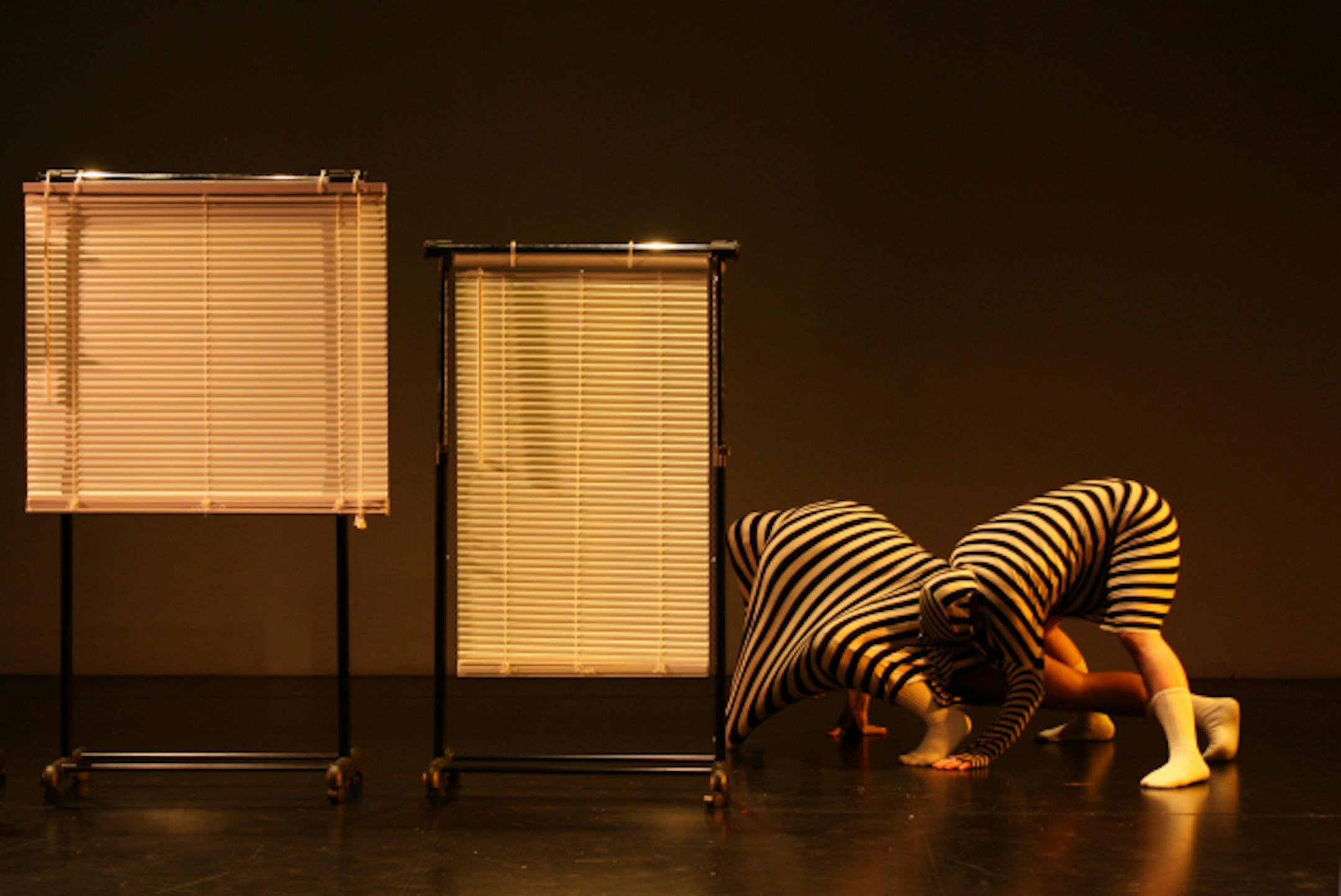
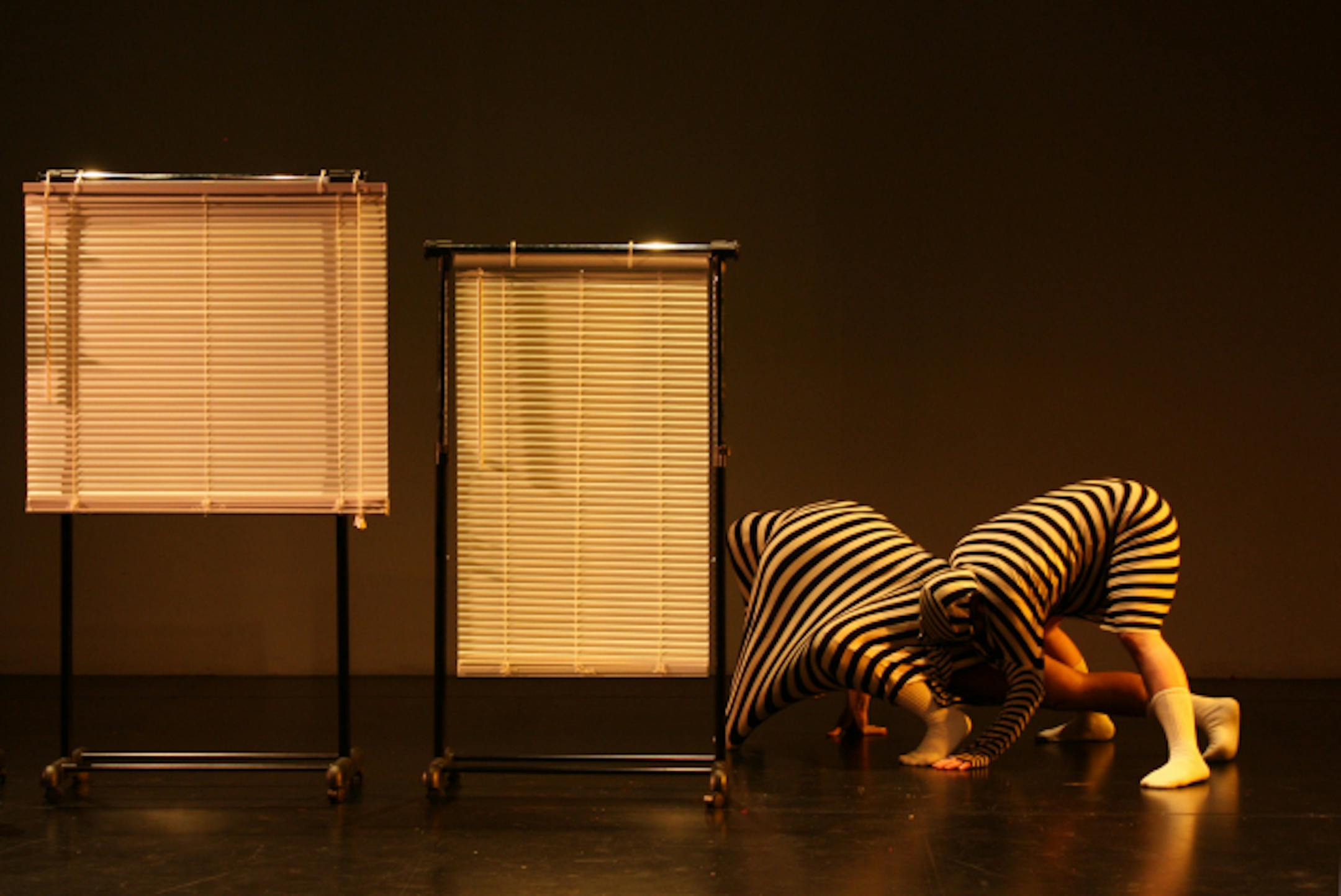
Physical objects played a huge role in both works. In "Bent/Straight," the performers collaborated with artist Madeleine Bailey, who created an installation made up of three mini-blinds on wheels that were used as a moving set for the piece. Whitney and Courtney rolled the blinds to different spaces on stage, creating architectural shapes for their dance and performance work to come alive. Bailey's design also incorporated household lamps that doubled as props — a crucial part of the lighting design, as well as costumes that matched the absurdity of their performance style.
In Gender Tender's work, the visual elements were much more integral to the piece than a set might be in a traditional play. The objects became themselves another character. The performers moved them around but used the mechanism of opening and closing the blinds to create metaphorical gestures. The blinds came to symbolize the obstructions that get in the way of relationships, and of seeing people as they really are. The blinds also became an instrument to provoke humor, a gag employed readily as the performers freely drew from film noir and horror movies in order to devise a macabre playfulness that ran through the work.
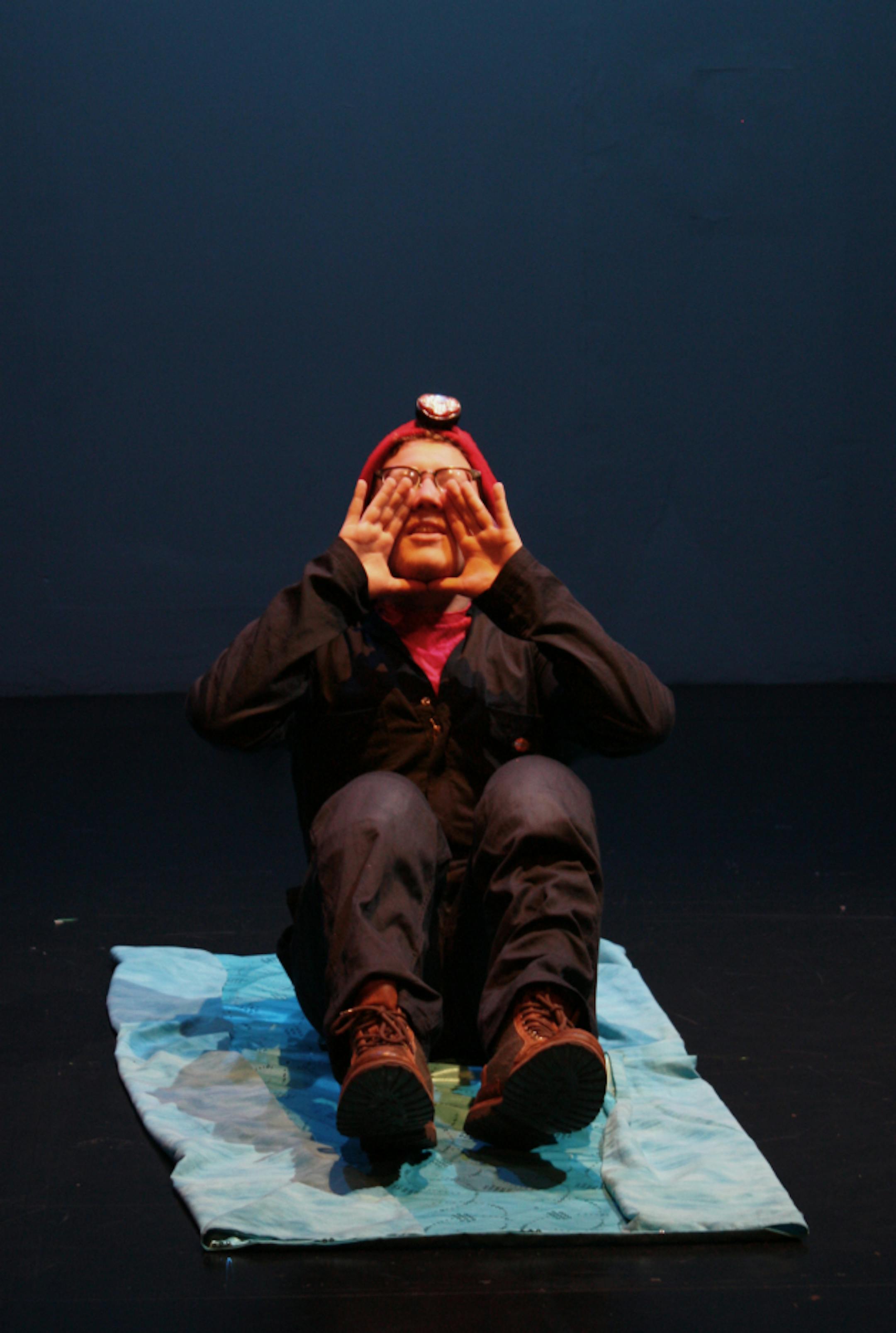
A.P. Looze, meanwhile, demonstrated their mastery at manipulating props. A sparkly blue cloth became a stand-in for social media communication, a pile of clothes on a floor, the ocean, and a bathtub.
Looze also made use of two Barbie and Ken-like dolls. They were seen copulating with each other and inserted into Looze's mouth in a funny, sexy scene that perfectly illustrated the ridiculousness of gender norms taken to the extreme.


