

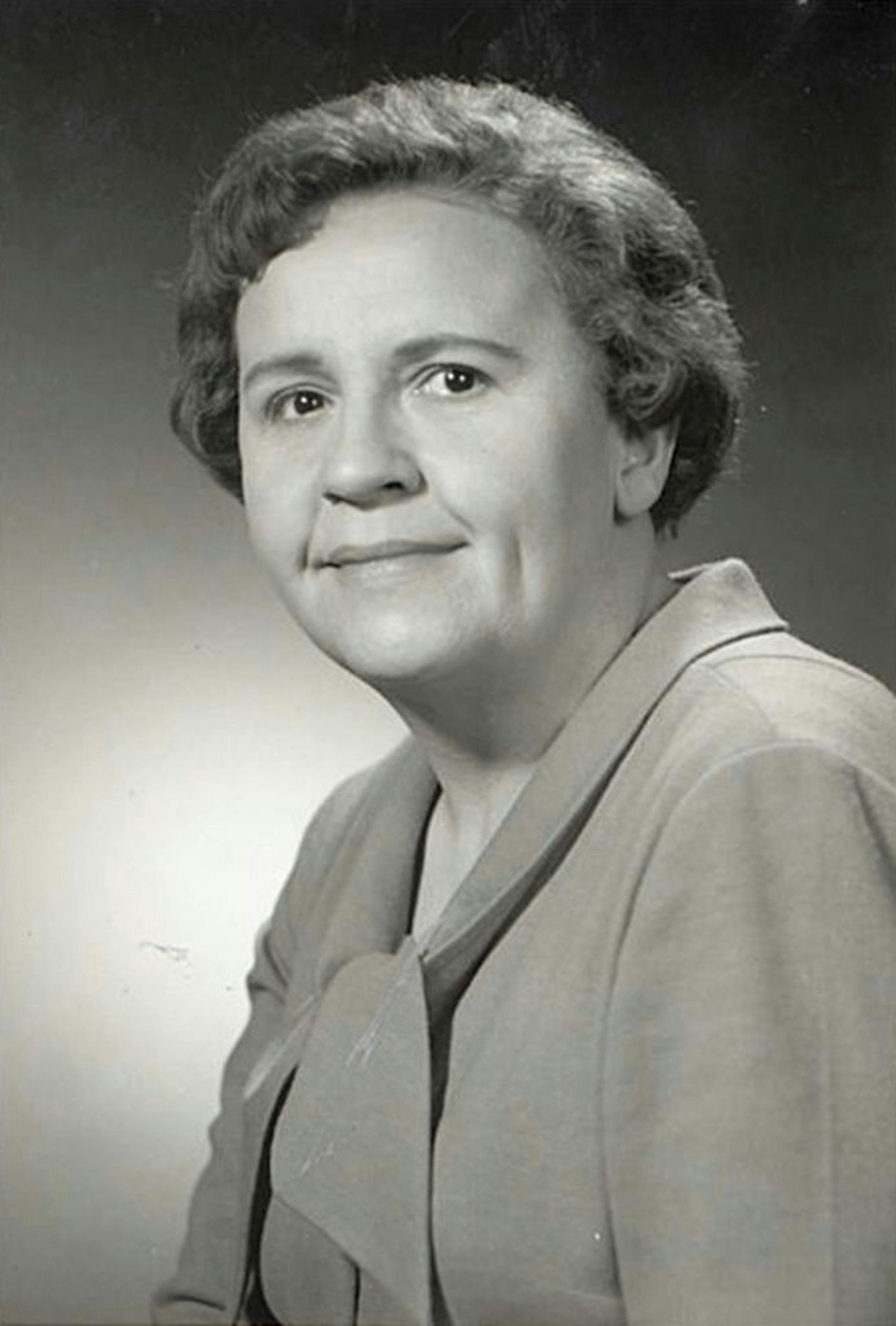
Vera Schletzer, a University of Minnesota psychology professor who worked for equality for women well before the women's movement gained national attention, died Sept. 12 at an assisted-living facility in Edina. She was 92.
Schletzer was "a bright, engaging woman, a pioneer committed to the cause of equality," former Star Tribune columnist Jim Klobuchar said last week. "I found her so interesting, with a good sense of humor. She was emphatic, but not a scold."
In a 1971 speech to the Woman's Club of Minneapolis recorded in the Star Tribune, Schletzer said, "Discrimination against women is usually disguised as being for their own good. The women's liberation movement is a complex ... movement [with] hawks and doves, radicals and moderates. ... Women's lib is not a joke."
She was born in Martins Ferry, Ohio, an "extremely bright girl" who was a high school debate champion. She earned an economics degree from Ohio University in Athens in 1941, the year she married a fellow student, said her son Bill, of Plymouth. She and her husband, who had three children, moved to Minnesota for his work. They divorced in 1954.
Motivated by intellectual curiosity and financial need, she earned a master's degree (1959) and a doctorate (1963) in psychology from the University of Minnesota. She worked in a variety of roles, at last settling in as a psychology professor and director of counseling for Continuing Education and Extension.
In all of her roles, she advocated for gender equality. She was a charter member of the National Organization for Women (NOW) and from 1963 to 1967 served on Gov. Karl Rolvaag's Commission on the Status of Women. Meanwhile, she was raising her children in the Edina rambler she'd live in until just before her death.
"She was different from a lot of moms at the time," said her daughter, Diane Swenson, of Fremont, Calif. "She was a good mom, though, and I was proud that she was a leader."
Said Bill: "My mother was a feminist way ahead of her time, a leader before Gloria Steinem and Betty Friedan came along. She presented her ideas in clear, firm ways, but was turned off by people who created spectacles. She was a traditional woman who thought traditional women should have complete equality with traditional men."


