![Steph Hoff, right, of Somerset, WI, is an ultrarunner. Dave Wirth of New Richmond is her trusted "pacer". Hoff, 38, and Wirth, 53, met back in 2007 at the New Richmond Running Club, and since then have each shed over one hundred pounds. Hoff, who has done 34 ultra runs and Wirth, who has made three ultra runs, were seen Saturday, March 31, 2018, at Afton State Park in Hastings, MN.] DAVID JOLES ï david.joles@startribune.com Ultrarunners get all the glory, but it pacers -- people who support](https://arc.stimg.co/startribunemedia/5JPY4WJFR4SGWCM3OWANRSSWSE.jpg?&w=1080)
Dave Wirth has prepared for the Zumbro 100-mile trail race that started Friday morning in southeastern Minnesota, as has his friend, Stephanie Hoff. She's prepared by running a lot. He has prepared by noting what Hoff likes to eat, what she thinks is funny, what's been going on in her life, what her goal is for this race. He is prepared to tend to her blisters, to help her change socks and shoes, and most of all, to offer positivity.
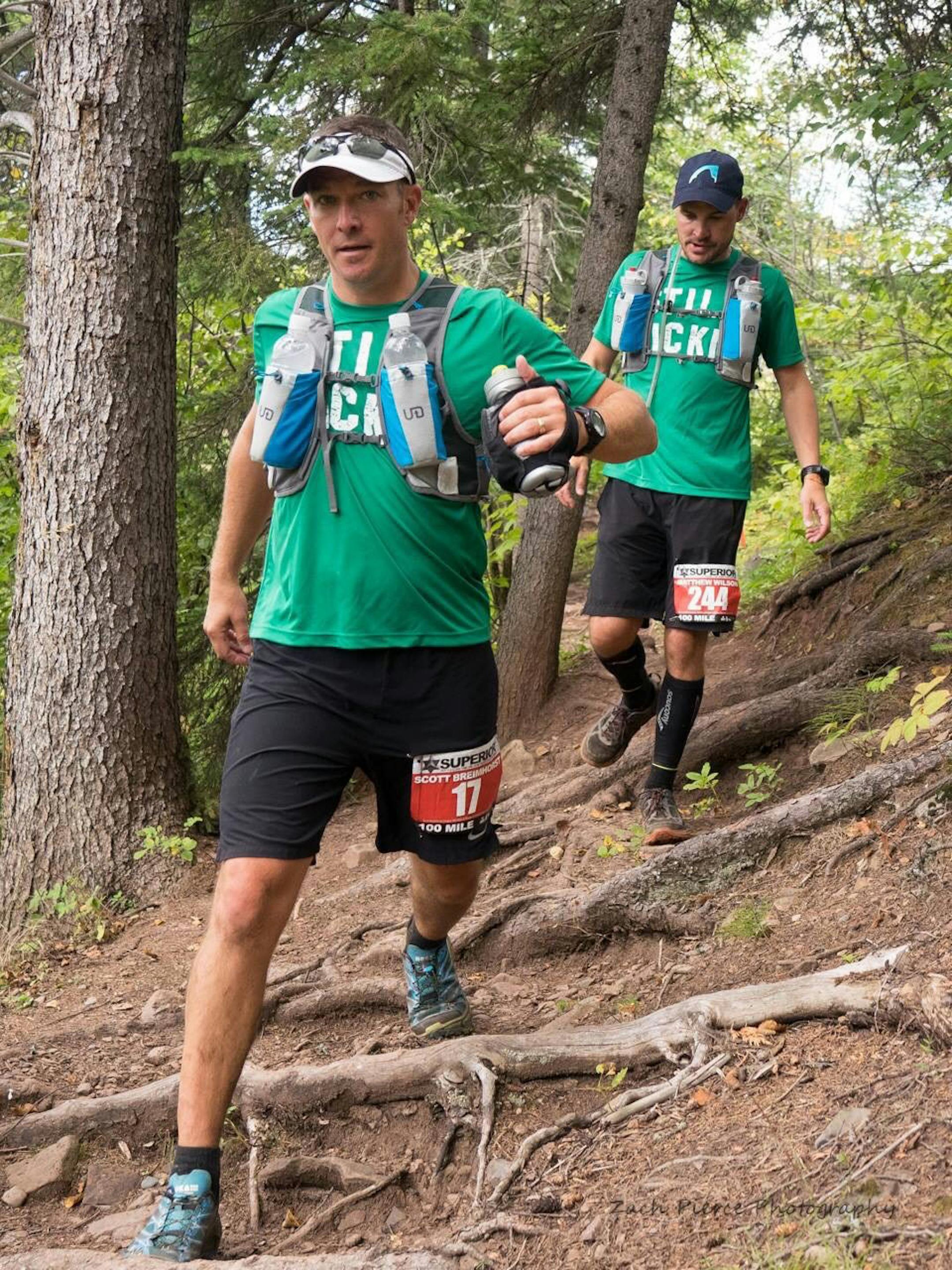
Wirth has prepared to be a pacer, running (or walking) with Hoff for about 33 miles in the second half of the race over the hilly, challenging terrain of the Zumbro River Valley. Psychologist, nurse, cheerleader, drill sergeant, and logistics specialist in one, pacers help make it possible for increasing numbers of people — average people — to finish 100-mile races.
"There's a lot of trust between runner and pacer," said Wirth, 53, of New Richmond, Wis. "It's not always pretty, but that's part of the deal. You're on a team. You're on a mission. When you commit to making someone else successful, the whole team feels like they won something."
And more people are making that commitment. In 1991, there were 12 trail races of 100 miles in the entire country. As of 2016, there were 145 hundred-milers, some so popular they accept only a tiny fraction of the applicants.
The demands of a 100-miler, moving continuously for well more than 24 hours (the Zumbro 100 cutoff time is 34 hours; Hardrock 100 in Colorado ends at 48 hours), require geometrically more food, equipment and support than shorter races. Most ultrarunners recruit a crew, family or friends who meet them at aid stations to help change clothing, locate food, perform first aid, and refill the pack they carry between aid stations. That takes care of the physical aspects, but what about the mental side? In a 100-mile race, runners are widely separated and may spend the majority of the race alone.
That's where pacers come in.
Race rules vary, but most allow runners to pick up a pacer near the halfway point to accompany them for part or all of the second half. Pacers must start and end their shift at an aid station, and have to stay with their runner while on the course. They can offer verbal encouragement, and pick a runner up if they fall, but can't carry, or "mule," food or equipment for their runner.
Before her first century run in 2013, Hoff, 38, gleaned from experienced runners that having the company and clearheadedness of a pacer was a good idea. Zumbro will be her ninth 100-miler.