

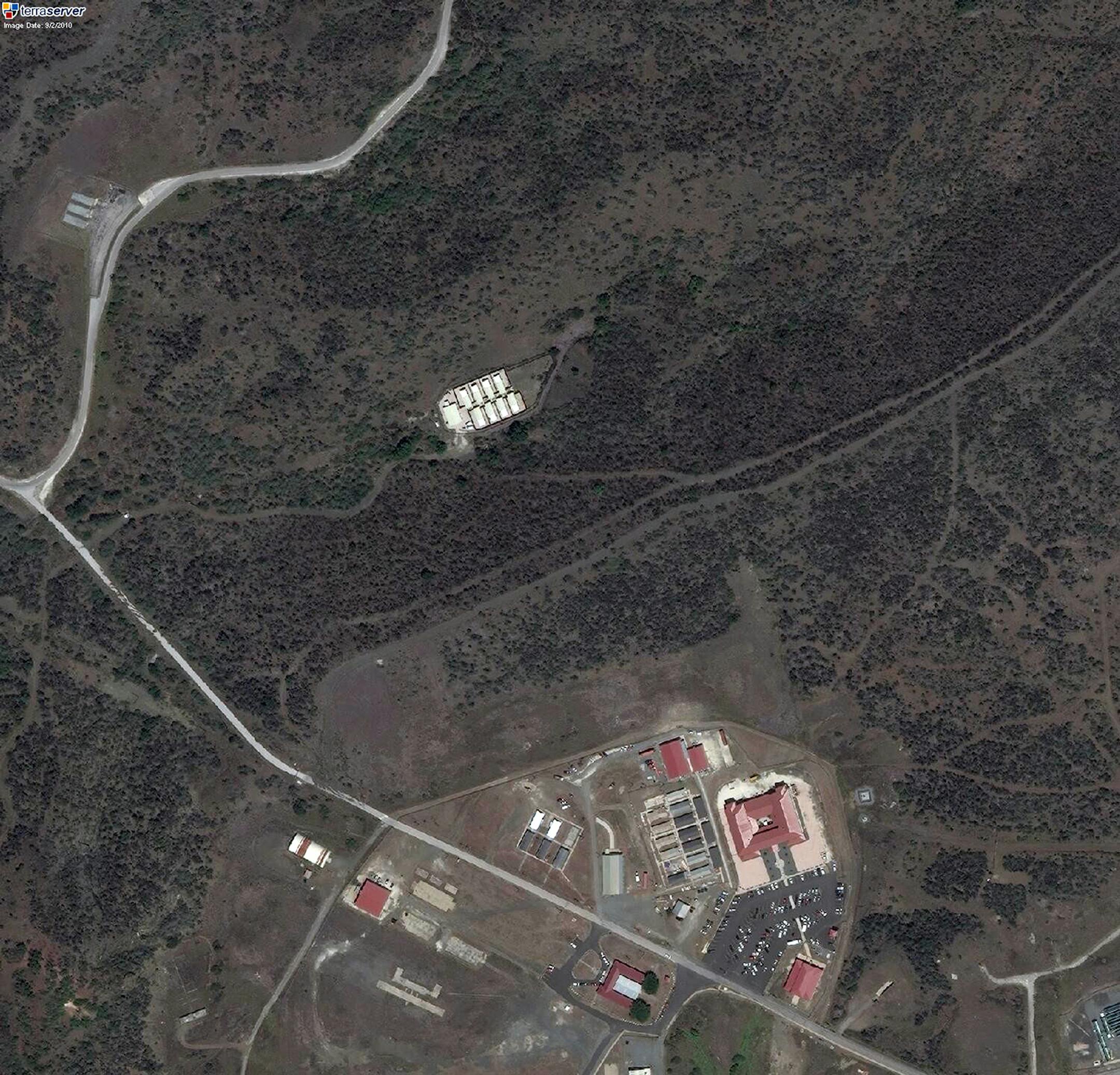
A few hundred yards from the administrative offices of the Guantanamo Bay prison, hidden behind a ridge covered in thick scrub and cactus, sits a closely held secret. A dirt road winds to a clearing where eight cottages sit in two rows of four. They have long been abandoned. The special detachment of Marines that once provided security is gone.
But in the early years after Sept. 11, these cottages were part of a covert CIA program. Its secrecy has outlasted black prisons, waterboarding and rendition. In these buildings, CIA officers turned terrorists into double agents and sent them home.
It was a risky gamble. If it worked, their agents might help the CIA find terrorist leaders to kill with drones. But officials knew there was a chance that some prisoners might quickly spurn their deal and kill Americans.
For the CIA, that was an acceptable risk in a dangerous business. For the U.S. public, which was never told, it was one of the many secret trade-offs the government made on its behalf. At the same time the government used the threat of terrorism to justify imprisoning people indefinitely, it was releasing dangerous people from prison to work for the CIA.
Nearly a dozen current and former U.S. officials described aspects of the program to the Associated Press. All spoke on the condition of anonymity because they were not authorized to publicly discuss the secret program, even though it ended around 2006.
The program and the handful of men who passed through these cottages had various official CIA code names. But those who were aware of the cluster of cottages knew it best by its sobriquet: Penny Lane.
It was a nod to the classic Beatles song and a riff on the CIA's other secret facility at Guantanamo Bay, a prison known as Strawberry Fields.
Some of the men who passed through Penny Lane helped the CIA find and kill many top Al-Qaida operatives, U.S. officials said. Others stopped providing useful information, and the CIA lost touch with them.


