

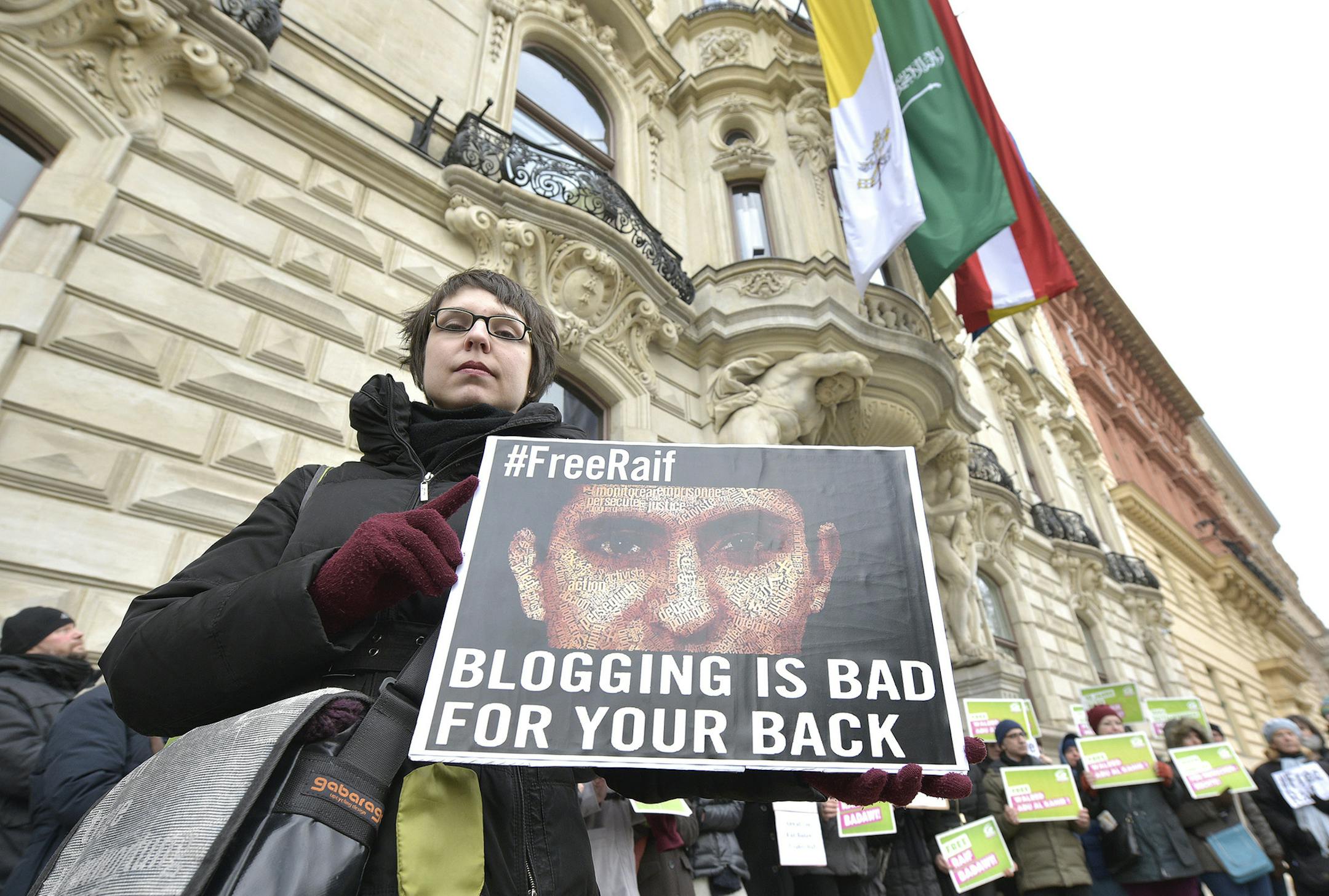
Nothing better symbolizes the craziness of the Middle East, and the contradictions of U.S. policy, than the case of the Saudi blogger sentenced to 1,000 lashes for advocating free speech.
I wrote about Raif Badawi in January after he received his first 50 lashes. Since then, a global campaign by human rights groups and by his courageous wife, who was granted asylum in Canada, has prevented more whipping. But Badawi, who is also serving a 10-year jail term, is now in danger of being retried on apostasy charges, which are punishable by death.
He could be beheaded.
The importance of this story goes beyond the need to rescue a courageous human rights campaigner from a barbaric sentence.
The Badawi case makes a mockery of the supposed alliance between the United States and Saudi Arabia to end the Islamic State "caliphate" in Syria and Iraq.
Badawi was arrested because his blog, the Saudi Free Liberals Forum, dared to critique the harsh Saudi interpretation of Islam — and the role of religion in politics. Yet the Saudi brand of Islam, known as Wahhabism — so evident in the sentencing of Badawi — is not so different from that of the jihadis they despise.
This narrow interpretation is a variant of the Salafi doctrine whose adherents seek to live like the earliest Muslims. It is intolerant of other religions and even other Muslim sects, while decrying all infidels. It calls on Muslims to reject Western values and norms.
For decades, the Saudi kingdom has spent hundreds of millions of dollars to spread its version of the faith across the Muslim world by funding religious schools and textbooks from Central Asia to all of the Arab states to Pakistan. Tens of thousands of Syrians and Egyptians, who came to Saudi Arabia as guest workers, also absorbed these ideas. Private Saudis were in the forefront of funding radical Islamist groups in the fight against Syria's Bashar Assad (it is still unclear whether all of this funding has ceased).


