

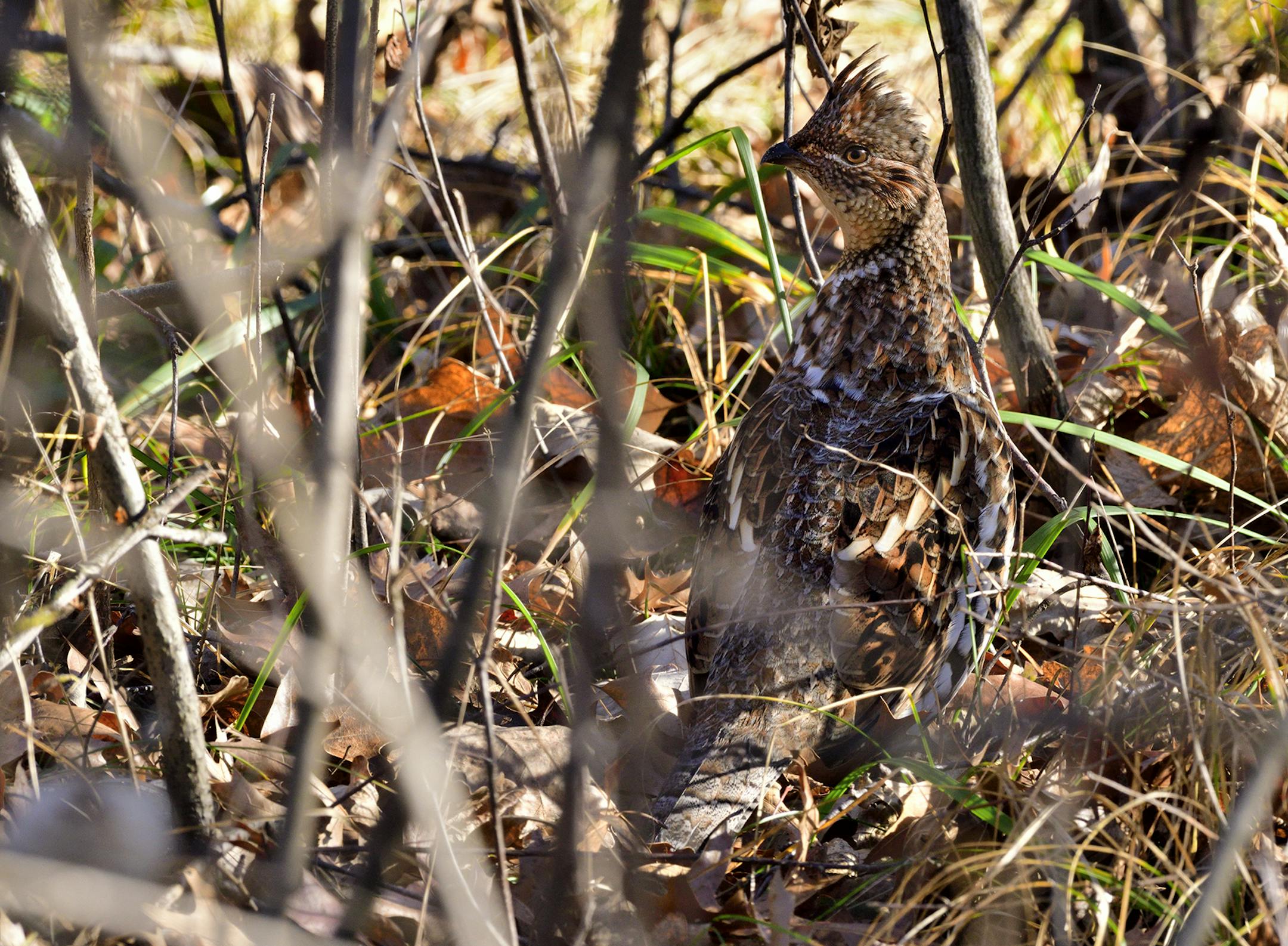
Brainerd – Many hunters consider ruffed grouse to be the king of game birds. That means Saturday is a big day: the 2017 Minnesota hunting season on grouse commences a half-hour before sunrise.
Ruffed grouse populations peak every 10 years, then fall dramatically before beginning a steady upturn. The last ruffed grouse population peak happened in 2009. Biologists don't understand the reason grouse populations cycle up and down despite years of extensive research.
The Minnesota Department of Natural Resources each spring conducts ruffed grouse drumming counts. The good news is this spring the statewide counts were up 57 percent. Males produce a drumming sound as they flap their wings as part of their display to attract females. Drumming counts are a marker of the breeding population.
The 2017 drumming surveys appear to verify the 10-year population upturn is nearing its peak.
Will the positive drumming counts result in more grouse flushes for hunters? We'll see. I have not seen a brood of grouse all summer in central Minnesota. Neither have most of my friends. However, in northeast Minnesota, anecdotal information suggests grouse numbers are high, with many sightings of a number of hens with chicks. One person told me, "Grouse are everywhere."
Still, a wet June in central Minnesota may have been tough on young grouse. The tiny balls of fluff are vulnerable to cold, rainy weather during their first week of life, and can easily succumb to hypothermia.
Those willing to stomp the forests Saturday should flush at least a few birds. Despite a grouse population that fluctuates, Minnesota is the nation's top producer of ruffed grouse, even during low population cycles.
Where does a hunter look for grouse on the opener? It may seem elementary, but its best to concentrate your hunting efforts where grouse feed and in the best habitat. If there is such a thing as a classic ruffed grouse terrain, it would be an area that was logged a decade ago and has since regenerated into thick aspens interspersed with openings. If the area also has mature aspens and alder lowlands nearby, even better.


