In Willmar, a soccer field becomes a refuge from heated immigration debate

November 2, 2025
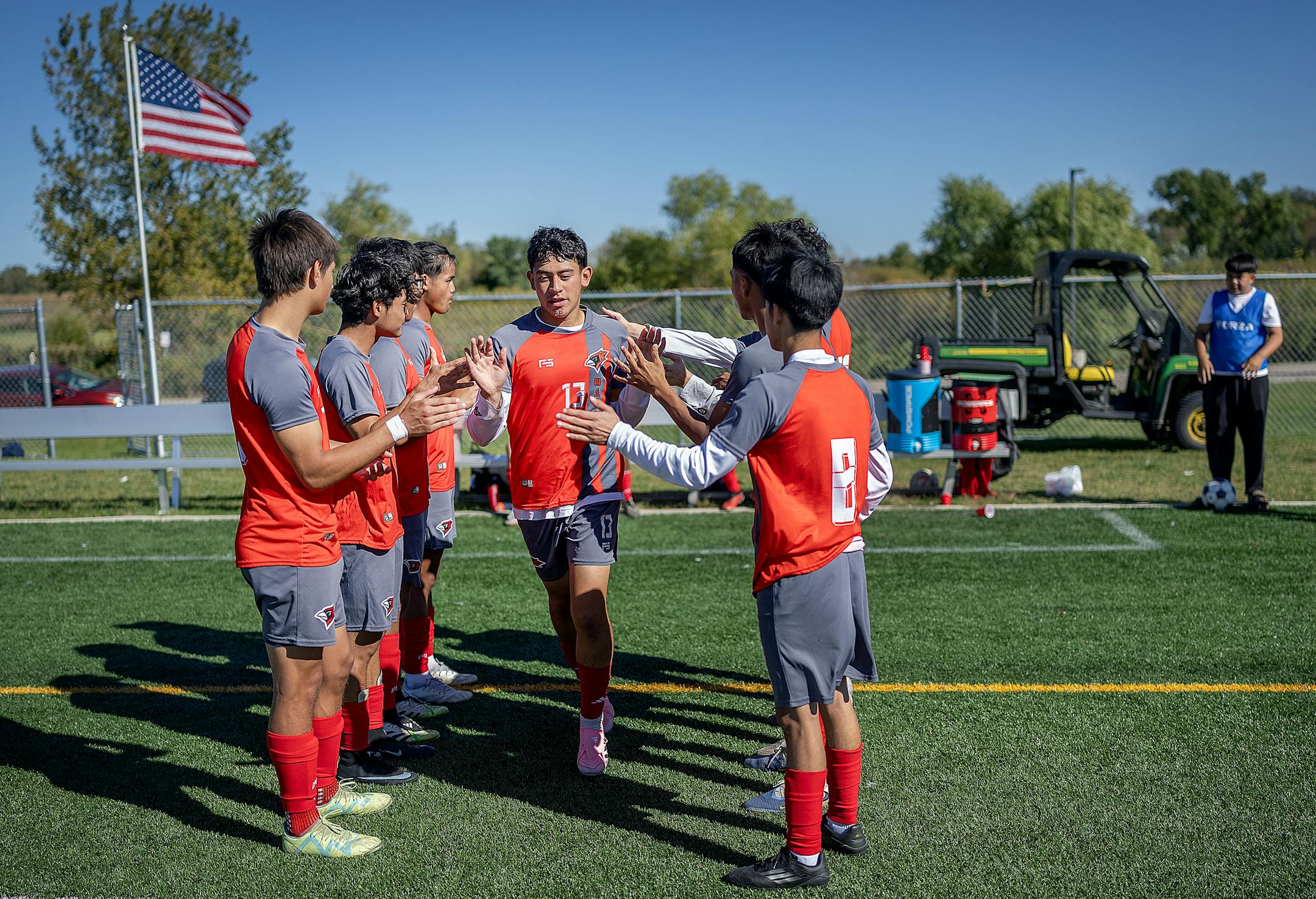
Hermis Alvarado Reyes makes his way onto the field after being introduced before a soccer game against Becker on senior night in Willmar, Minn., on Sept. 27. (Elizabeth Flores/The Minnesota Star Tribune)

Most of this varsity boys team hails from immigrant families. This season, they learned to live and play as a team against the backdrop of a nationwide immigration crackdown.

The Minnesota Star Tribune

WILLMAR, MINN. — Every year or two, a player on Willmar’s boys varsity soccer team drops out midyear and leaves the country. Head coach Jeff Winter never knows exactly what happened.

It’s one of the many challenges of coaching in this diverse west-central Minnesota town of 21,000. All but two varsity players this season are children of immigrants. Some players are U.S. citizens. Some are permanent residents. Some are undocumented immigrants. Winter doesn’t ask. The best players get playing time, period.

But he constantly worries about his boys. This year, Winter’s worries have been even more stark as the cloud of increased immigration enforcement under the second Trump administration hovered over Willmar. National news swirled around them: executive orders to halt illegal immigration, more ICE detentions than ever before, massive rallies nationwide supporting immigrant rights. But in this town and on this team, lives anxiously moved forward.

Everyone here knows someone at risk. Families not fearful of deportation still deal with the everyday struggles and striving of immigrant life. This year, one player left the team, saying he had to work to support his family. Another plans to live with his sister once his parents move back to Mexico this winter. Every week, Winter called the mother of a Somali player, who was needed at home to care for six younger siblings. Winter pleaded with her that soccer wasn’t some frivolous pursuit.

This season, expectations for the team were high. They’d lost just two starters from the top-seeded team in last year’s sectional tournament. Maybe the Cardinals could make their first state tournament since 2021; maybe they could win their first state title.

But real-life problems lingered on the periphery of players’ minds. Soccer became their refuge.

“Making the state tournament? We’ll see,” Winter said. “The real mission is to make this their place, to make it their home. Soccer is just the vehicle that I know. And it’s the one sport all cultures play.”

Winter, a Twin Cities native, moved here decades ago as middle-school counselor. Since then, the town has undergone a seismic shift. Willmar is home to Jennie-O turkey, the county seat of the biggest turkey-growing county in America’s biggest turkey-producing state. As agriculture leaned more heavily toward immigrant labor, Willmar shifted from virtually all white as recently as the 1990s to, according to the latest American Community Survey, 40% nonwhite in 2023. The school district is almost two-thirds nonwhite, with 29 different languages spoken in homes. Winter’s team has two white players alongside players whose families hail from Ecuador, Guatemala, Mexico, Honduras, Somalia, Brazil and Myanmar.

“It’s really unbelievable to people on the outside looking in, but it’s so ordinary, so normal to all our kids,” Principal Paul Schmitz said. “For the Great American Experiment to work, it has to work at Willmar Senior High School.”

Hermis Alvarado Reyes’ parents, Hermis Sr. and Maria, join the rest of the family in September to cheer on their son, who led the Willmar boys soccer team in warmups before their Oct. 2 game in Columbia Heights.

On a recent fall evening, Hermis Alvarado Reyes, the soft-spoken, big-footed Honduran defender who is Willmar’s most talented player, stood in a circle of teammates before kickoff against Central Lakes Conference rival Rocori. During that night’s game, players shouted soccer phrases — “through ball! pass!” — in Somali, because Rocori had a lot of Latino players. When they play a heavily Somali team, Willmar’s code shifts to Spanish.

But before that night’s game, Hermis and his teammates chanted in English.

“WE ARE WILLMAR!” players shouted. “A TEAM AND A FAMILY! WE LIVE AND FIGHT TOGETHER! CHAMPIONS WE WILL ALWAYS BE!”

They’d stumbled early: only one win and two ties in their first five games. Maybe it was because the two starters they lost were vocal leaders. Or maybe it was because for these teens, 2025 has felt so heavy.

A group of Haitian families here received letters from the federal government telling them to self-deport. A Nicaraguan family left when they lost their work permits. A Ukrainian family whose mother couldn’t get her visa renewed returned to Europe, and a high-achieving Venezuelan high school student left when her mother couldn’t renew her visa. None of the rumors of ICE raids here were true, but the town stayed on edge, with church volunteers going grocery shopping for undocumented immigrants afraid to leave home.

Then, a few games into the season, the team’s junior varsity coach, a Guatemalan, lost his work permit and had to step away.

“Sports lets us push stuff away and focus on us,” said Luis Gomez, the junior varsity coach’s younger brother and a goalkeeper born in Missouri. “Nobody has to talk about it because everyone already knows what everyone else is going through. We’re brothers. We’re meant to be on this team. Everyone is so connected, because we were all raised in Willmar.”

Players like Hermis identify as much with small-town Minnesota as with their home countries. They bring their own stories: Karen kids who fled into the mountains and became refugees, Latino kids whose parents sought peace and prosperity, Somali kids born in Willmar and straddling their parents’ world, Black America and small-town life. They’re disheartened when immigrants are painted as gangsters and criminals.

Winter knows his players deal with heavier problems than the average American teen. He’s a worldly man, having taught the Bible and soccer on mission trips in Ecuador and Ukraine. He’s proud that students from 25 countries have played in his program, and he’s proud that his players don’t obsess over problems out of their control. Instead, they head to La Manzanita Honduran restaurant together, or gather in a teammate’s basement for a video-game tournament, or play the sport that’s given these boys a second family.

“There’s always rumors of ICE around town, or somebody worried about their parents,” said senior Hector Robles. “Lots of people don’t understand the problem because it doesn’t affect them. The people who do understand, they don’t speak about it out loud. You just shut up and live your life.”

The Willmar boys soccer team gets ready to play on a beautiful October night in Columbia Heights. (Elizabeth Flores/The Minnesota Star Tribune)

As the Cardinals’ top player, Hermis harbors big dreams. He wants to play college soccer. He has uncanny field vision and ball skills, able to land 40-yard diagonal passes at teammates’ feet. But it’s tough to attract college scouts to Willmar. Make state, however, and Hermis would be bombarded.

Hermis, an altar server at his Catholic church, came to Willmar as a legal permanent resident. He hopes to get his citizenship after turning 18, but he didn’t worry about his status even after a November citizenship appointment for his father, who works at a turkey ranch, got delayed by the government shutdown. Like many families, his immigration story is complicated.

Hermis’ older half-sister was born in California but by 2007 was living in Willmar. She’d just had her first baby when ICE came knocking. The agency was doing four days of home and workplace searches here, arresting 49 people. Hermis’ half-sister was a citizen, but the baby’s father was deported to Honduras, never to return.

By 2013 Hermis’ half-sister helped Hermis’ father and one of his sisters settle in Willmar as legal permanent residents. That sister, Diana Alvarado Reyes, spoke of years of striving, working overnights as a meat-cutter before heading to English classes at 9 a.m.

By the time Hermis came here five years later, at age 10, he was already a soccer star.

As an 8-year-old in Honduras, he held his own against teenagers. His family took 90-minute bus rides to a soccer academy in San Pedro Sula, then one of the most violent cities in one of the world’s most violent countries.

In Willmar, soccer meant immediate friends. As a freshman, he scored three minutes into his first varsity game. His dad loves watching his son dribble and pass without looking at the ball.

Before this season, Hermis, the team’s top scorer, told his coach he wanted to play defense. This was a surprise. But Hermis saw his team lacking on defense. Even though it would hurt his statistics — and, potentially, his college prospects — he made the sacrifice.

“I can play every position,” he said simply. “This will help our team go far.”

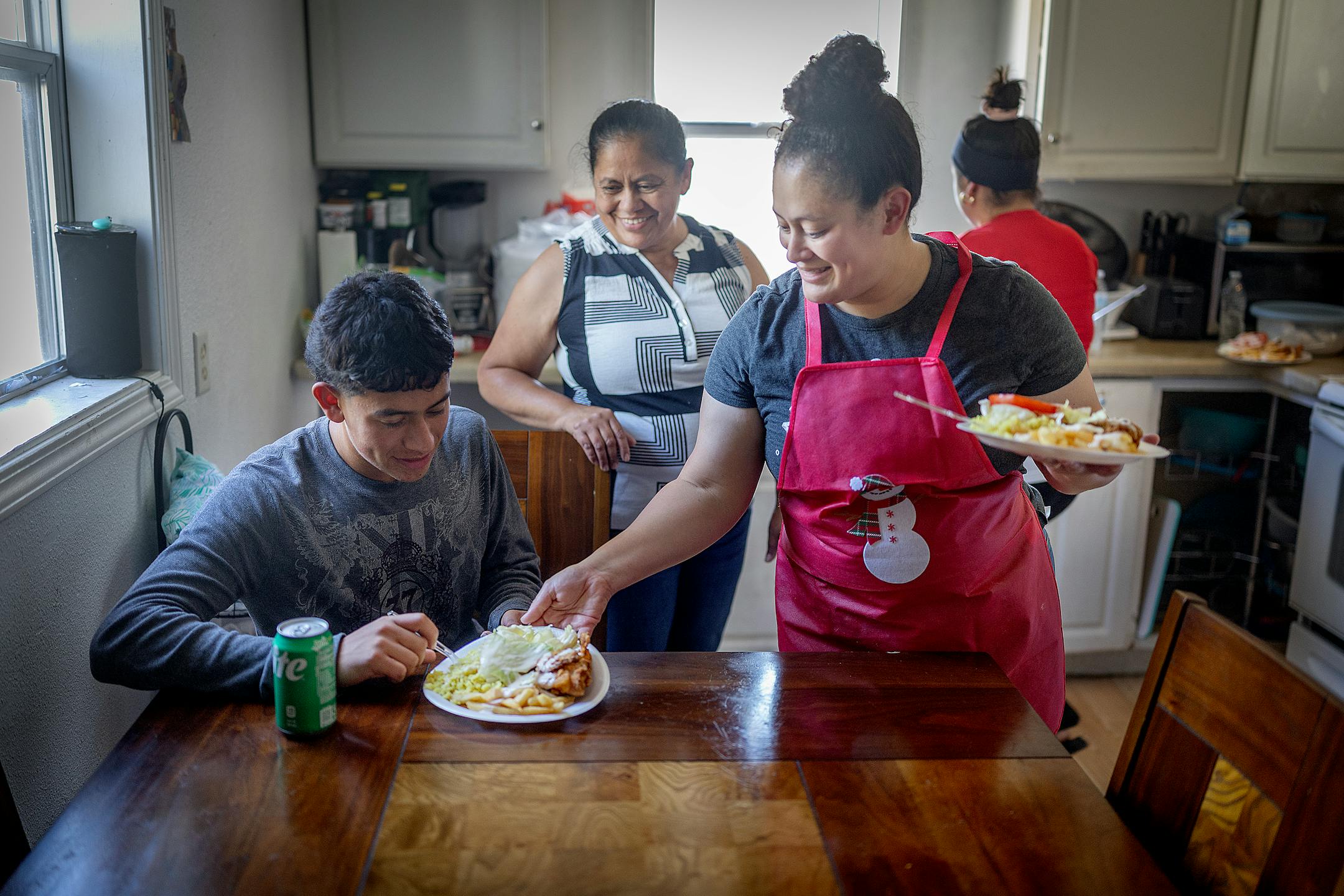
Hermis Alvarado Reyes' sister Darlyn Alvarado serves him a meal before the family heads to a game in Columbia Heights. Their mother, Maria Reyes, watches over them. (Elizabeth Flores/The Minnesota Star Tribune)

They lost to Rocori, and Willmar’s record was a disappointing 3-3-2. Winter was vexed: One of his most talented teams couldn’t figure it out. He fiddled with lineups.

Then something shifted. Captains became more vocal. The team organized weekend breakfasts and FIFA video-game tournaments. They played seven games in 13 days and didn’t lose a single one. They came into sectionals as a three-seed and dominated Fergus Falls in the quarterfinals.

On a chilly October night, Hermis’ father’s hands shook while he sat in the stands at St. Cloud’s Tech High School: nerves. Win and his son would be one win away from state.

Less than a minute in, the Cardinals nearly scored, but the shot went wide. A few minutes later, Hermis just missed the net on a free kick from 25 yards. An intense, back-and-forth match unfolded. Hermis’ nieces and nephews toddled around the stands.

Willmar pressured Tech as the aggressor for two-thirds of the second half, but after 80 minutes of scoreless soccer came overtime.

“I don’t care if you’re tired!” Hector shouted. “We put that ball in the net!”

Willmar’s big chance came on a Tech hand ball in the second overtime. Hermis lined up for the free kick near the penalty area. He sent a low screamer past a wall of defenders, toward the corner. It looked like a goal — but missed wide. Willmar’s bench groaned. The winner would be determined by shootout.

“We’ve been working on these all year,” Winter soothed. “Don’t change anything. Do what you do!”

Tech went first. Luis dove right for the save. Next was Hermis, who buried it in the middle of the net. Advantage Willmar.

Tech tied it in the next round. Then a Tech goal was followed by a goal by Abdifatah Ahmed, only on the field because Winter had persistently lobbied his mother. After a save by Luis, Mubashir Muse, who’d come from Somalia at age 6, had a shot to win it. Mubashir’s kick sailed just high. After Tech scored again, Willmar senior Wilman Enamorado lined up behind the ball.

He missed.

Willmar players crumpled to the turf. Tech fans charged the field. Winter told the player who’d missed that he wasn’t defined by that moment. Hermis dropped to his knees. He spread his arms wide, closed his eyes and prayed, thanking God for a beautiful season.

“We did our best,” the teen shrugged. “You lose and you win. You can’t do anything about it. It’s a new chapter now. On to college.”

Soccer was over, but team life moved on. A postgame meal at Wingstop. A postseason banquet where coaches presented plaques they made in the school’s woodshop. A celebration where Mubashir and Hermis made all-state. Hermis ranked as the top player in his section. He hoped colleges noticed.

The Willmar team huddles in prayer before a pivotal game against St. Cloud Tech on Oct. 11. Hermis Alvarado Reyes drops to his knees as the hard-fought game ends, spreading his arms wide, grateful for a beautiful season. Willmar head coach Jeff Winter takes a moment to encourage team captain and goalkeeper Luis Gomez before a second penalty shootout vs. St. Cloud Tech.

The night after the loss, Winter lay in bed and sobbed. He flashed back on his seniors: the precocious maturity of Hector, Hermis’ quiet confidence and faith. Winter worried how Abdifatah would cope with the pressure of being the oldest child in a big Somali family.

A few days later, Hermis’ family hosted a team dinner. His parents cleared the living room, and Winter and his assistant, both Minnesota born and bred, ate Honduran fried chicken and baleadas Hondureñas, a traditional Honduran tortilla dish, among players from all over the world. The next night was a Karen player’s home for pho.

Outside, Hermis’ sister Diana lingered. She’d immigrated legally, paid taxes, became a citizen, and she said she hated how the political right paints immigrants with a broad brush. She knows there are criminals. But she sees Willmar, and this hardworking, faith-filled soccer team, as the classic American story.

“With the president now, it’s like immigrants are bad people,” she said. “But we aren’t all bad people. This country gave us opportunities we wouldn’t be able to have in our country. Seeing this happen to us when we are doing everything right just to survive …”

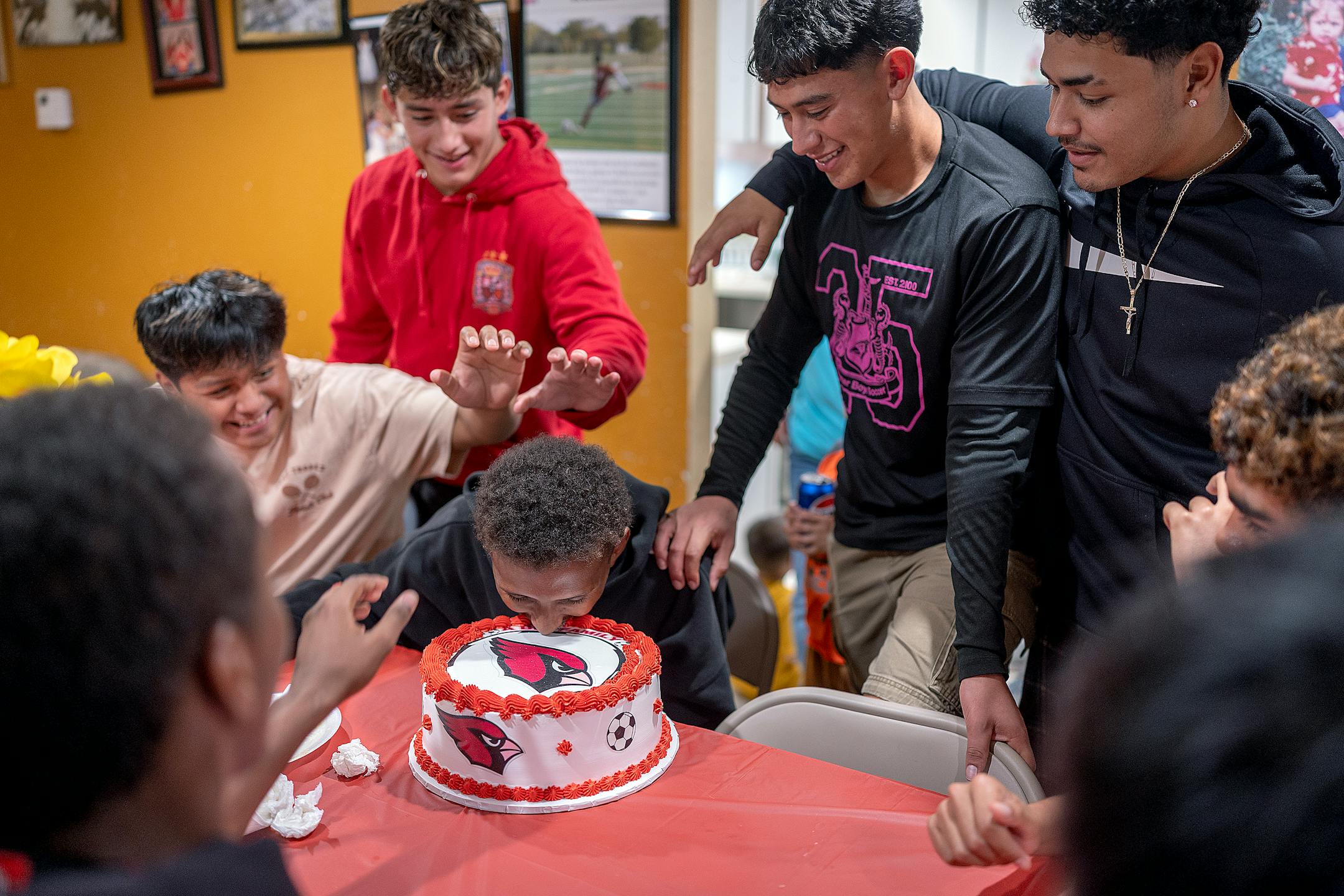
Her voice trailed off. Inside, Hermis’ mother gave a long speech, thanking the team for welcoming Hermis into their lives. Nobody spoke of national politics. Hermis’ family brought out a cake for Abdifatah’s birthday. When a teammate pushed Abdifatah’s face into the icing, the boys all roared in delight.

Abdifatah Ahmed gets a birthday surprise from his teammates during a postseason dinner at the home of Hermis’ parents in Willmar. (Elizabeth Flores/The Minnesota Star Tribune)
about the writer

about the writer

Reid Forgrave

State/Regional Reporter

Reid Forgrave covers Minnesota and the Upper Midwest for the Star Tribune, particularly focused on long-form storytelling, controversial social and cultural issues, and the shifting politics around the Upper Midwest. He started at the paper in 2019.

See Moreicon

More from Greater Minnesota

See More
card image
Brian Peterson/The Minnesota Star Tribune

The annual meteor shower will send streaks through the sky at 44 miles per second.