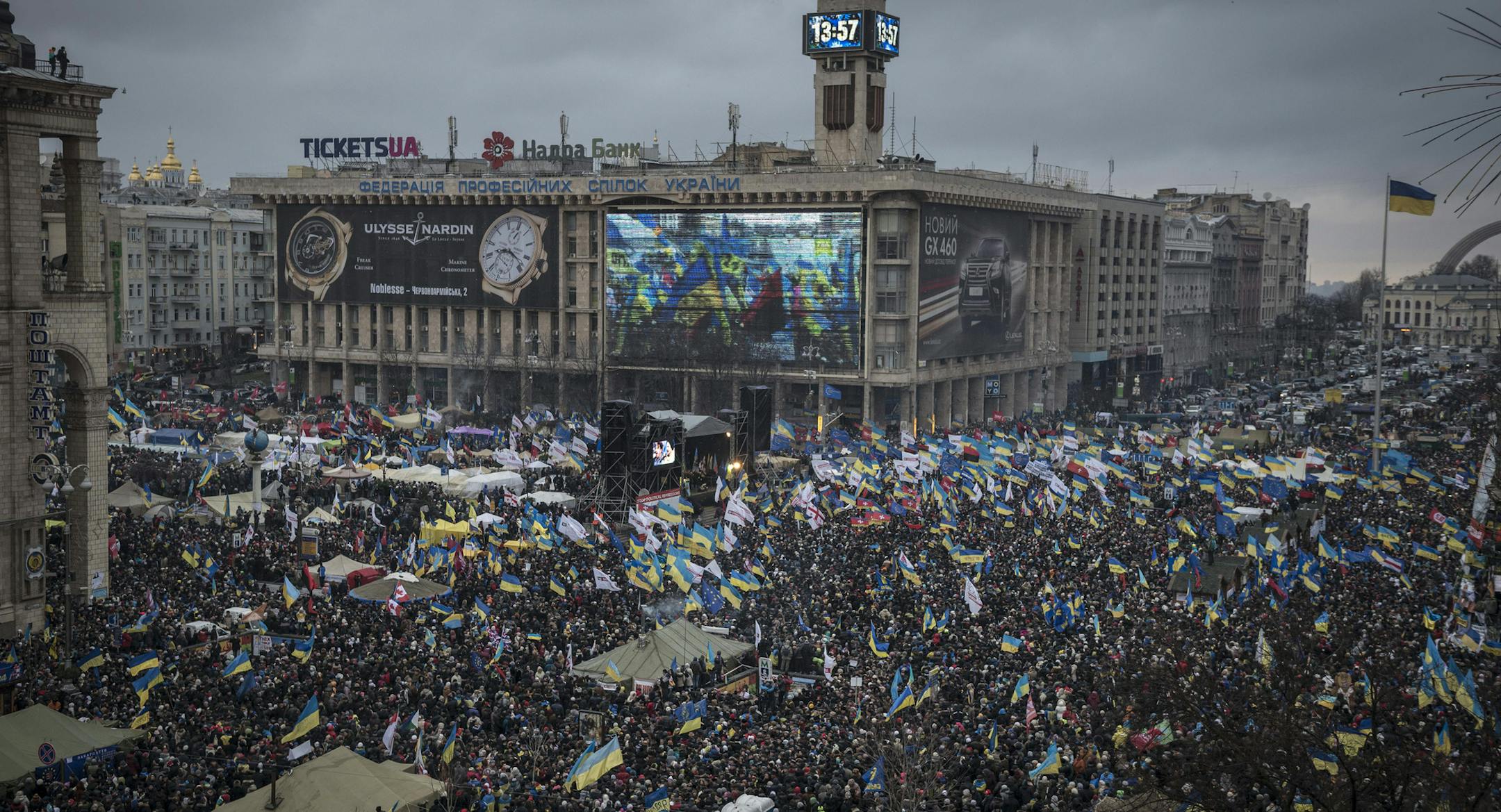
KIEV, Ukraine – Public protests thundered into a full-throttle civil uprising in Ukraine on Sunday as hundreds of thousands of protesters answered President Viktor Yanukovych's dismissiveness with their biggest rally so far, demanding that he and his government resign.
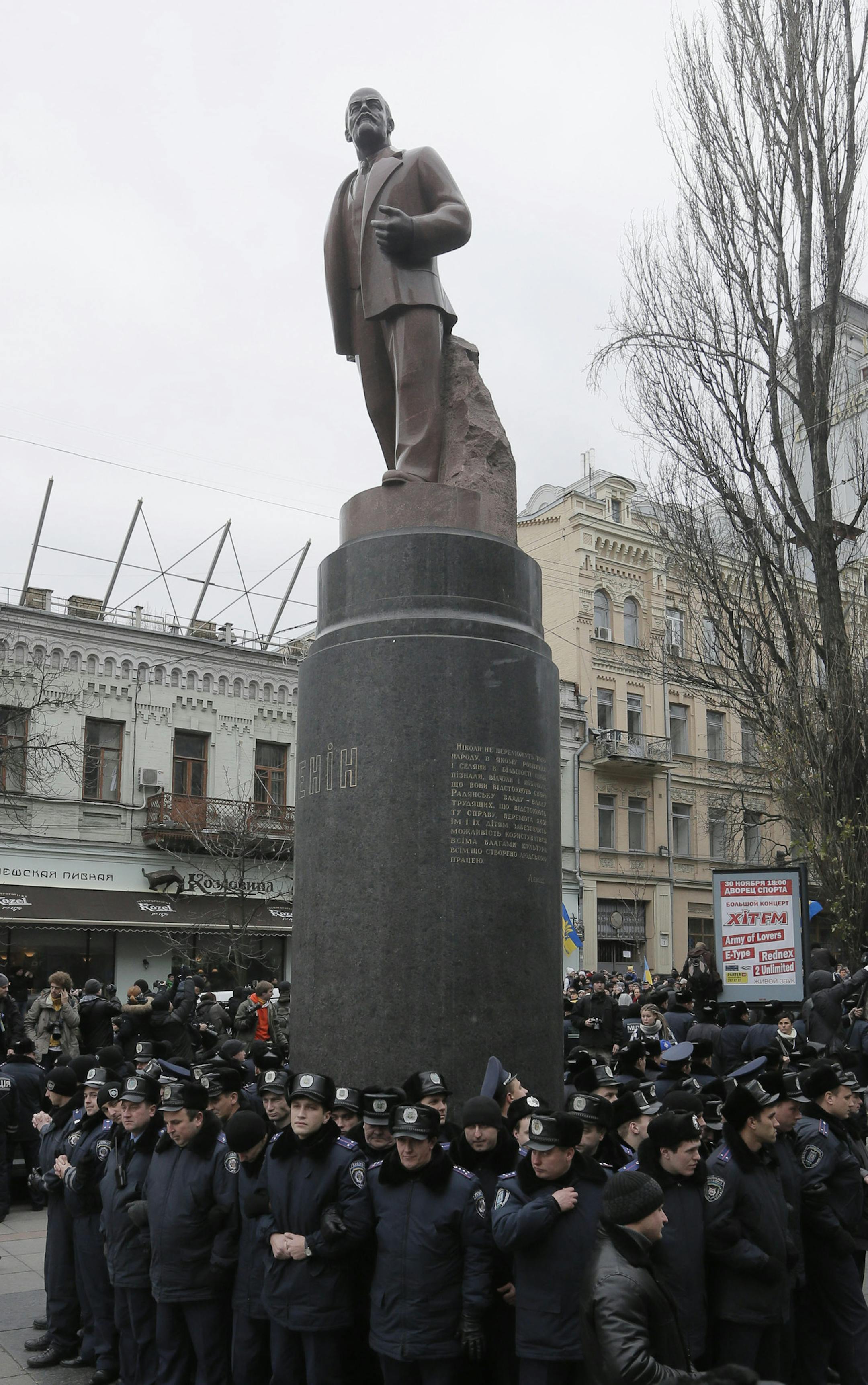
At the height of the unrest Sunday night, a seething crowd toppled and smashed a statue of Vladimir Lenin, the most prominent monument to the Communist leader in Kiev. The act was heavy with symbolism, underscoring the protesters' rage at Russia over its role in the events that first prompted the protests: Yanukovych's abrupt refusal to sign sweeping political and free-trade agreements with the European Union.
After an electrifying assembly in Independence Square in the center of Kiev, the main focus of the protests, the huge crowd surged across the capital, erecting barriers to block the streets around the presidential headquarters and pitching huge tents in strategic intersections. They were not challenged by the police, who have largely disengaged since their bloody crackdown on a group of protesters Nov. 30 sharply increased outrage at the government.
International concern over the unrest deepened Sunday as U.N. Secretary-General Ban Ki-moon telephoned Yanukovych and Western leaders continued to call on him to respond to the demonstrators' demands. The E.U. has been eager to draw Ukraine, a nation of 46 million, into closer alliance with the West, while Russia has sought to safeguard its major economic and political interests in its close neighbor. Making the crisis more acute, Ukraine is on the verge of bankruptcy and is desperate for financial assistance from abroad.
The spreading disorder set off a new round of speculation that Yanukovych would declare a state of emergency and potentially turn again to force by ordering the removal of demonstrators who have occupied Independence Square and several public buildings, including Kiev's City Hall. There were reports Sunday that the security services were preparing to bring charges of treason against three opposition leaders in parliament who have been at the forefront of the demonstrations.
One of those leaders, Arseniy Yatsenyuk of the opposition Fatherland party, called for mass civil disobedience if Yanukovych tries to impose martial law.
Later, as the Lenin statue was pulled down and men took turns smashing it to bits with a sledgehammer, protesters twice sang the national anthem, removing their caps and covering their hearts with their hands.
A spokesman for Prime Minister Mykola Azarov called the statue's destruction "barbaric."