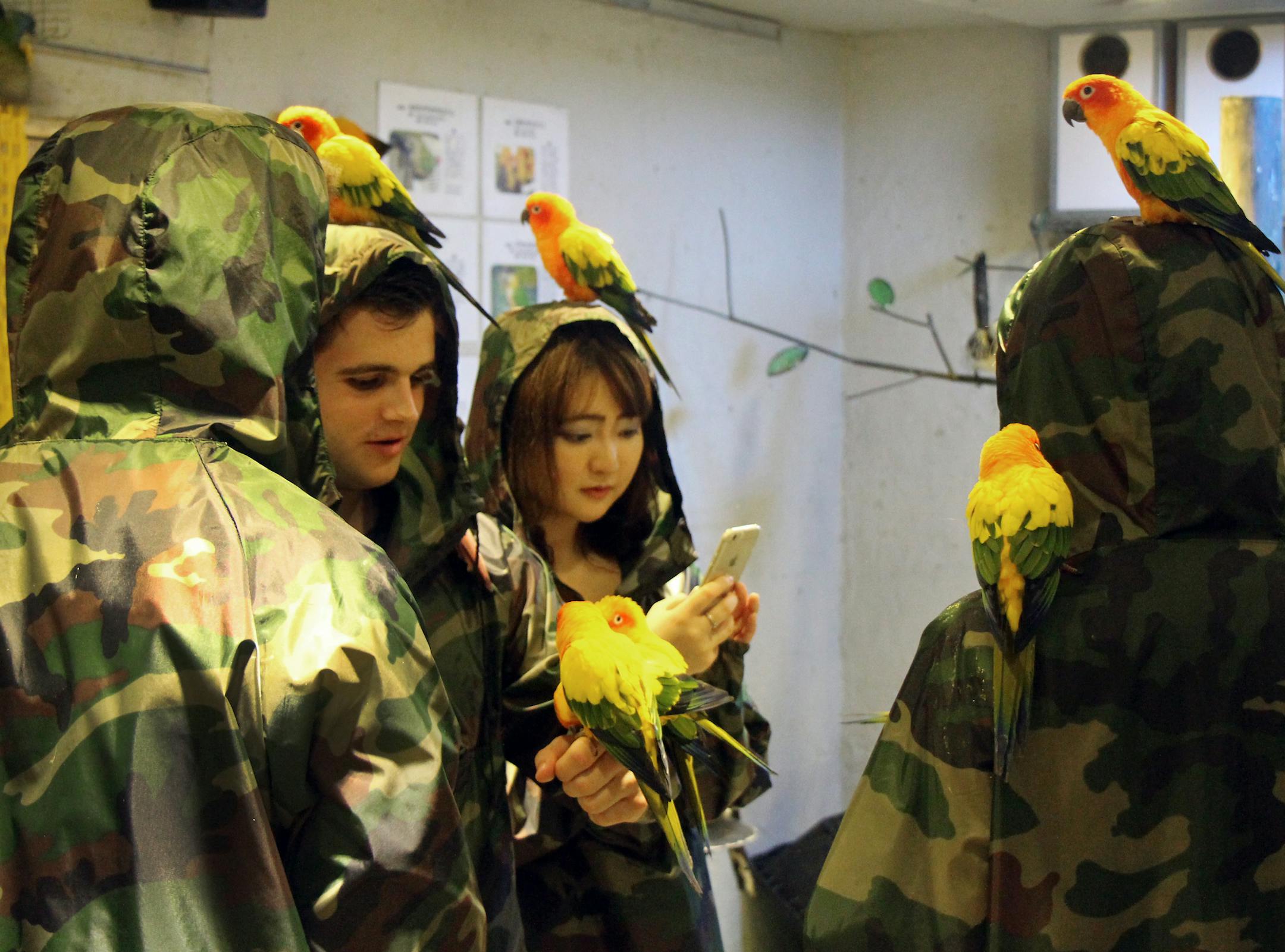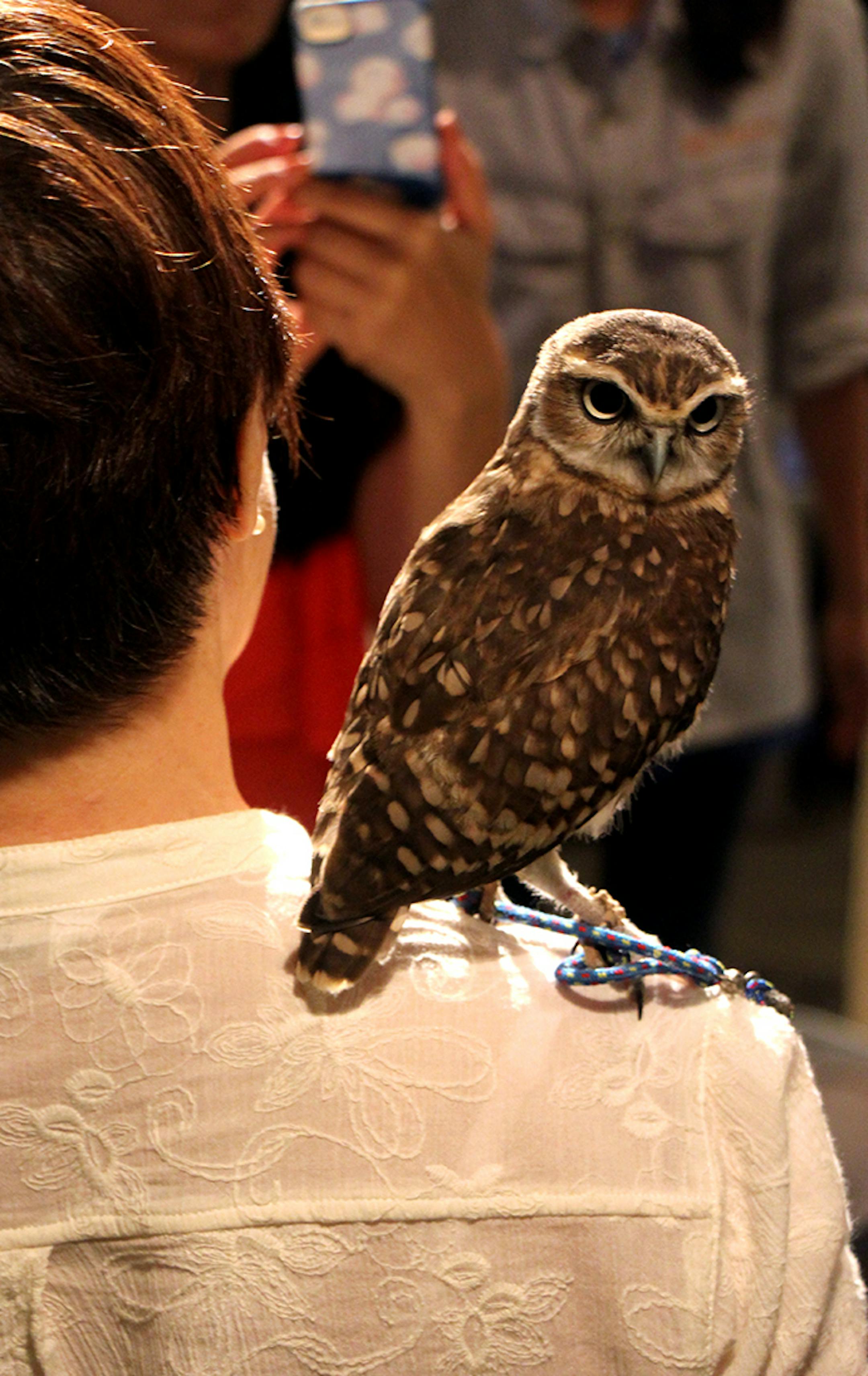
In a concrete building a few blocks from Tokyo's grand Sensoji Temple, I selected a female companion for a 45-minute session. She and I were ushered from the second to the fourth floor, where a garishly hued room awaited. My hostess, who went by the English name "Queen," was pretty, but not much of a conversationalist. In fact, she mostly just wiggled her nose at me. But then, Queen is a rabbit.
She's one of the rentable residents who work at With Bunny, in the tourist-heavy Asakusa neighborhood. The six-floor business is among Tokyo's biggest animal cafes, even if it doesn't quite justify its billing as "Education & Museum." But it does offer a variety of activities, for a range of fees. Visitors can feed a rabbit, pose for a photo with one or take an animal on a stroll through the structure's roof garden. That last choice was the priciest option I encountered in several days of visiting cat, rabbit, dog, bird and reptile cafes in and around Tokyo.
A note about the widespread use of the word "cafe" to describe Japan's animal hangouts: Don't imagine sitting at an elegant little table, sipping cafe au lait and nibbling macaroons as a tabby curls in your lap or a beagle flops at your feet. Tables are rare, and the animals may ignore you. Plus, beverages are likely to come from a self-service vending machine — sometimes covered by the entrance fee — or a tiny refrigerator.
Most of these places are one-person operations, and the budget doesn't include baristas or short-order cooks. You're paying just for (a) a semiprivate space and (b) animals. But both of those can be significant attractions in Japanese cities, which are known for minuscule dwellings and landlords who forbid pets. Thus the popularity of what are essentially petting zoos for adults.
Another potential disappointment: Although these places might seem a boon to parents with kids, many of them bar guests younger than 12 or 13. Japan's critter cafes are for your inner child, not your actual one.
As someone who lives with cats, I wasn't part of the purr-deprived target audience of cat cafes. But after walking past the sign for Calico, near Shinjuku station, a dozen or so times, I finally went in. I took off my shoes, sanitized my hands and paid the equivalent of about $8 for an hour of furry kawaii ("cute").
Calico, I later learned, was one of Tokyo's first cat cafes. It's also the largest, which may explain why its inhabitants seem more relaxed, although perhaps it's the Bach and Pachelbel on the sound system.
The more than 50 cats can prowl between two floors, climb the specialized furniture or stare out the window at bustling Shinjuku, a neighborhood where nearly any entertainment (not all of it strictly legal) is available.