

 1:28
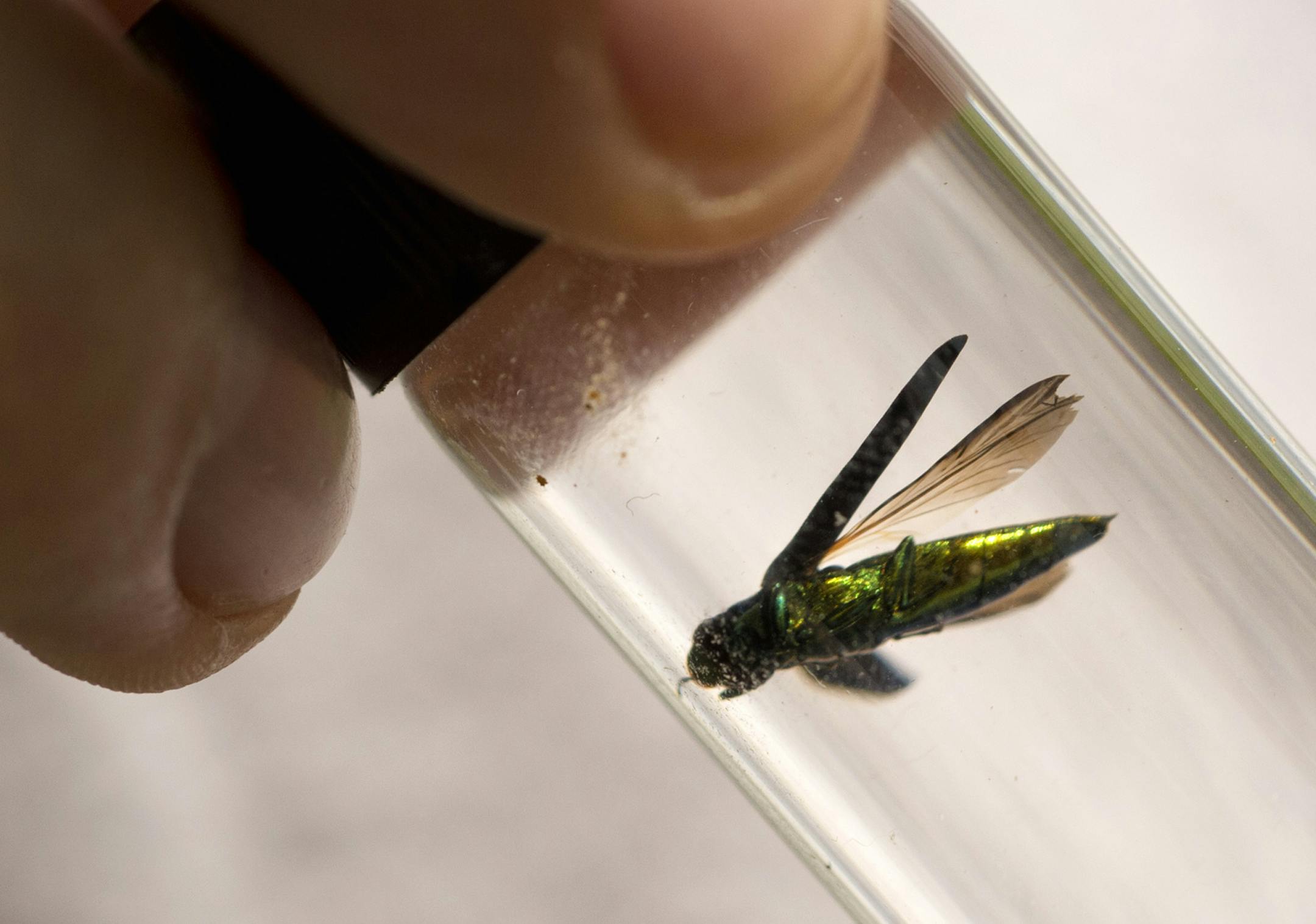
1:28The emerald ash borer may have started to feel the heat Tuesday in the Twin Cities.
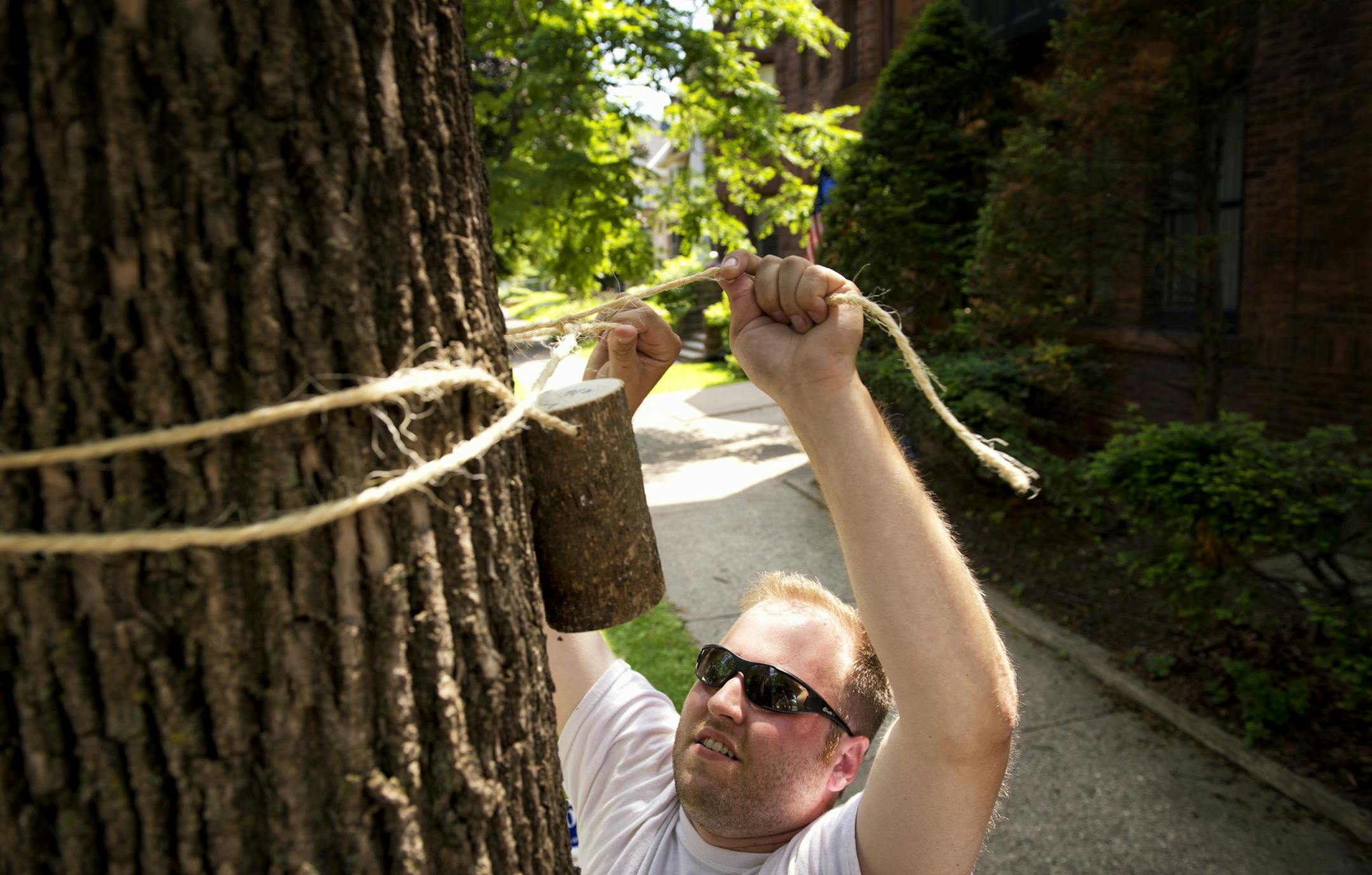
Along the shady streets of St. Paul's Cathedral Hill neighborhood and the shore of Minneapolis' Lake Harriet, workers launched two different attacks on the tree-killing beetle: a release of predatory wasps in St. Paul and a chemical inoculation of the popular "Elf Tree" in Minneapolis.
The work coincided with the peak of the "flying season" for the ash borer, a time when the weather has become warm enough to coax the insect to bore out from under the bark of ash trees, where it's been developing over the winter as a larva, and fly off to mate, lay eggs and infest other ash trees, thus expanding its range.
Although the warm-up this year was delayed by the cool, wet spring, state Agriculture Department workers are releasing the tiny wasps — which don't sting and are, like ash borers, imports from China — in early summer in hopes that an additional generation or two this season will make some gains on the invaders.
"We really want to try to get them established," said Jon Osthus, emerald ash borer biocontrol coordinator for the Agriculture Department.
The wasps, developed at a U.S. Department of Agriculture facility in Brighton, Mich., have been used in the metro area and far southeast Minnesota, where ash borers have been detected, since 2010. Jonathan Lelito, the facility manager, said he's been encouraged to find that wasps in Michigan have been spreading steadily on their own, and now kill about 25 percent of the larvae in trees researchers have sampled. In China, where the wasps and ash borers live in a natural balance, the figure is about 70 percent.
Back in Minnesota, Osthus was scheduled to release 1,040 wasps Tuesday in Cathedral Hill and Como Park in St. Paul, as well as in northeast Minneapolis and Shoreview, where ash borers been found.
Goal: Natural balance
The wasp release is the third of three strategies that officials hope will deter ash borers in St. Paul. After several dozen trees along Kent Street and Portland and Holly Avenues were found infested two years ago, the city removed some, and it inoculated others last year. But ash borers are still present, Osthus said.
![The fight against the emerald ash borer includes a special inoculation of Lake Harriet's famous "elf" tree. Paul Schoenike, of Rainbow Tree Care in Minnetonka injected a chemical call Triage after he drilled and pounded in some taps for the inoculation. ] Richard.Sennott@startribune.com Richard Sennott/Star Tribune Minneapolis Minnesota Tuesday 7/2/13) ** (cq)](https://arc.stimg.co/startribunemedia/YA6XL63VF62ZNWAPY5RGV6DMOU.jpg?&w=1080)


