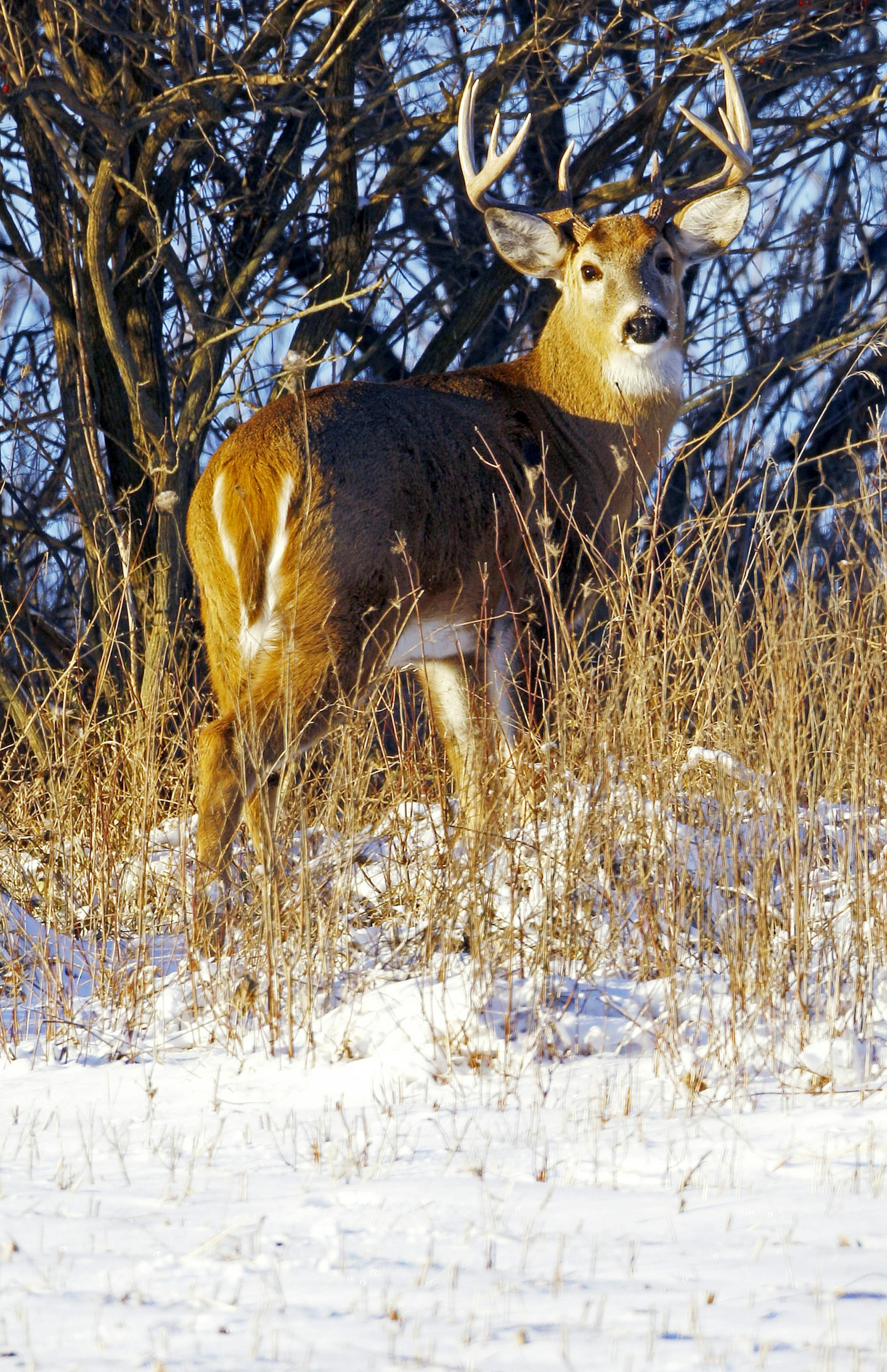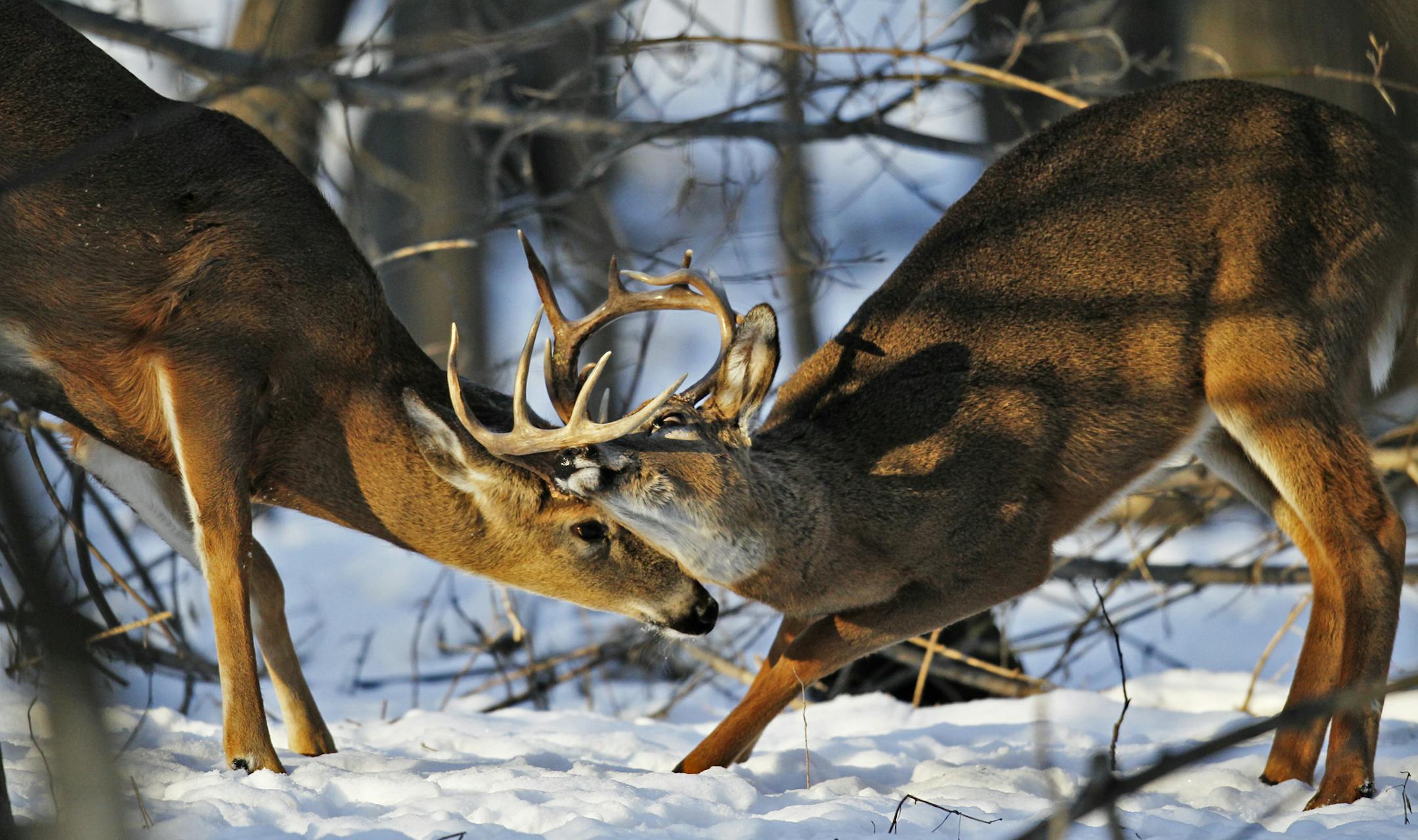
The rut plays a key role for whitetail deer hunters every fall, from Minnesota to Texas. Why is it so important? Lou Cornicelli, Department of Natural Resources wildlife research manager, explains.
Q: So what is the rut?
A: It's the one time of year that deer breed. In southern states they can breed over six or seven months, but here it's a narrow window in November.
Q: What triggers it?
A: Photoperiod, or changing amount of daylight. Hot or cold weather can slightly interrupt things, but it's the length of day that triggers the response to breed. Our peak breeding is around Nov. 12-14.
Q: Why November?
A: Deer come into estrus in northern states at this time of year for a reason, and the reason is survival. They need 195 days for gestation, which means the fawns will be dropped in May. That puts them at a reasonable size so they can survive the winter. You can't have a fawn born in August, because they won't survive the winter. It's evolutionary adaptation. They have evolved to do this over millions of years. One Canadian researcher says whitetails are the oldest deer species in North America; they have been around for about 6 million years.
Q: So what happens?