

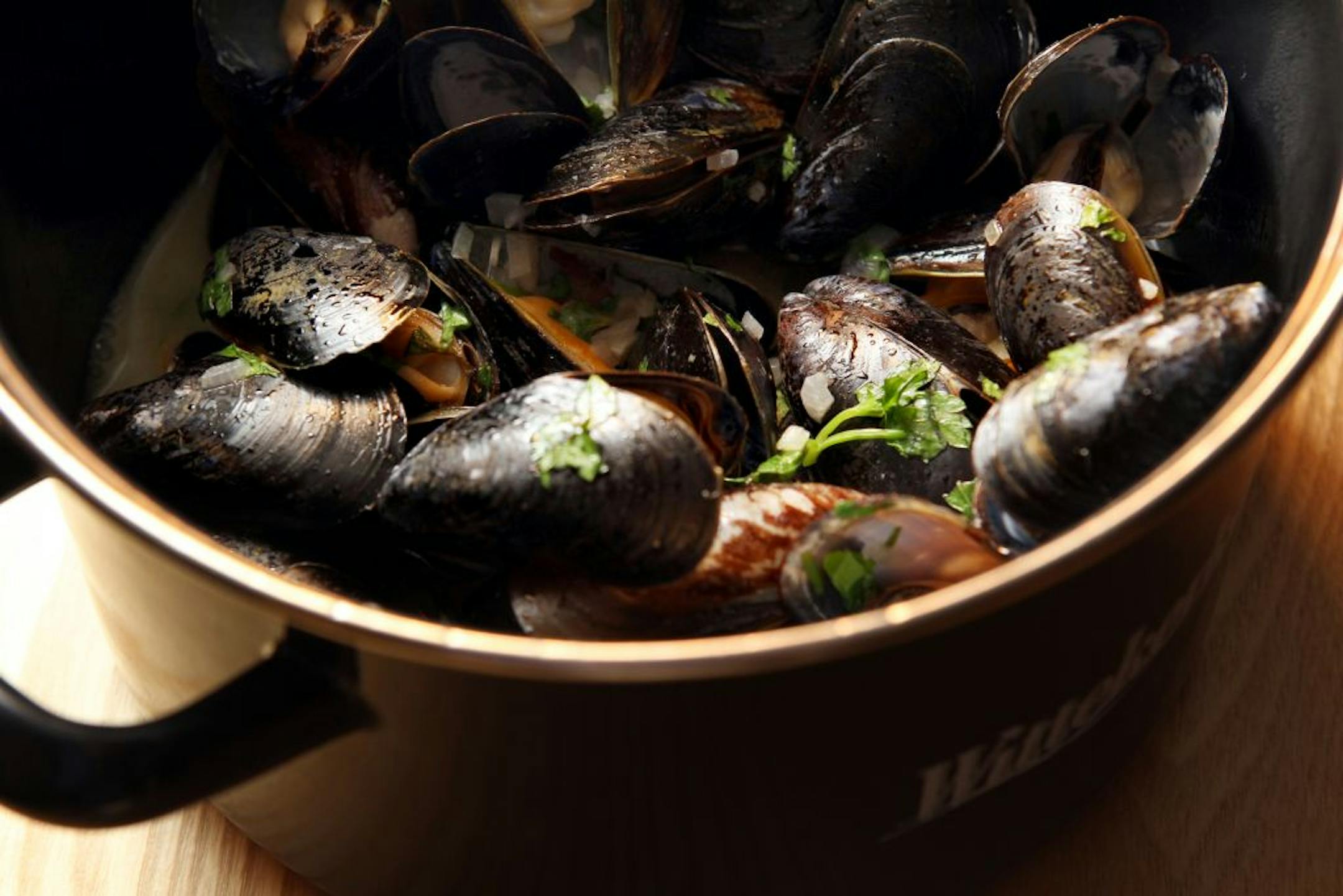
"Oh, yes," my friend moaned as he poked his fork enthusiastically into a steaming bowl of shellfish. "Mussels. The poor man's oyster."
The thought put a smile on my face. He was right on economics: The briny feast set out for this little dinner party had been bagged for under $20. But given a choice between oysters and mussels, I'll have mussels, thank you -- purely for reasons of taste.
Apparently, I'm in good company. Tim Lauer, general manager of Coastal Seafoods, may be the dean of local fishmongers. When I sheepishly confessed that I preferred mussels to their more prestigious cousins, Lauer unflinchingly replied, "Me, too." At that, we launched into a conversation fueled by mutual appreciation, ranging from taste to ecology, and the care and handling of mollusks.
First things first: Mussels belong to a family of bivalves (think hinged shells that close like a book) that include clams and oysters. If you've never tasted a mussel, you're in for a treat. They're sweeter and more delicate than an oyster, with a pleasantly meaty texture that's far less chewy than a clam.
Unlike oysters, mussels are seldom eaten raw. And that's a very good thing. The flavorful juices they throw off upon cooking are arguably their finest quality -- a true aficionado will practically lick the dish to avoid wasting a single drop.
Around the world
The classic French method of cooking mussels is to briefly steam them with white wine and aromatics -- yielding a deeply flavorful dish that's done in a matter of minutes. But various types of mussels range around the globe, giving cooks a world of tasty options. Italians use them in pasta sauces. In Spain, they crown paellas. Southeast Asians steam them with lemon grass and turn them into flavorful curries.
Since most of us don't eat shellfish every night, mussels have an exotic elegance that belies their paltry price. Lauer notes that, in his 25 years in the business, the cost of mussels has fluctuated very little.


