Minnesota House members are responsible for 100 percent of their votes, but they don't push their voting buttons 100 percent of the time.
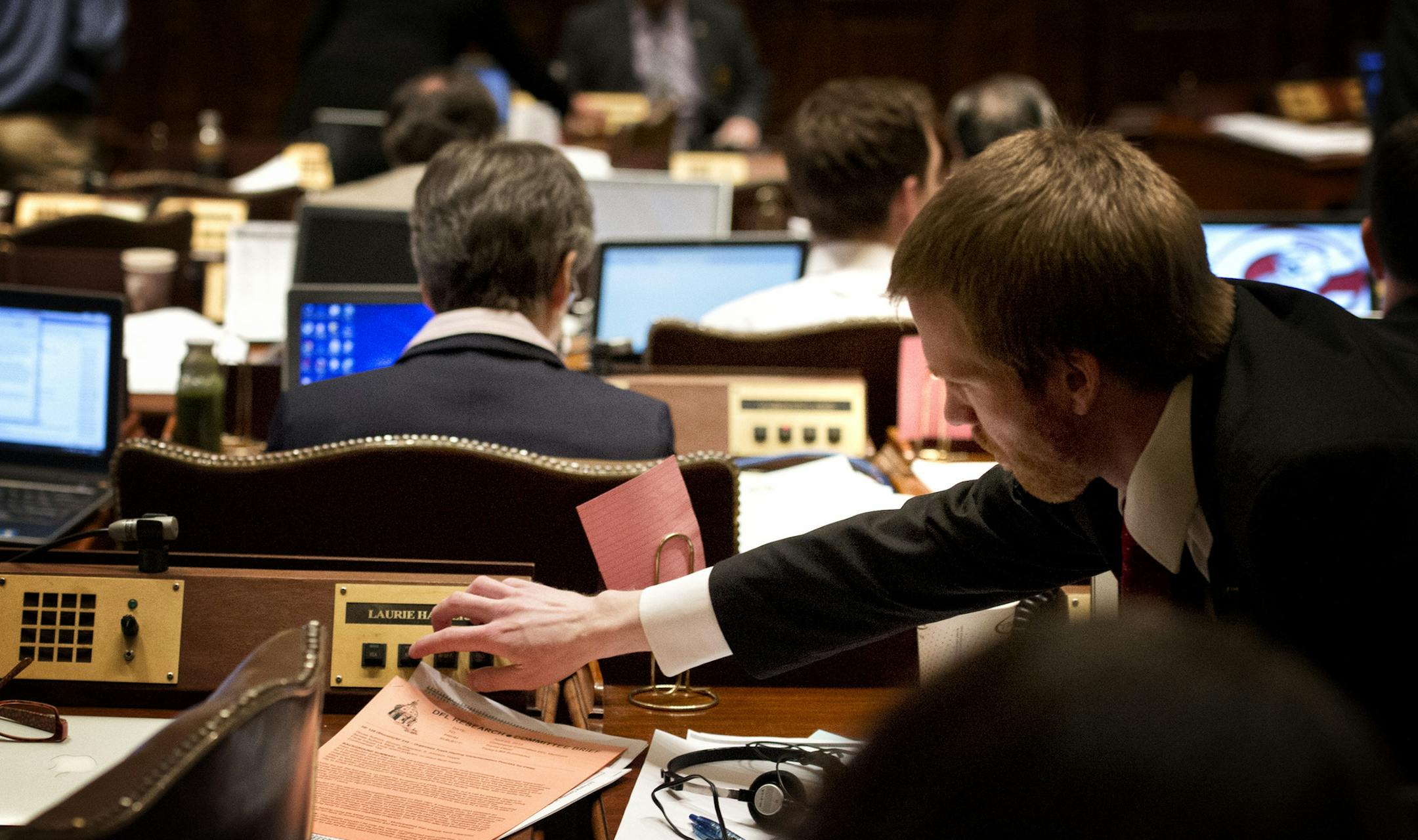
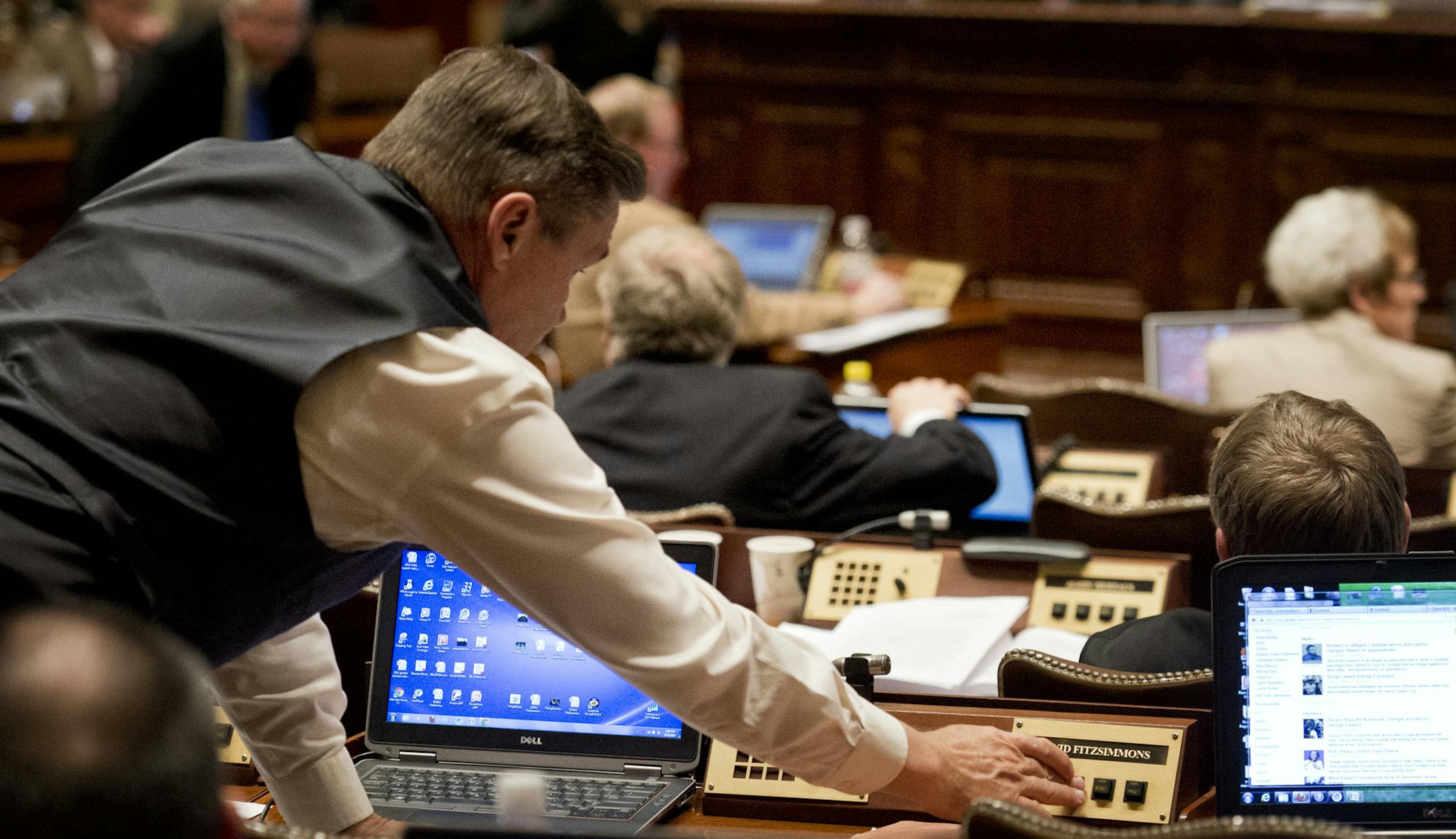
As legislators head into the longest days and nights of the session, watch the House during lengthy floor debates and invariably a representative will reach over to a neighbor's desk to put up a red "no" or green "yes" vote for a colleague. It is against the rules but accepted.
"It'd be nice to have everybody on the floor voting, but … the reality is there are multiple things going on at times," said House Speaker Paul Thissen, DFL-Minneapolis. "That's just how it goes."
Thissen is one in a long line of House speakers — from both parties — to allow the neighbor-voting-for-neighbor practice. Some representatives are a bit abashed about it. Others say it simply helps keep legislation moving.
"It's the long-standing custom and usage of the House and that's been recognized," said former Speaker Steve Sviggum, the Kenyon Republican who ran the House from 1999 to 2006.
In the House chamber, each of the 134 members has a desk with his or her nameplate directly above a panel with voting buttons on it. Press the "yea" button and a green vote will appear on the large voting board, which shows all the votes; press the "nay" button and a red vote will be posted.
Bending the rules
The House rules clearly state that "a member must not vote on a question except at the member's own seat in the chamber." Yet, representatives in the Capitol but not sitting in their own chairs often end up with recorded votes.
House members commonly push the voting buttons for colleagues on less consequential issues that appear before the chamber, such as proposals to change a small part of a bill or measures that have massive support.