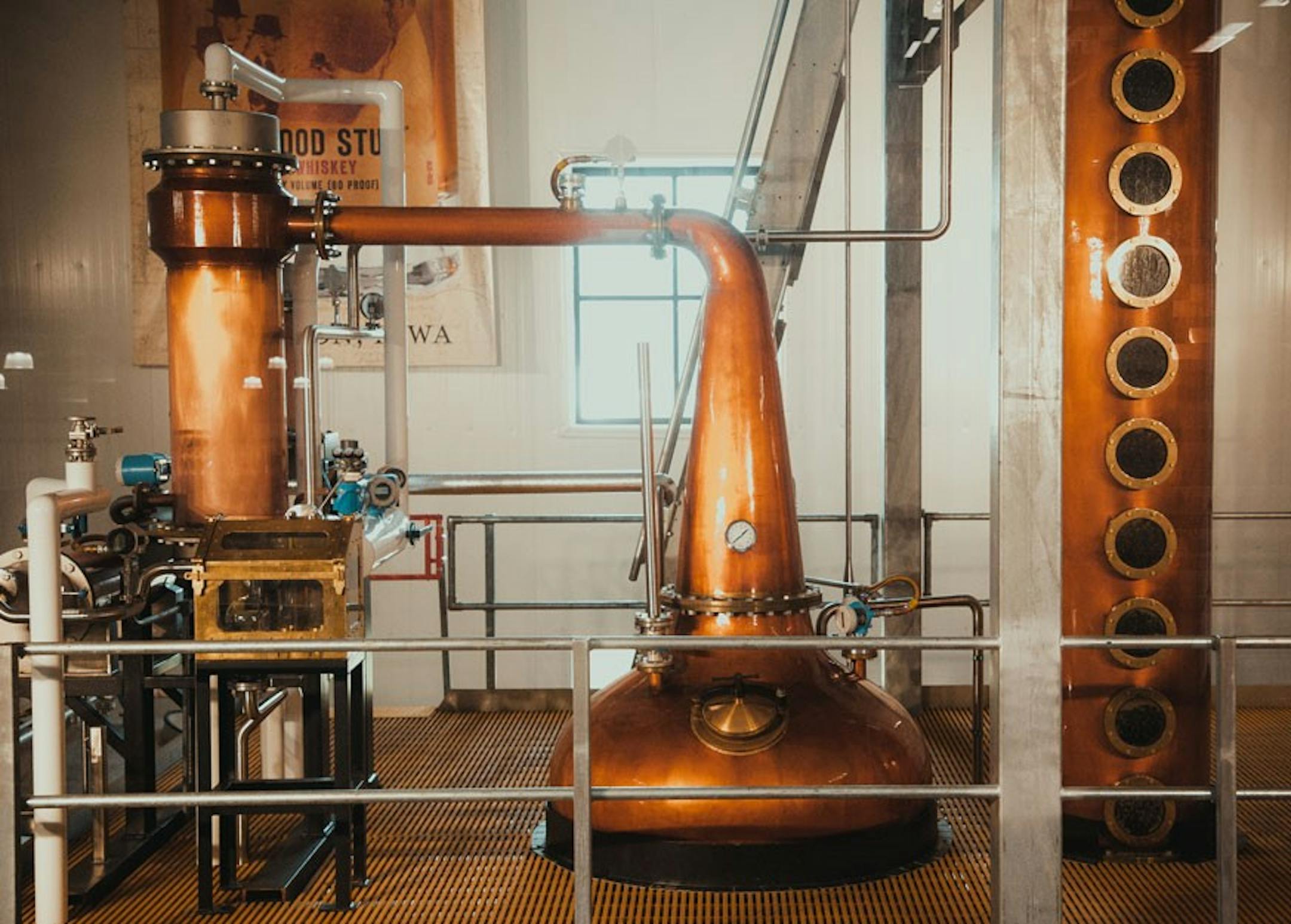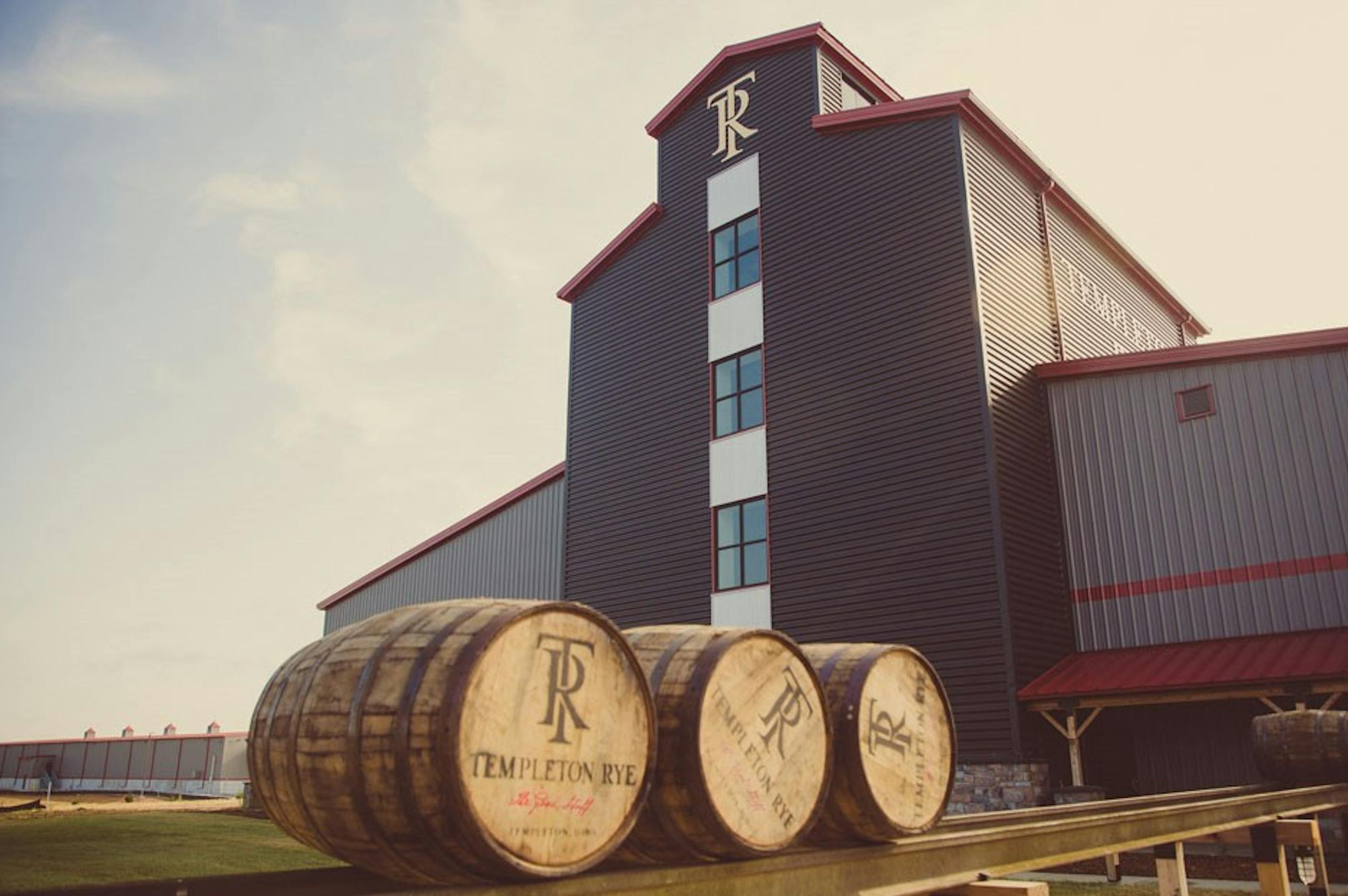
The whiskey distillery is hard to miss as you drive into the tiny western Iowa farm town of Templeton. A sky-high stack of whiskey barrels topped with American and Iowan flags — aka the "Templeton Rye Barrel Tree" — towers above a sprawling 20-acre production facility that welcomes visitors with a small history museum and guided tours.
Above ground and aboveboard, today's Templeton Rye, introduced in 2006, is a reboot of the underground (and illegal) Prohibition-era hooch made by Templeton townspeople. Templeton Rye's first heyday was from 1920 to the 1930s, when it was dubbed "The Good Stuff" and was reputedly the favorite of Chicago mobster Al Capone.
Opened in 2018, the $35 million Templeton Rye Distillery and Visitor Center presumably quiets any complaints that the 21st-century product was, at first, deceptively marketed as Iowa-made craft whiskey, when it was actually distilled in Indiana and bottled in Templeton. Related lawsuits were settled in 2015. The first all-Iowan good stuff, aged for four years, will be sold in 2022.
I'm not a whiskey drinker, but I am a sucker for a maker's tour. And I'm a history buff who loves a good story. I got this and more (yes, there's a tasting) during a 90-minute tour in two buildings, each with modern and rustic touches. The low-slung, western-looking visitor center is clad in brown metal siding with wood posts, a slanted copper-colored metal roof and dormer windows. The distillery, also a long, brown metal building, has a flat-faced tower resembling an old-fashioned grain elevator.
Prohibition lore
On a Friday in August, I joined 13 other visitors from as far away as North Carolina on a tour led by a resident of Templeton (pop. 338). It began in the visitor center museum, which documents Templeton's colorful bootleg history via re-created old-timey scenes, signs with folksy narrative, historic photos and memorabilia.
Although I'd already wandered around the free museum, the tour ($10) added good value, and the guide entertained us with local lore. Facing hard times after World War I, enterprising farmers and townsfolk — including the grandfather of a co-founder of today's Templeton Rye — began producing whiskey and hauling it as far as Denver and New York City.
We learned that the bootleggers included a former mayor and a justice of the peace. A 10-year-old boy's chores included hiding whiskey in his dad's truck. Deliveries were made weekly to the Iowa Statehouse in Des Moines, where a local tavern also reportedly sold the good stuff to a young Ronald Reagan, then a radio broadcaster.
Even the local priest and sheriff kept the town's secret. Word has it the sheriff wore a white hat to alert whiskey cookers of a raid. Hogs did their part by creating a stench that masked the smell of cooking booze.