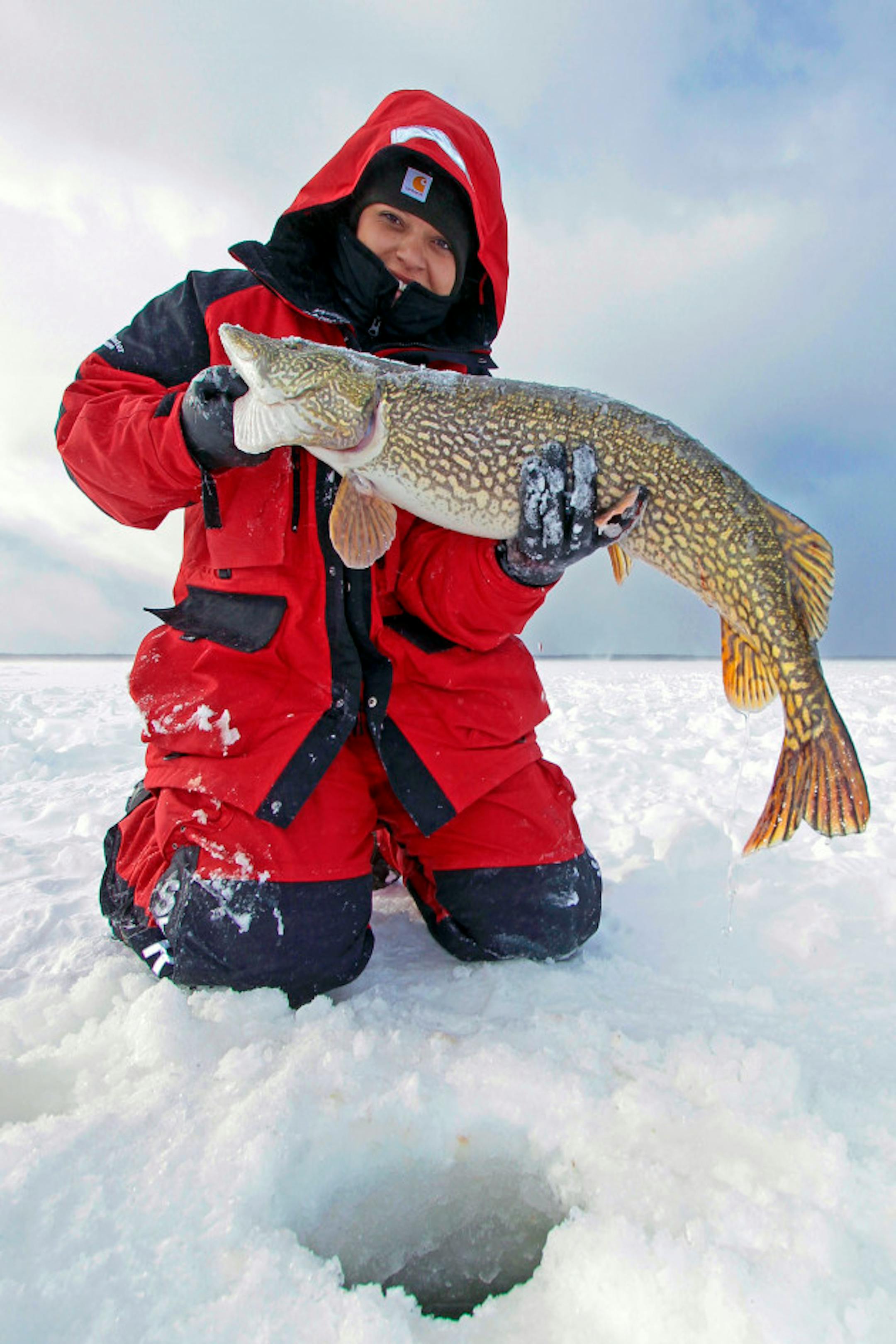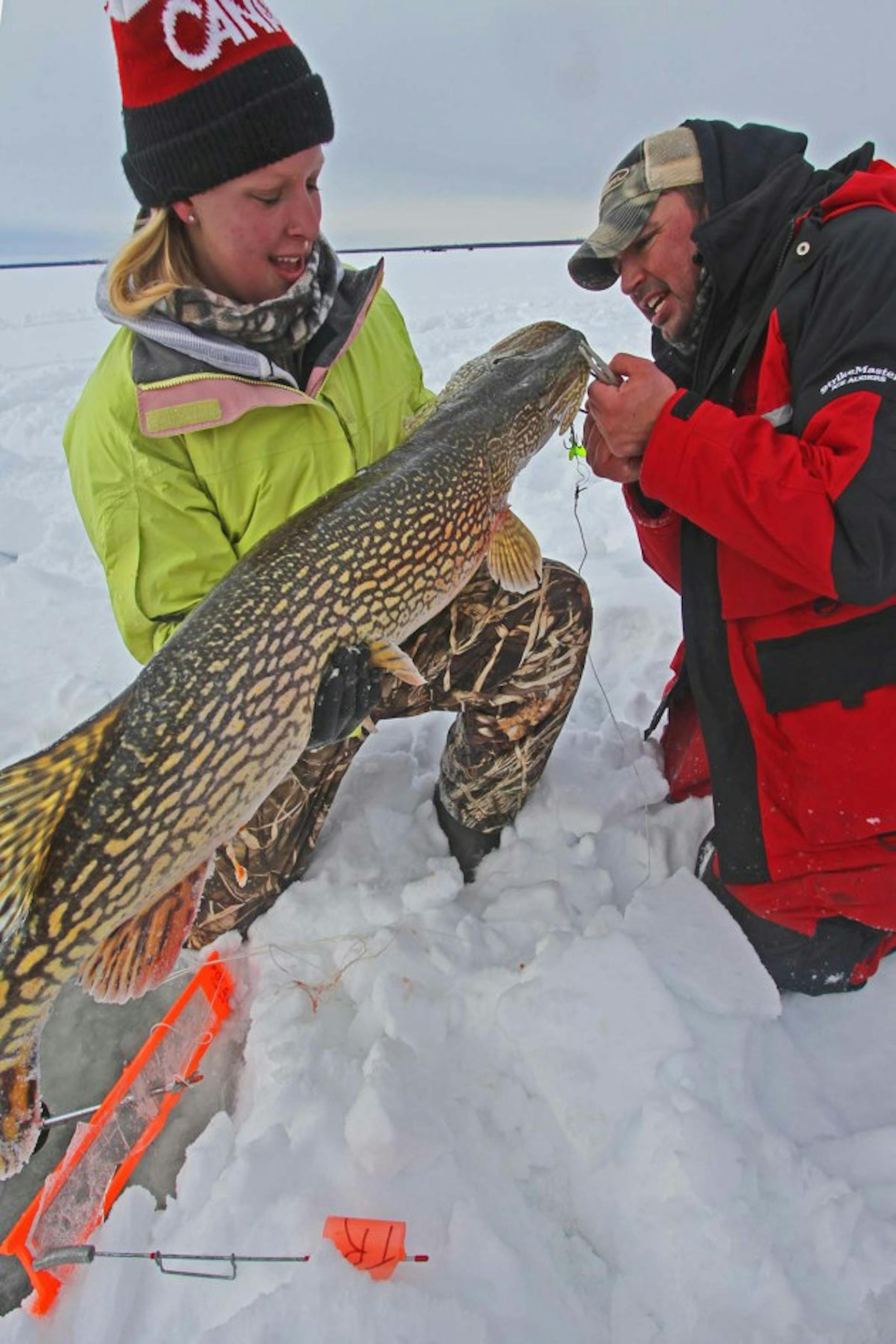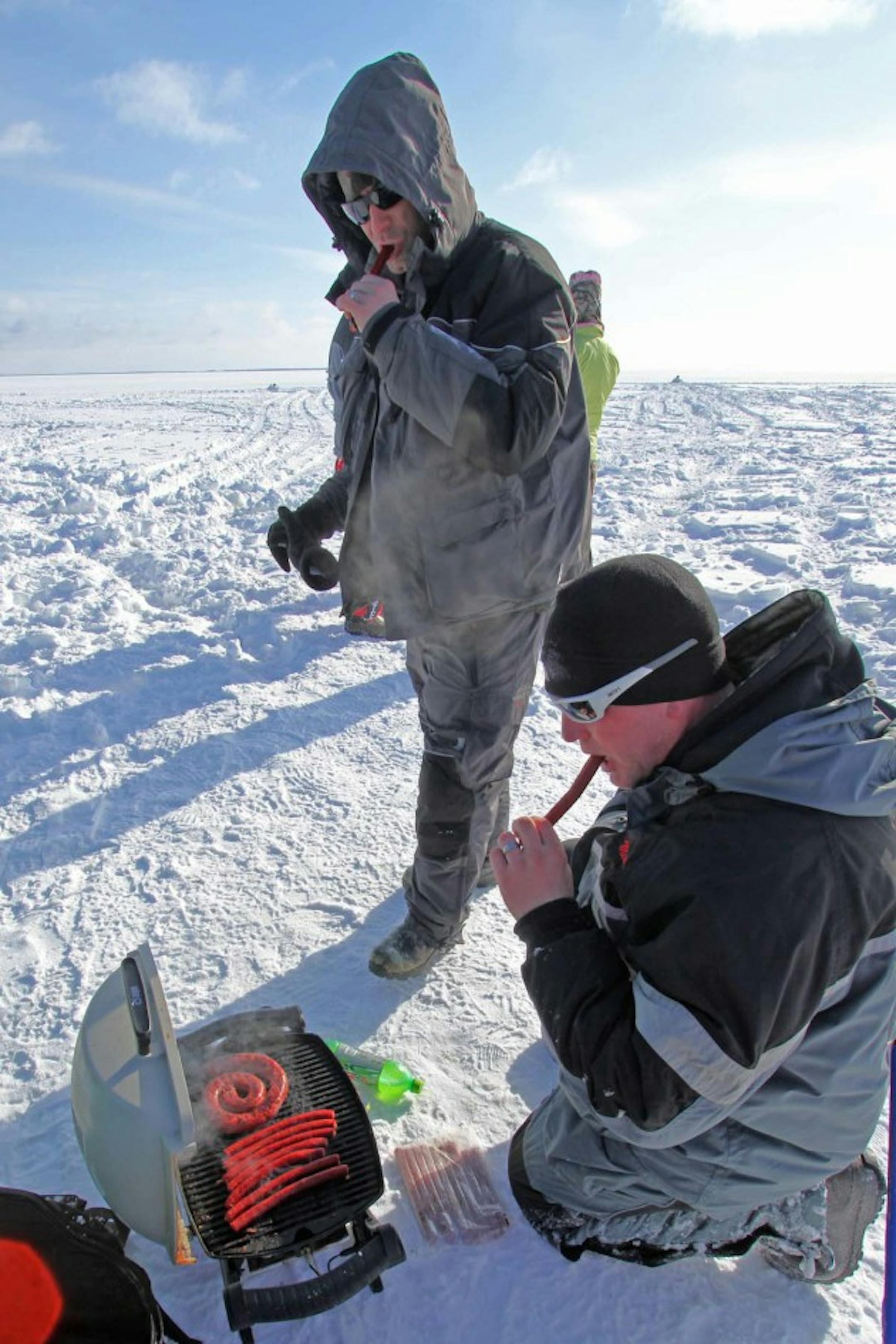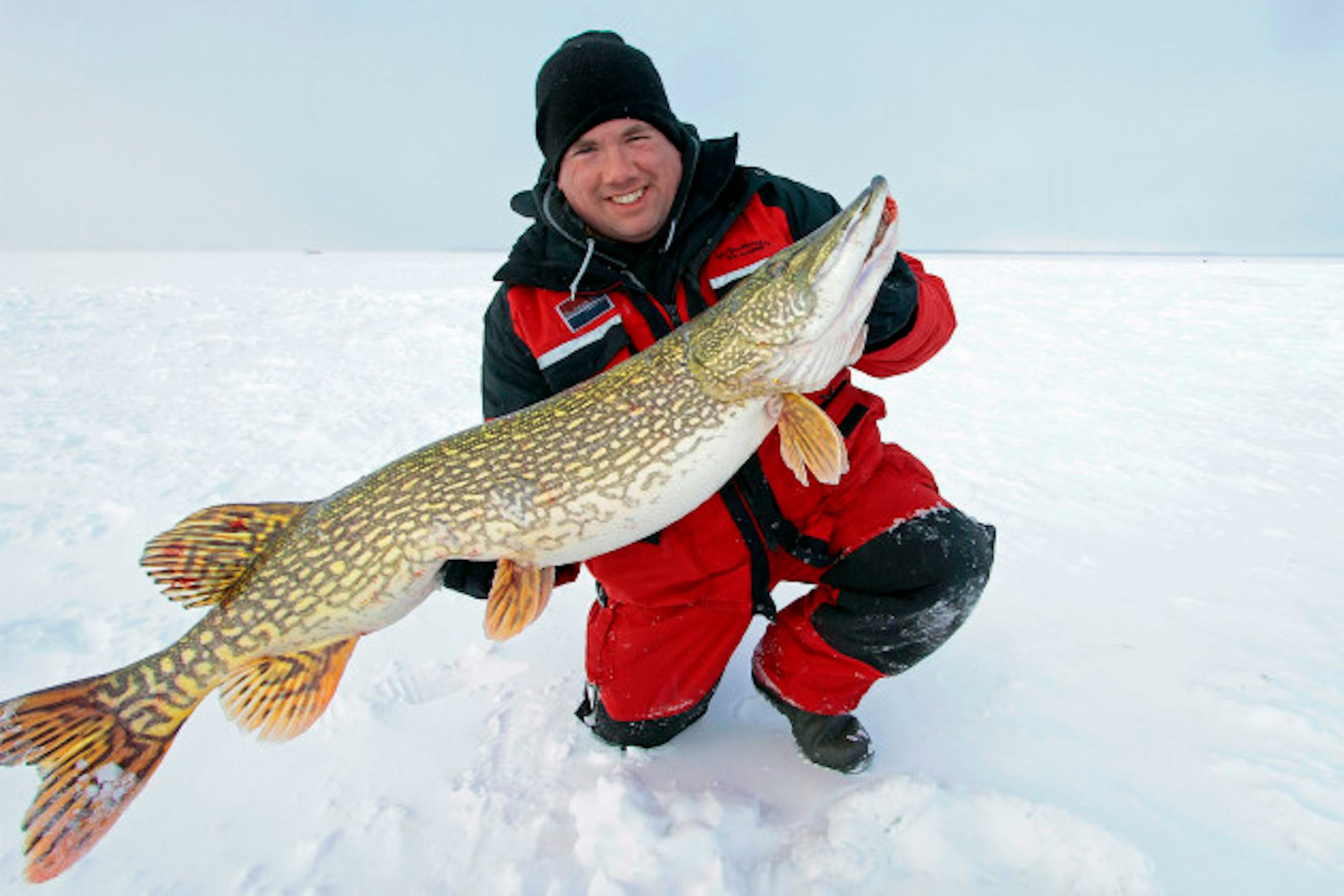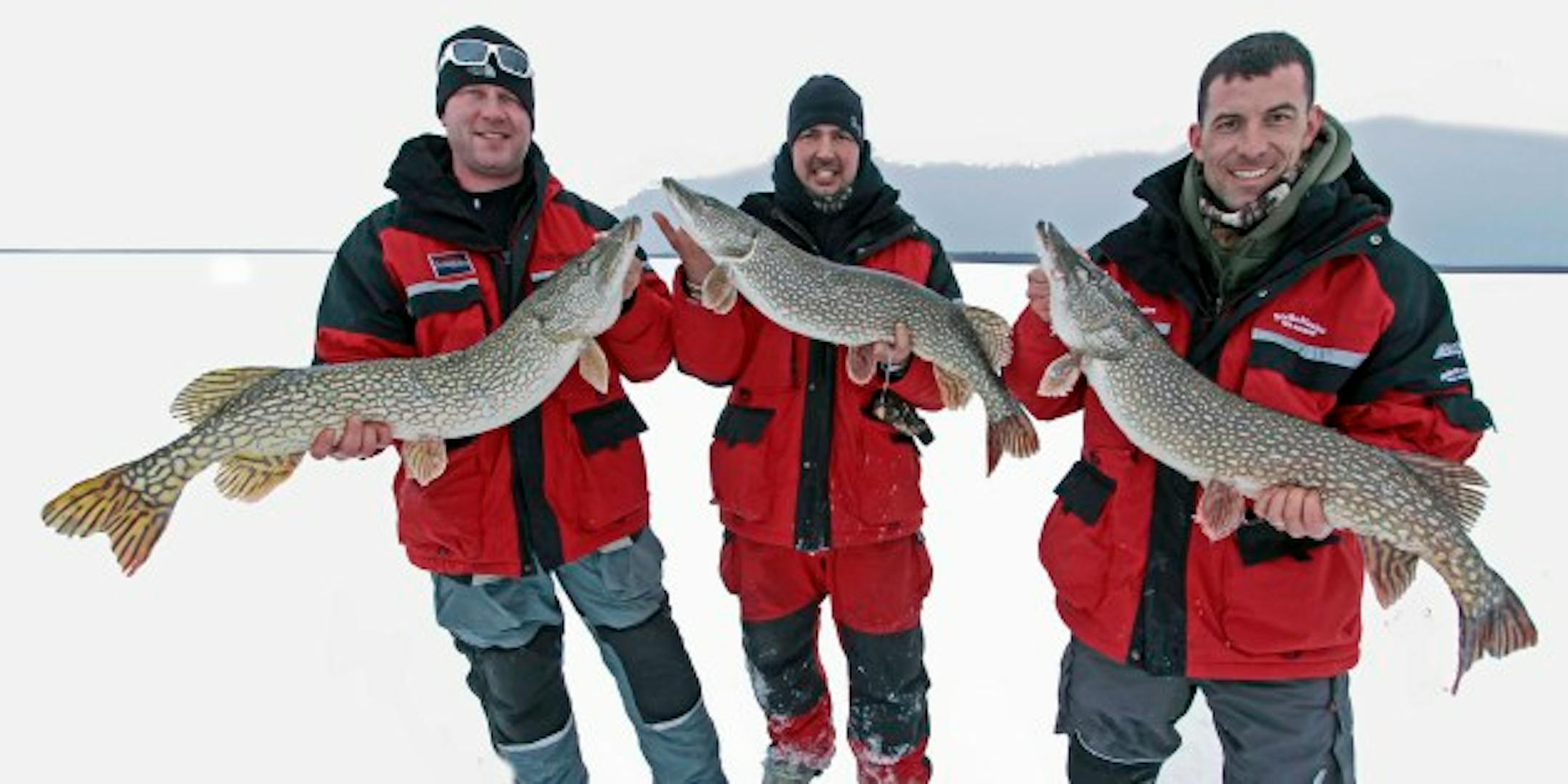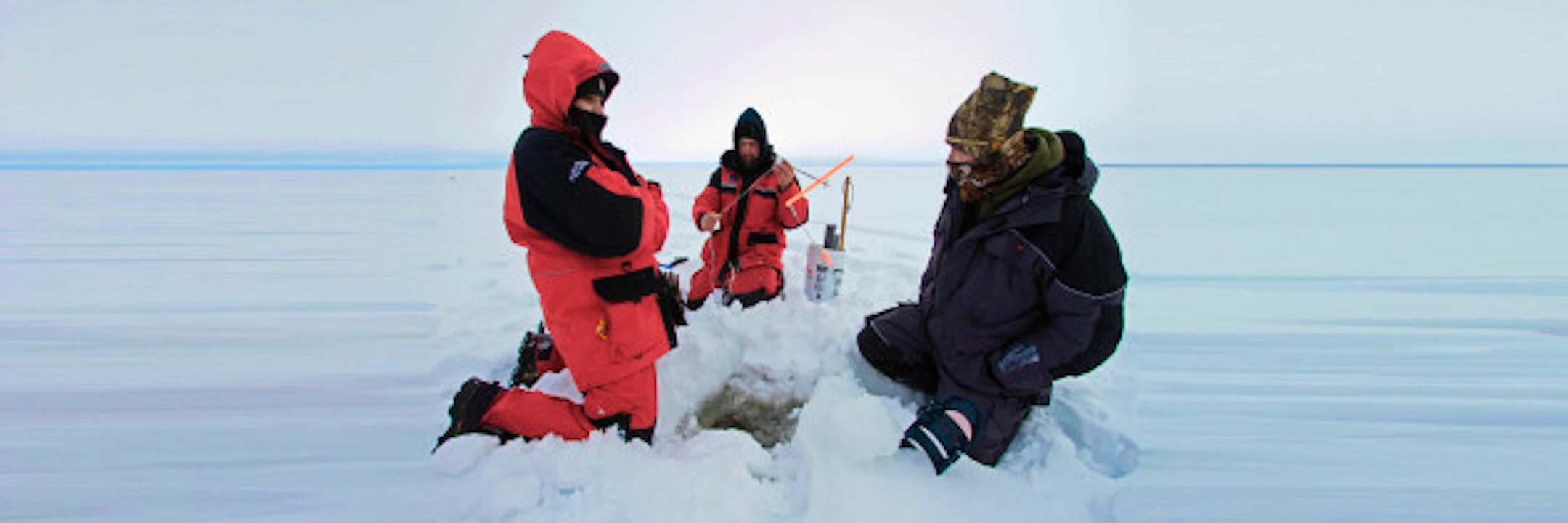
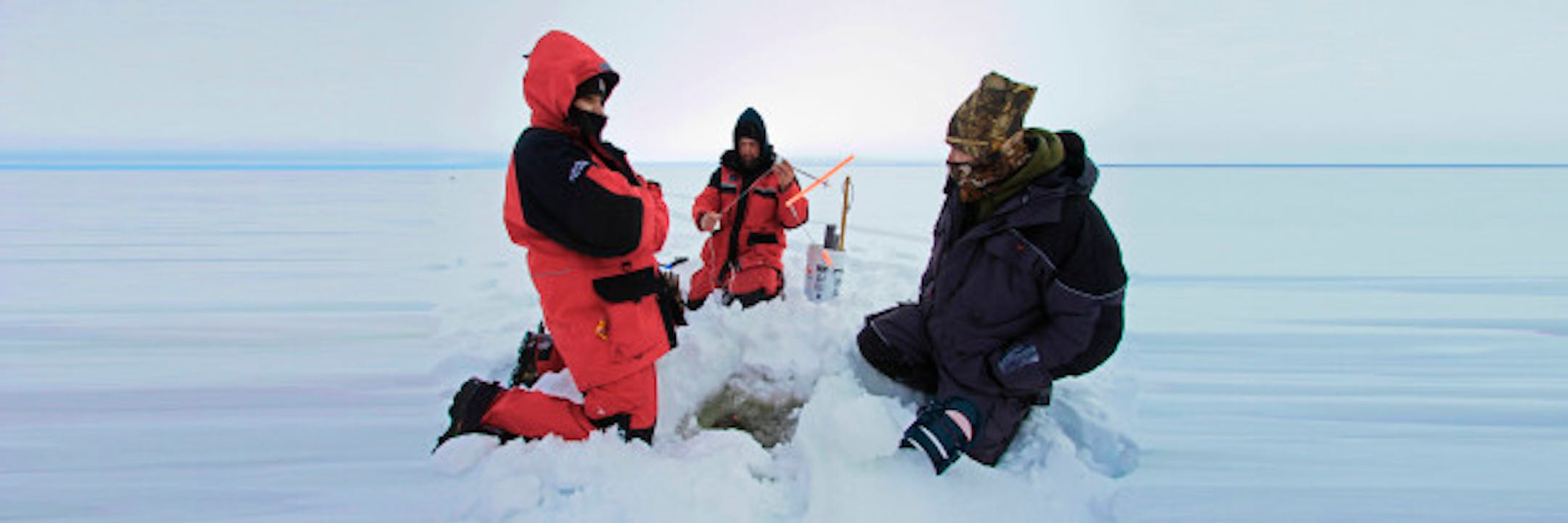
Some anglers go ice fishing—we were out on a trophy hunt.
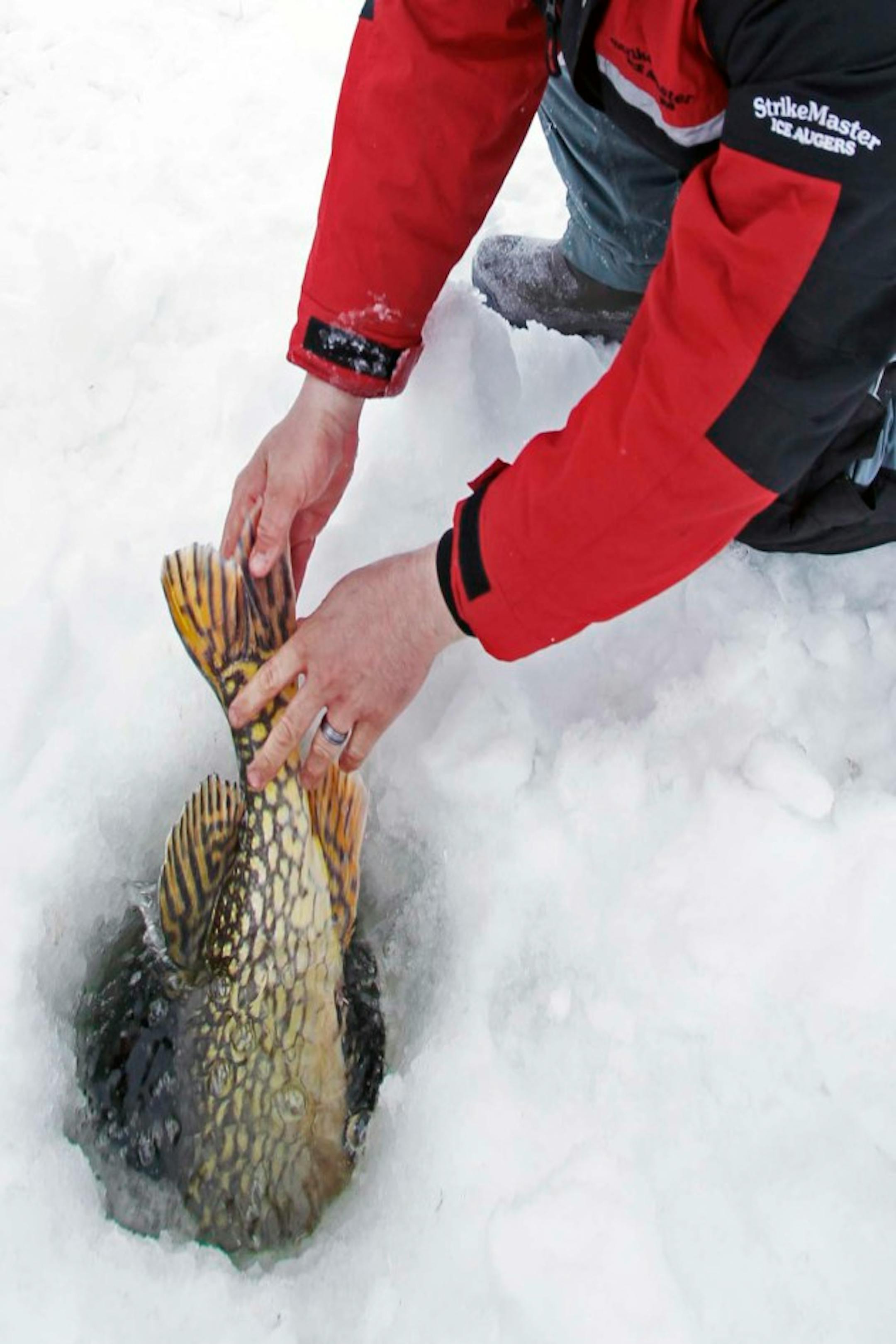
Not your typical trophy hunt, however. There would be no killing, at least none intentionally. Trophies would be released, a little tired, but no worse for wear.
Whatever the quarry, it's true that trophies tend to live in special places that require a little extra work to get to. A specific bay on Lake of the Woods was our destination for this trophy hunt and big pike were our quarry.
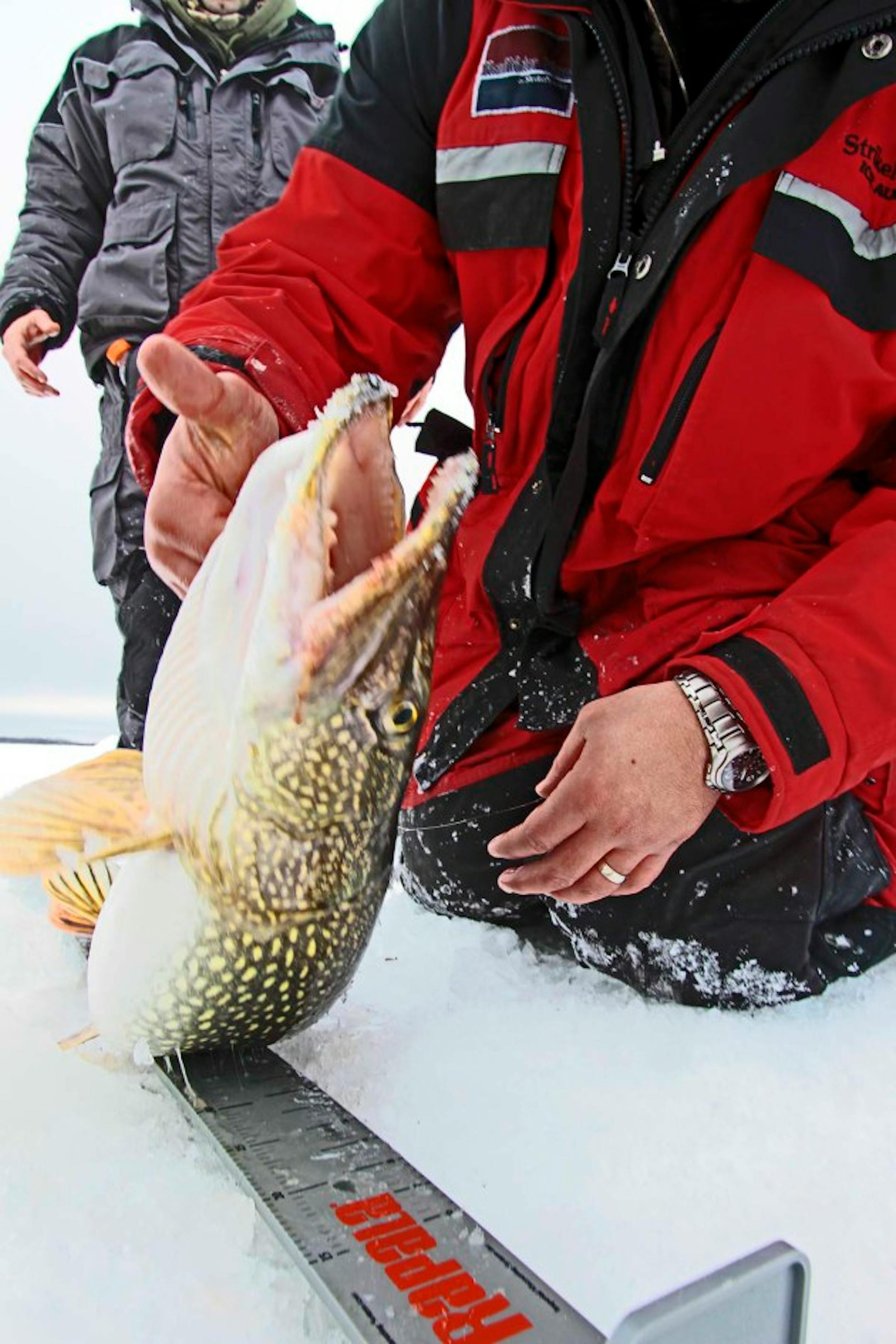
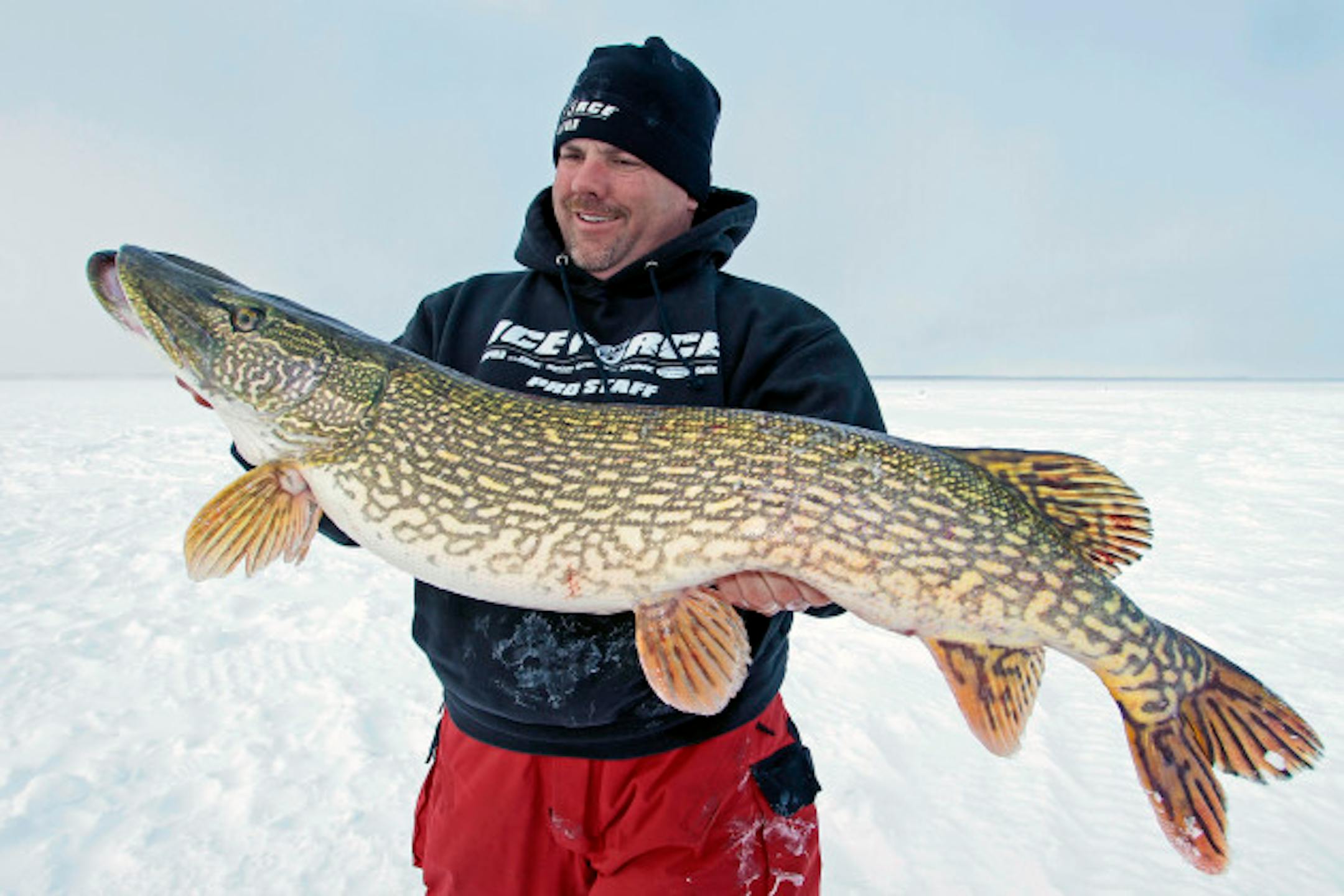
The mythical number for pike anglers is the 40-inch mark which roughly works out to being a 20-pound fish. It takes a special body of water and the right tactics to land a pike of that size.
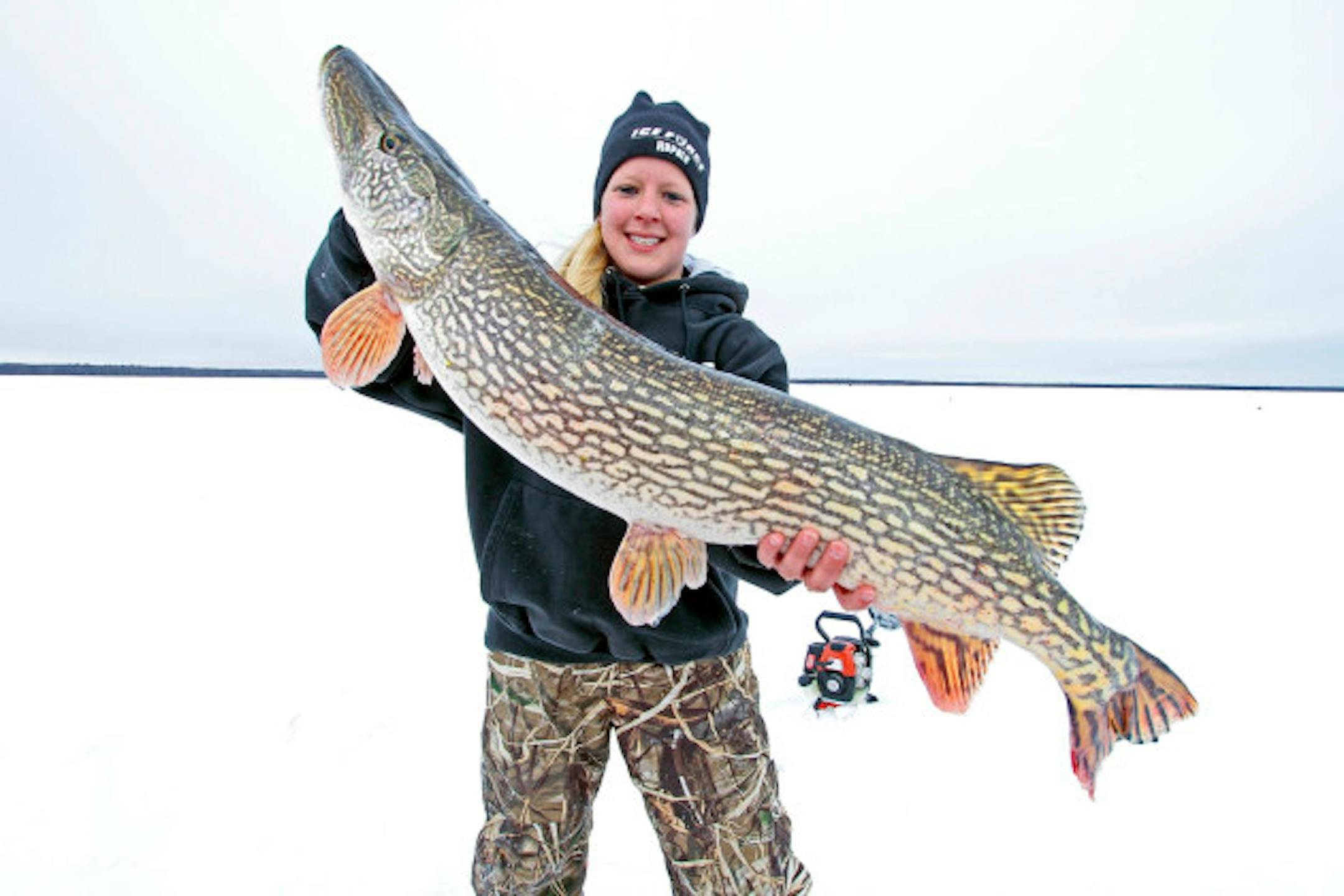
Lake of the Woods is loaded with big fish including probably the highest population of pike over 40-inches in the 48 contiguous states. Although there are plenty of excellent big pike entry points on the American side, our trophy hunting crew decided to cross the border into Canada—Manitoba to be specific.
Only a small portion of massive Lake of the Woods is in Manitoba, most of the lake is in Ontario. The segment in Manitoba is known as Buffalo Bay and we stayed at the beautiful Buffalo Point Resort located right on the lake complete with a marina—a great access point for four-wheelers and snowmobiles.
The group leader for my trip was Bryan "Beef" Sathre of Fathead Guide Service. A national pro-staffer with companies like IceForce, StrikeMaster, MarCum Electronics, Rapala and Otter Outdoors, he has fished Lake of the Woods a ton but usually from the American side.
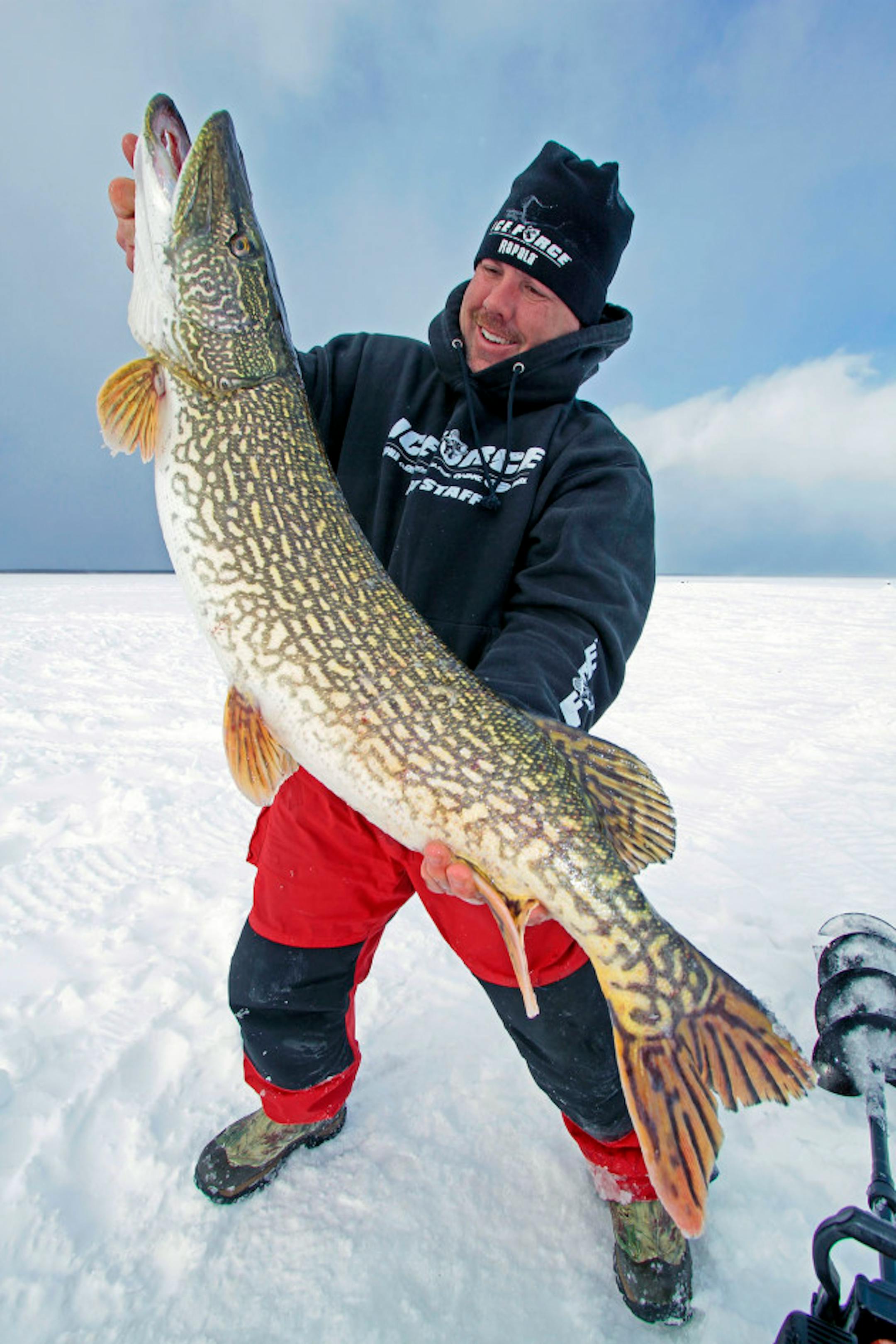
"Late ice is big pike time all over the lake but it seems like Buffalo Bay just has a higher percentage of pike in that 40-inch range," Sathre said. Anglers practicing catch and release is one of the chief reasons for that. "Trophies like this have been around a long time but have a lot more life to live so we let them go to keep making more pike to catch in years to come," Sathre emphasized. Also along with the group was seasoned big pike angler Sabin Rasmus who has iced numerous big pike and is equally adamant about releasing every pike as quickly as possible into the waters. "Celebrate the catch with a few photos and then let it go again—there's nothing cooler than that big tail disappearing back in the hole and the gush of water as it swims off to be caught again someday," Rasmus said.