

For years, many food professionals, including me, were skeptical about slow cookers. These were seen as more of a convenience to the home cook who wanted to throw everything into a vessel at once, hit a button and go to work than a kitchen appliance that could produce excellent results.
Over time, as readers requested slow cooker recipes and I've become better acquainted with this popular appliance, I've come to respect it. As it turns out, if you understand how it works and adjust your recipes accordingly, you can get some fine, dare I say, finger-licking-good results.
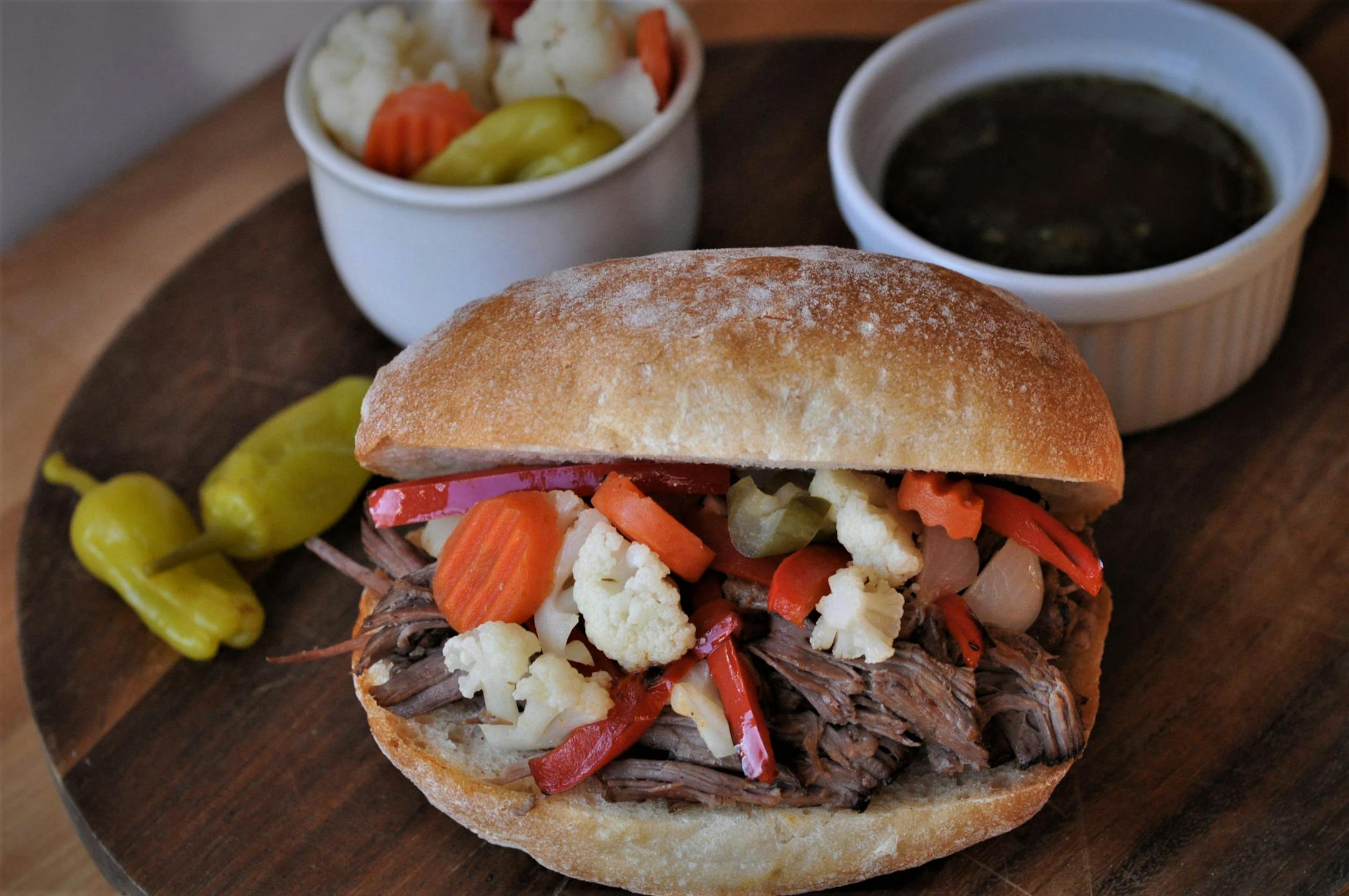
A case in point would be Slow-Cooker Italian Beef Sandwiches. The key to a good Italian beef sandwich (at least the pot roast type) is to have meltingly tender meat and a flavorful cooking liquid, which can be used to soak the sandwich roll or simply as a dip for the sandwich.
In a typical non-slow-cooker recipe, you brown the meat and braise it in a generous amount of liquid, along with other seasonings. The meat cooks on the stove or in the oven until it's tender and the liquid has reduced until its flavor has intensified. That's important, because it will be used to moisten the bread, which doesn't have a lot of flavor on its own.
The whole thing is then topped with sautéed peppers, pepperoncini and the crunchy, briny Italian pickled vegetables called giardiniera.
If you simply took all the ingredients for this recipe, minus the roll and toppings, and tossed them into a slow cooker you'd be disappointed with the results, which would be lifeless meat swimming in a large pool of bland liquid.
Because the slow cooker is a completely enclosed environment that doesn't work well with the lid off, there is no evaporation or reduction. With that in mind, you need to make sure all the ingredients pack a maximum amount of flavor, while keeping the liquids to a minimum. Remember, they're not going anywhere once you add them in and put the lid on.
What I've done for this recipe is lower the amount of beef broth and add the pepperoncini to the roast at the beginning of the cooking process, which gives the meat a nice tanginess and liquid with just enough heat to be interesting.

