

We had just boarded the bus for a daylong tour of what was once called, by National Geographic, "the most beautiful place on Earth" — Ireland's Dingle Peninsula.
Yet the woman in front of us, a middle-aged American traveling alone, was already planning her escape.
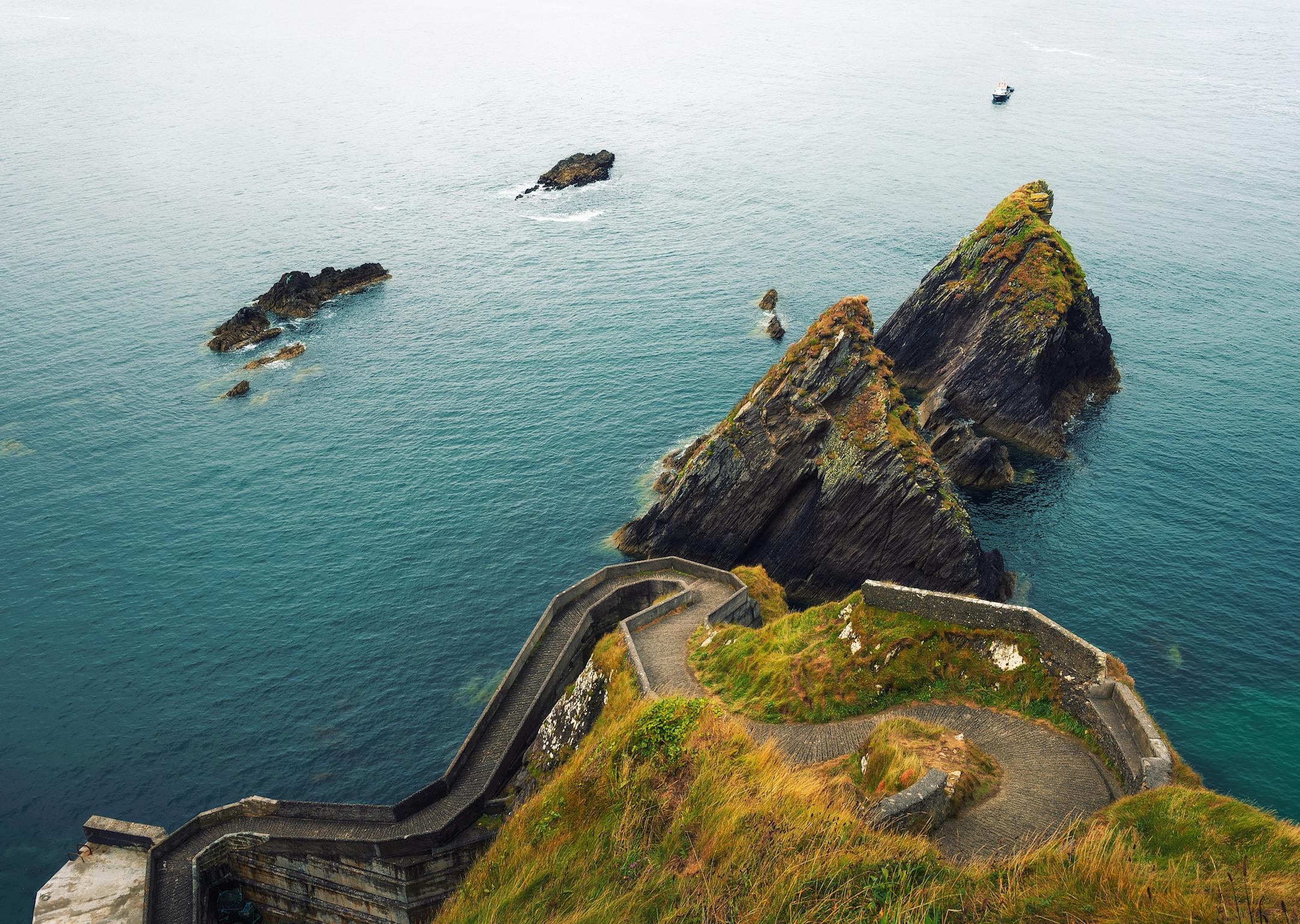
She had booked this trip along the majestic Atlantic coastline, she told me, for one reason: Because she knew it would pass a remote harbor village called Dunquin.
She wasn't sure if our tour bus would stop there. But if not, she confided, she was prepared to jump ship at the closest town and find someone to drive her the rest of the way.
The woman — I'll call her Susan — pulled out her cellphone to show me the reason for her obsession.
It was a photograph of a flock of white sheep winding their way up a narrow path on a jagged cliffside, which pierced the water like a broken arrowhead.
Susan told me that she had seen the photo in a magazine a year earlier, while she was recovering from cancer. Now, she had traveled nearly 5,000 miles to see the site, known as Dunquin Pier, in person.
I had no idea, as I glanced at the picture on her phone, what an iconic image it would turn out to be. Or what a lasting impact it would have on me, as well.

