
In Iraq, another bloody sweep of car bombings

Al-Qaida in Iraq suspected in attacks, which killed 35.

June 17, 2013 at 12:56AM
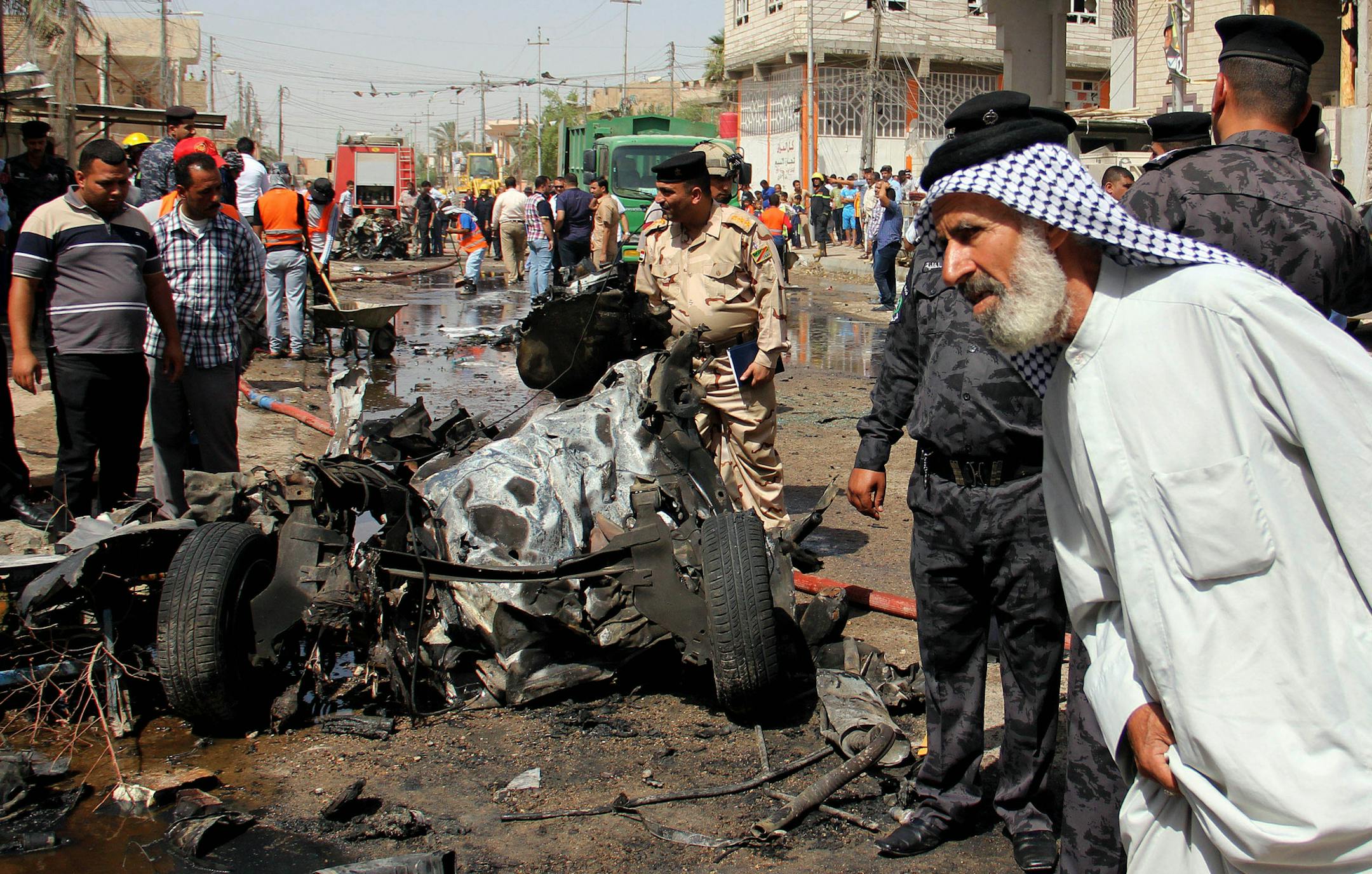
An Iraqi man and Iraqi security force members inspect the site of a car bomb attack in Basra, 340 miles (550 kilometers) southeast of Baghdad, Iraq, Sunday, June 16, 2013. Most of the car bombs hit Shiite-majority areas and were the cause of most of the casualties. The blasts hit half a dozen cities and towns in the south and center of the country. (AP Photo/Nabil al-Jurani)
In Basra, authorities and passersby examined the wreckage after two coordinated explosions on a busy downtown street. (The Minnesota Star Tribune)

BAGHDAD – A blistering string of apparently coordinated bombings across Iraq killed at least 35 and injured dozens Sunday, spreading fear throughout the country in a wave of violence and feeding worry of a return to widespread sectarian killing 10 years after a U.S.-led invasion.

Violence has spiked sharply in Iraq in recent months, with the death toll rising to levels not seen since 2008. Nearly 2,000 have been killed since the start of April, including more than 180 this month.

The surge in bloodshed accompanies rising sectarian tensions within Iraq and growing concerns that its unrest is being fanned by the Syrian civil war raging next door.

One of the deadliest attacks came in the evening when a suicide bomber blew himself up inside a cafe packed with young people in the largely Shiite neighborhood of Al-Ameen in southeastern Baghdad. The attack killed 11 and wounded 25, police said.

Clothing shop owner Saif Hameed, 24, was watching TV at home when he heard the blast nearby. He saw several of the wounded being loaded into ambulances.

"It seems the terrorists are targeting any place they can, no matter what it is," he said. "The main things for them are to kill as many Iraqis as they can and keep the people living in fear."

Sunday's explosions, in a half-dozen cities in the south and center of the country, hit Shiite-majority areas and caused dozens of casualties.

There was no claim of responsibility for any of the attacks, but they bore the hallmark of Al-Qaida in Iraq, which uses car bombs, suicide bombers and coordinated attacks, most aimed at security forces and members of Iraq's Shiite majority.

The U.S. Embassy condemned the attacks, saying it stands with Iraqis "who seek to live in peace and who reject cowardly acts of terrorism such as this." The few remaining U.S. forces act as an arm of the embassy to provide training and to facilitate arms sales.

Sunday's blasts began early in the morning when a bomb inside a parked car killed six people and wounded 15 in an industrial area of Kut, a city 100 miles southeast of Baghdad. That was followed by another car bomb outside the city that targeted construction workers. It killed five and wounded 12, according to police.

In the oil-rich city of Basra in southern Iraq, a car bomb exploded on a busy downtown street, then, as police and rescuers rushed to the scene, a second car exploded. Six people were reported killed.

About an hour later, car bombs ripped through two neighborhoods in the southern city of Nasiriyah, 200 miles southeast of Baghdad, killing two and wounding 19, police said.

In the Shiite holy city of Najaf, 100 miles south of Baghdad, a blast struck a produce market, killing eight and wounding 28.

Blasts were also reported in Hillah, Mahmoudiya and Madain, all south of Baghdad, killing seven. In the northern city of Tuz Khormato, a roadside bomb targeted a passing police patrol, killing two policemen.

In the north, near the restive city of Mosul, police reported four killed and five injured when gunmen attacked police guarding a remote stretch of an oil pipeline. Mosul, 225 miles northwest of Baghdad, has been the scene of some of the deadliest unrest outside the Baghdad area in recent weeks.

Medical officials confirmed the casualty figures. Officials spoke on condition of anonymity.

about the writer

about the writer

SINAN SALAHEDDIN Associated Press

More from No Section

See More
FILE -- A rent deposit slot at an apartment complex in Tucker, Ga., on July 21, 2020. As an eviction crisis has seemed increasingly likely this summer, everyone in the housing market has made the same plea to Washington: Send money — lots of it — that would keep renters in their homes and landlords afloat. (Melissa Golden/The New York Times) ORG XMIT: XNYT58
Melissa Golden/The New York Times

It’s too soon to tell how much the immigration crackdown is to blame.