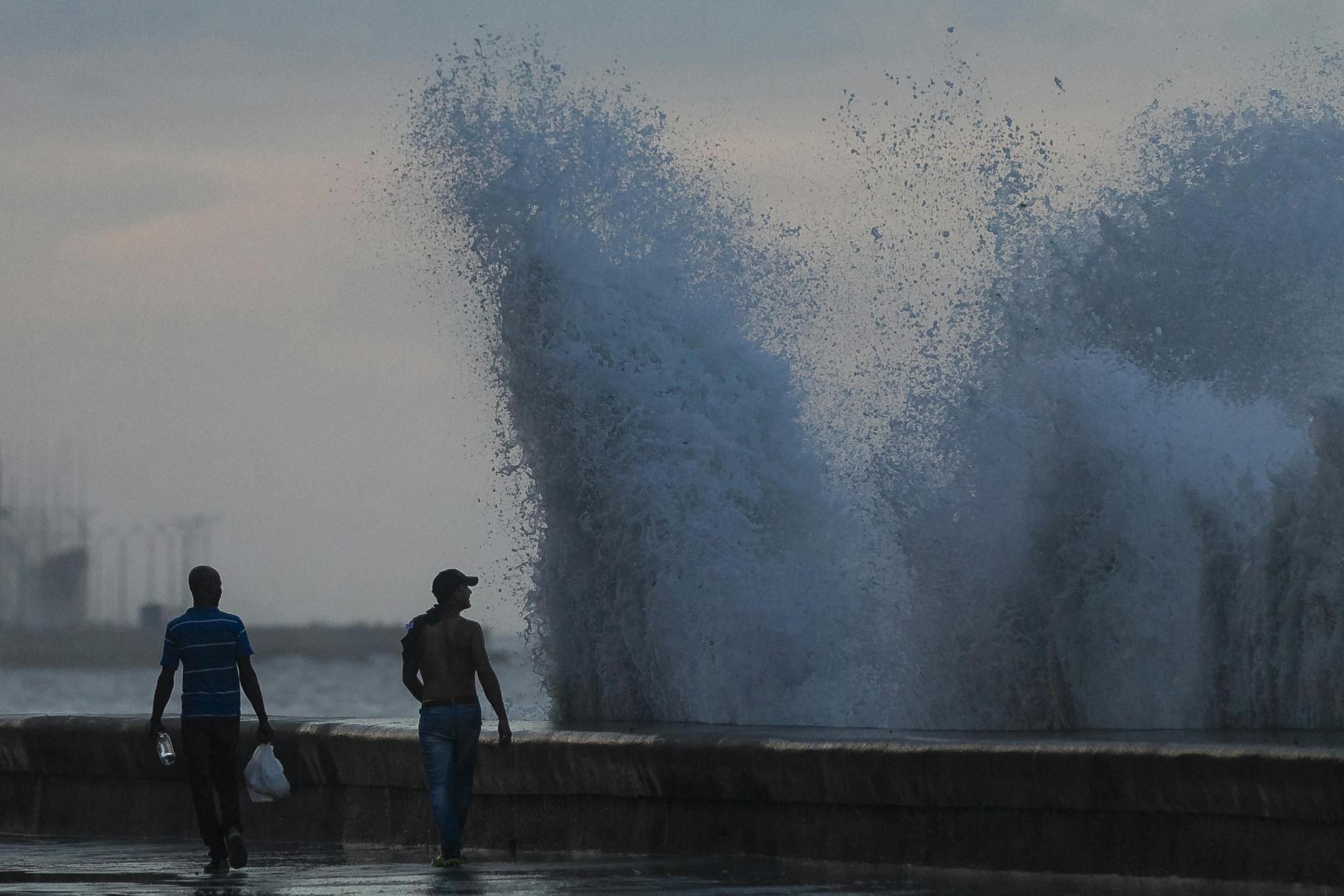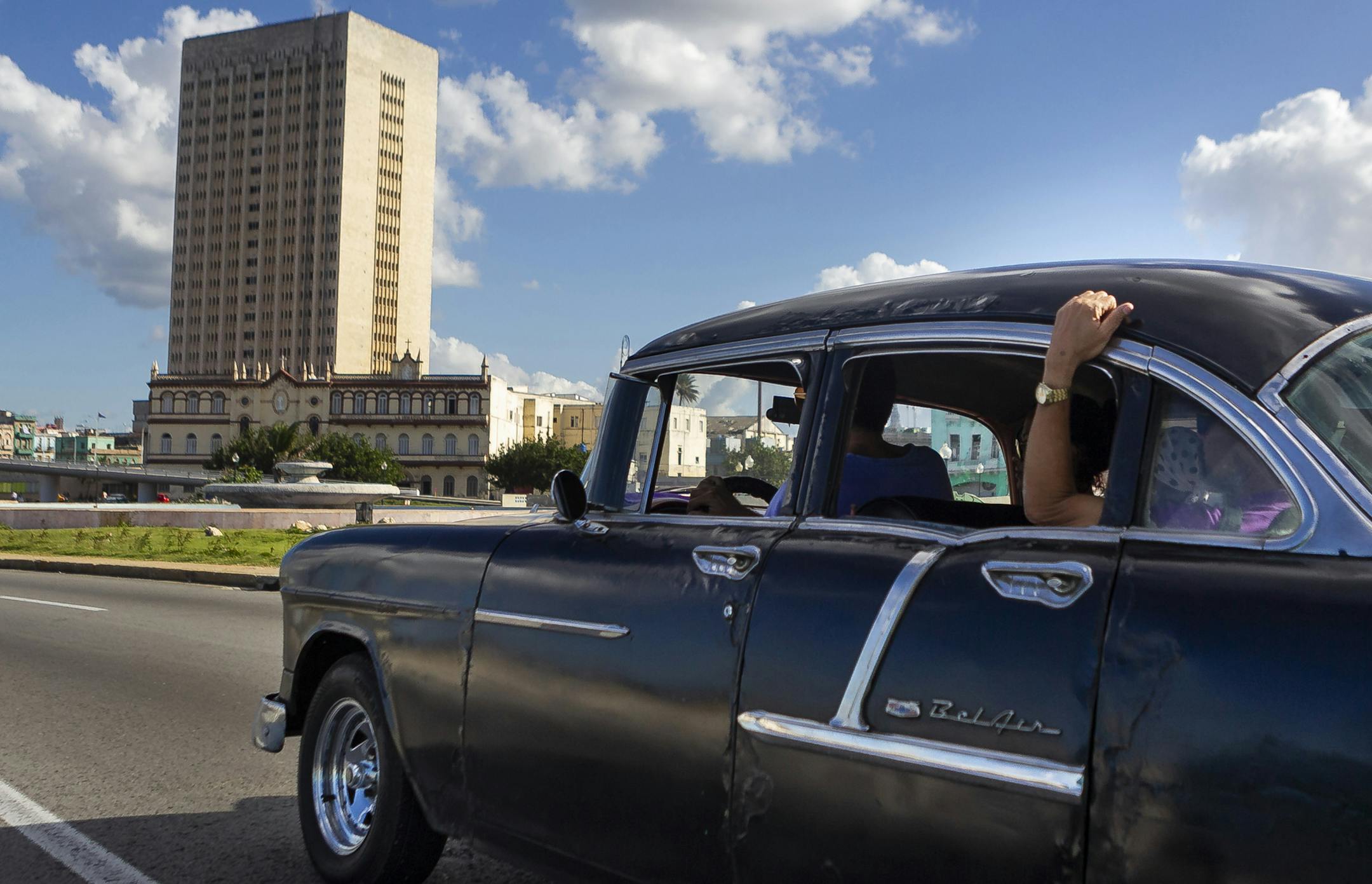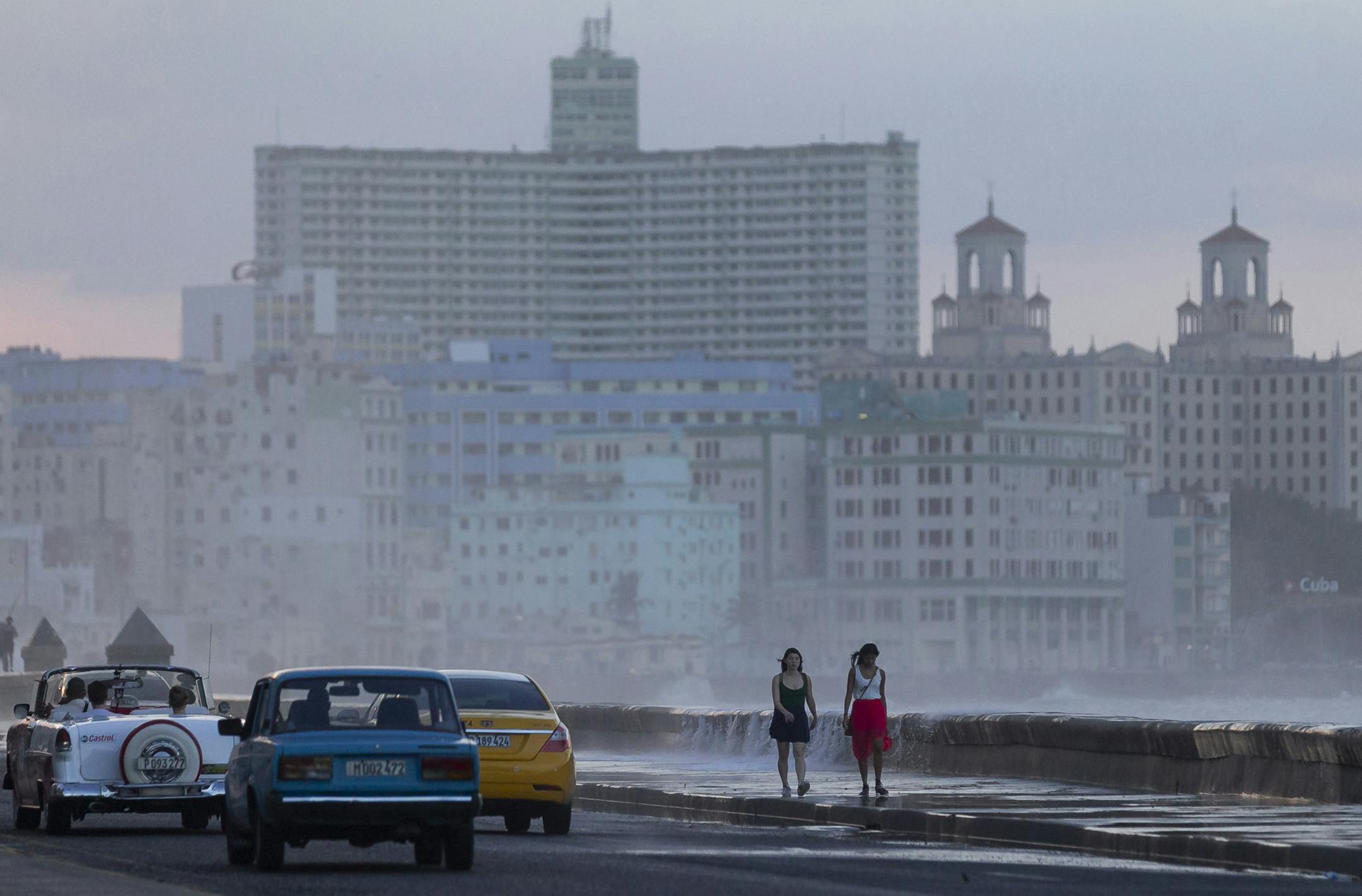
Herman Portocarero, a former diplomat in Cuba, refers to the seaside Malecon — the wall and promenade that run along Havana's coastline facing north toward the United States — as "the last rampart of the Cold War, a frontier between two worlds."
"You sit on it, watching the ocean, and become part of the history of the world," the former E.U. and Belgian diplomat writes in his book "Havana Without Makeup."
Many Cubans refer to the wall more prosaically as the sofa, a giant outdoor gathering place to socialize, share a bottle of rum with friends, fall in love, check e-mails, take a rest from everyday cares, fish with buddies who may or may not be catching anything, or just watch the endless parade of humanity that floats past.
It is here that Cubans staged the "Maleconazo" protest during the austere time known as the special period and launched themselves into the waves to head north toward the United States during the rafter crisis of 1994. Through the years, the Malecon has been the scene of countless marches, including the entry of Fidel Castro and other rebels into the city after a triumphal journey across the island following the 1959 Cuban Revolution.
Construction of the Malecon, which was originally called Avenida del Golfo, first began in 1901, only to be suspended and started again in the 1920s and then again in the 1930s. In Cuba, it often seems as if all roads lead to the Malecon.
It is here along the Malecon, which runs from La Punta at the foot of El Prado west to La Chorrera fortress, that the U.S. Embassy sits. Towering above the wall and the seaside highway is the iconic Hotel Nacional, where everyone from American gangsters, Hollywood stars of yesteryear, presidents from around the world and Winston Churchill have stayed.
More recently there has been a curious intersection between the embassy and the hotel. The Nacional gained recent notoriety because the U.S. government says a room in the hotel was the scene of one of the mysterious "attacks," of unknown origin, that have caused 26 diplomats stationed at the embassy to fall ill.
Although only one eighth-floor room was reportedly involved, in a Level 2 travel advisory issued for Cuba, the State Department recommends that U.S. travelers avoid the hotel. Saying there is no danger, the hotel has returned the room to its inventory, and tour groups from the U.S. still regularly book rooms at the Nacional.