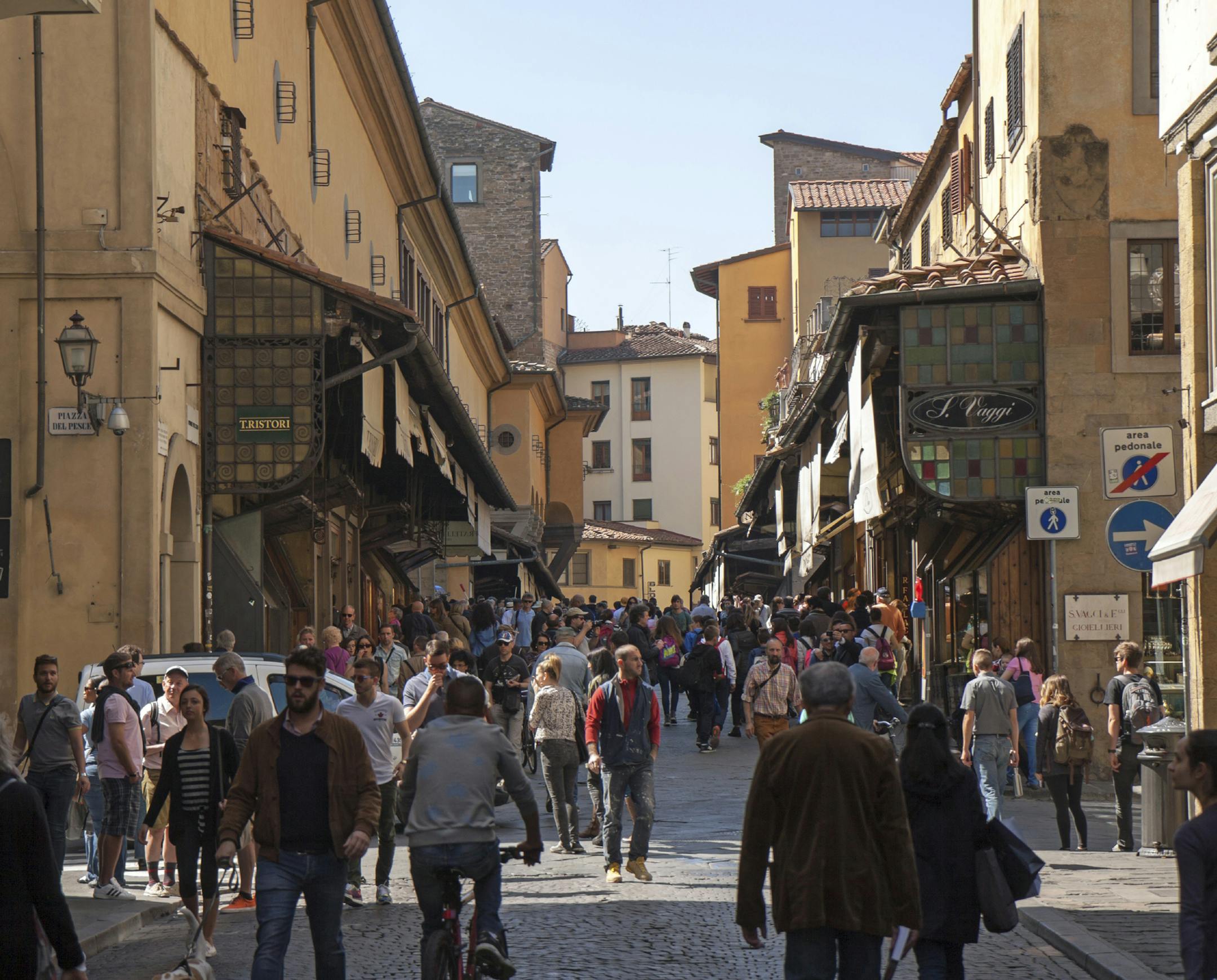
Thanks to the strong dollar, American tourists are thronging to European destinations. If you're headed to Florence, where I've spent extended periods, I have some tips for keeping your sanity amid the madding crowds.
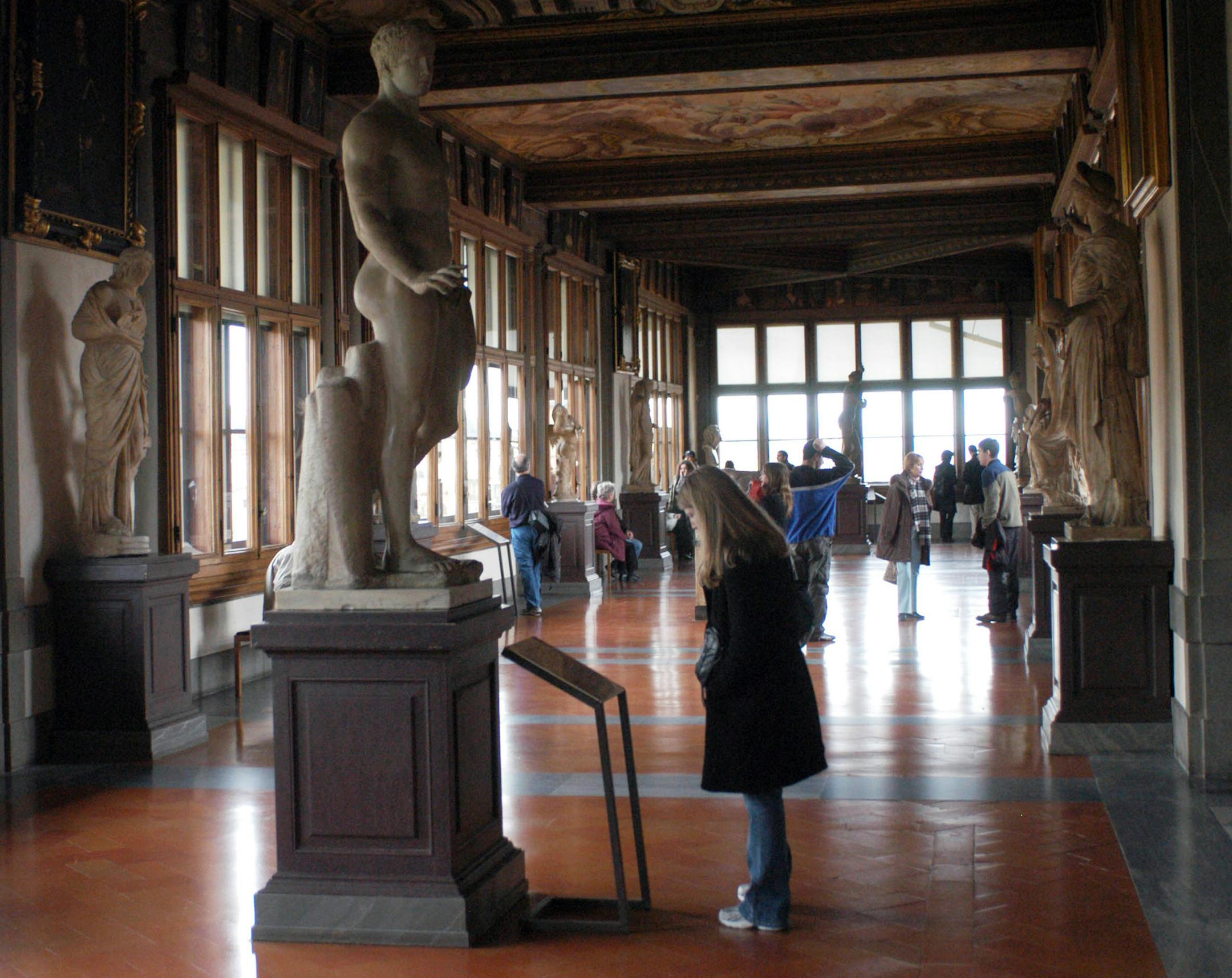
Unlike the Mona Lisa, Florence's most famous masterpieces are big enough to see even in a crowd, and greater than you can possibly imagine from photos. To experience Michelangelo's David and Botticelli's "Primavera" and "Birth of Venus," you'll just have to brave the crowds at the Accademia and the Uffizi. Either buy tickets online in advance (www.b-ticket.com/b-ticket/uffizi/default.aspx) or get both at the Uffizi box office, where the lines are shorter. Try first thing in the morning at the Uffizi, before the large tour groups show up.
The real secret to enjoying Florence is to explore some of its less popular sites — and to savor rather than rush, even if that means ticking fewer items off your list.
After seeing Michelangelo's David, continue up the street a few blocks (away from the Duomo) to the former Dominican convent of San Marco, where frescos by Fra Angelico adorn the cells and hallways. Cool and quiet, San Marco was built for the contemplative life, with a single painting and a small window in each cell. At the top of the stairs leading to the dormitory is one of the world's best arguments for seeing paintings in person: an "Annunciation" where tiny flecks of mica, invisible in reproductions, make the angel's wings sparkle. The fresco's arches and garden echo those of San Marcos, inviting its original Dominican audience into the sacred scene and reminding contemporary visitors that Fra Angelico created it for this specific spot.
Not all San Marco's inhabitants were friars. The convent had space for lay visitors as well, and Cosimo de' Medici, its patron, kept a sort of luxury box for his own spiritual retreats: a two-room cell that includes a large "Adoration of the Magi," Renaissance Florence's favored scene for reconciling wealth and piety. (Unfortunately, it's currently closed for maintenance, according to the museum's Italian-language site.)
While San Marco offers art in its original setting, another tranquil museum, the Bargello, is a converted prison that once rang with the screams of the tortured. Today it is dedicated mostly to sculpture, particularly the works of Donatello, including his behatted David, a very English-looking St. George, and a ridiculously adorable dancing cherub. A room on the first floor includes some early works by Michelangelo and Giambologna's Flying Mercury, who balances on one foot against a puff of (bronze) air from Zephyr's cheeks.
With big rooms and small crowds, the Bargello lets you get close to the sculptures. It's a good place to apply one of economist Tyler Cowen's tips for enjoying an art museum: Think about what you'd take home. I'd probably go for the cherub, but it faces tough competition from two nearby reliefs — Ghiberti's groundbreaking "Sacrifice of Isaac" and Giovanni di Bertoldo's battle scene.
Across Via del Proconsolo from the Bargello is one of the many Florentine churches where plain facades disguise hidden riches: La Badia, home of Filippino Lippi's painting of the Madonna appearing to St. Bernard. At just the right time in the early afternoon, it glows with light from a window high above. La Badia is an active monastery, housing both monks and nuns, and visitors say the services are hauntingly beautiful. A Catholic friend who happened on vespers there describes the experience as "spiritually exciting and refreshing. A wonderful surprise. It felt like a gift."