

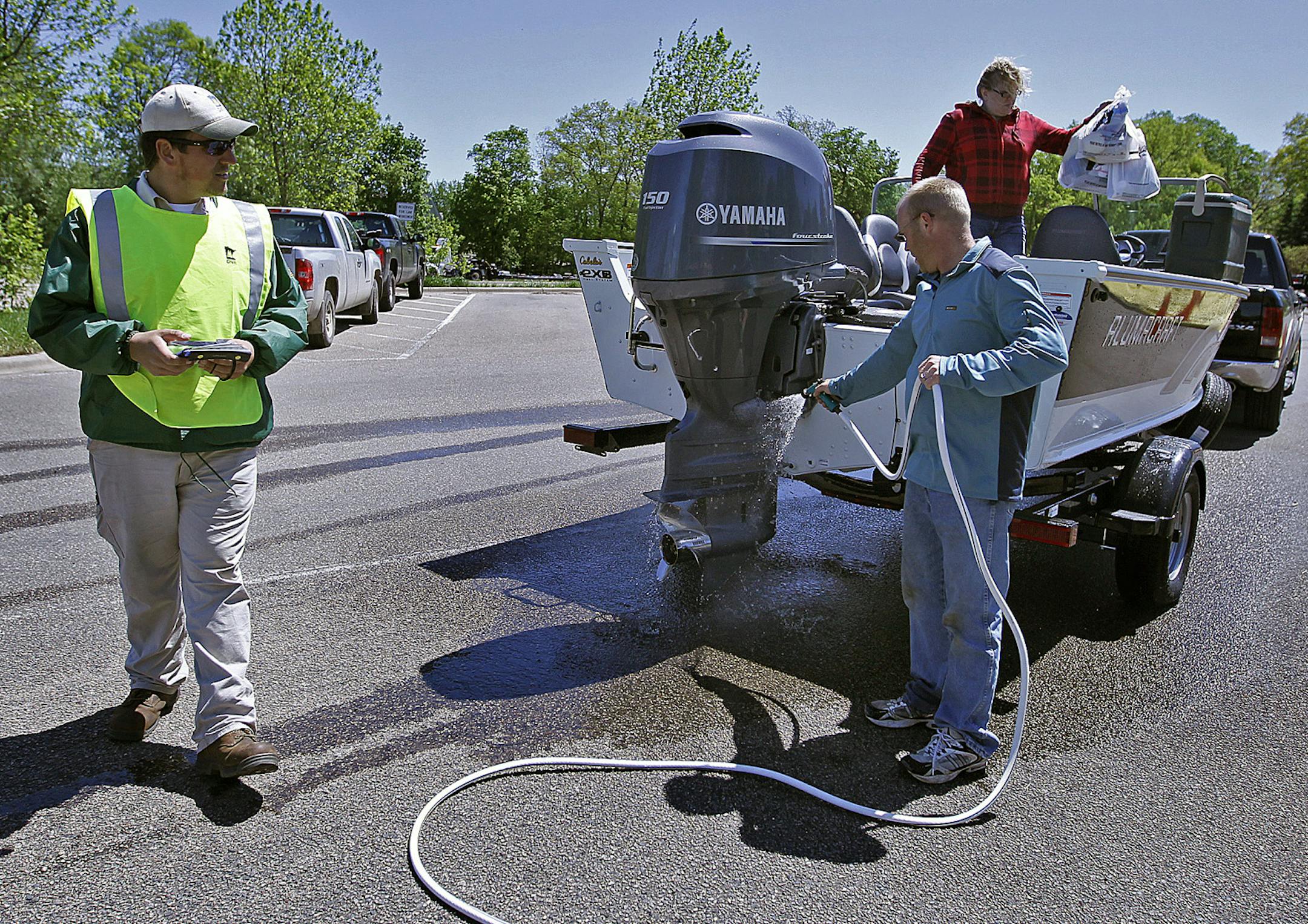
Facing little traffic and lots of fish, the only thing standing between angler Paul Martinson and Lake Minnetonka last week were two watercraft inspectors, asking him questions and scanning his boat before he fished for crappies.
But like many of Minnesota's 2.3 million boaters, Martinson has reluctantly accepted the new routine.
"It's a pain," said the Dayton resident, adding that he changed his habits after he was fined $130 for not following rules on when to put in the boat's drain plug. But "it is what it is."
In the Land of 10,000 Lakes, boaters are going to run into more watercraft inspectors this Memorial Day weekend — the unofficial kickoff to the boating season — as everyone from local groups to the Minnesota Department of Natural Resources (DNR) boosts the number of inspectors and money spent to try to slow the spread of zebra mussels and other aquatic invasive species.
From Lake Minnetonka, one of the state's busiest lakes, to Minneapolis' Chain of Lakes, researchers are donning scuba gear and boarding kayaks to track down the earliest signs of invasive species. Other lake associations are focusing on educating the public, even getting restaurants to print place mats with details on invasive species.
While some critics say the state isn't doing enough, the new measures follow last year's unprecedented new prevention efforts that some boaters saw as an affront to unfettered access to public waterways.
"The demand for greater protection of water is very high," said Joe Shneider, president of the homeowners association at Christmas Lake, which is next to Lake Minnetonka. "We're just turning the corner on this ramp up on spending on this."
'What are lakes worth?'
Public concern and awareness have dramatically increased the last couple of years as invasive species such as zebra mussels have infested more Minnesota lakes. As a result, local funding to fight aquatic invasive species has increased by 40 percent over the past three years, with watershed districts, park districts, cities, counties and other local governments spending more than $5 million on it.
![Dave Fine worked on cleaning his boat as he got in ready for the weekend at Browns Bay in Wayzata, Min., Friday, May 24, 2013. ] (KYNDELL HARKNESS/STAR TRIBUNE) kyndell.harkness@startribune.com](https://arc.stimg.co/startribunemedia/C2AWFG2UN43XNOK4PUM5UNWT2U.jpg?&w=1080)


