

Pay close attention. Because if you want to learn how to properly out-slick, crisis-manage and manipulate burgeoning social justice movements, this is how you do it.
That was the big lesson drawn from the draining weeks of knife-slicing tension. Ferguson just wrote a textbook on how governments can time, script and engineer racially charged grand jury announcements.
As significant as the no-indict decision itself was, the grand takeaway was how the Missouri state political machine brilliantly managed the highs and lows of verdict expectations. Not only was the process long, but it was one suspiciously bumbling leak after the other. Not only did it string an anxious public along with mythical dates from one week to the next, but media propaganda teased news tickers into a corrupted jurisprudence of lost faith.
In this masterful, tortuous stretch of peel-the-Band-Aid off slowly, St. Louis County prosecutor Robert McCulloch engineered one of the most effective snow jobs in recent memory. And then launched a smug blame-social-media diatribe that masqueraded as a news conference. He was preachy, finger-wagging, putting folks in their place to pimp the notion that "see, the system does work - now shut up and go home."
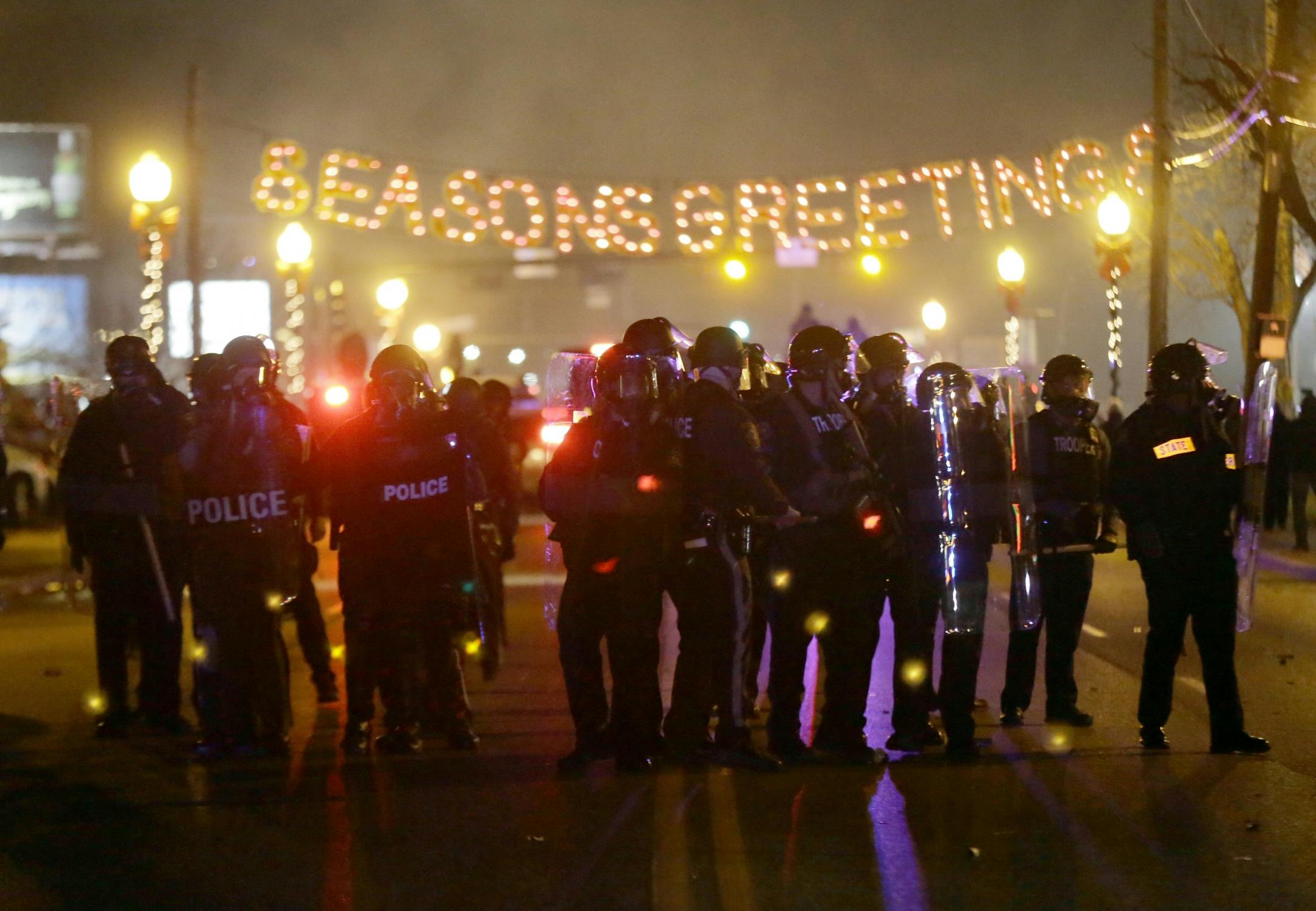
As a result, this became a textbook on how you cut off frustrated people of color at the pass. It's a telling commentary on the state of things that we cynically called the verdict before it officially dropped. We knew it was going to happen. But equally fascinating was how the process jerked the public's chain while shrouded in the fake semblance of unbiased deliberation. The timing betrayed any sense of institutional innocence, from the duration of deliberation, to the leaks to the elaborate state-of-emergency planning. Missouri police and military assets deployed with a no-shots show of force, eager to contain hands-up disruptions before they boiled over.
Looking at it more closely, peering past the rage of a non-indictment, it all comes into focus. There's little official evidence, but there's a molding bread crumb pile of clues. Any sniffing onlooker could easily believe the verdict was known for some time. That this jury (in the age of TMZ breaches and social media mavens) kept it this tightly wrapped is testament to old-school secrecy.
There was nothing organic or sudden despite the preachy platitudes about jurors "extremely engaged in the process." It was Missouri Gov. Jay Nixon's nervous dispatch of National Guard assets that seemed to give it away. The late Monday-night primetime, pre-Thanksgiving timing of the announcement seemed professionally mapped for a workday public settling in for football and wings. Many backpacking millennials who would've spent a fall weekend busing to Ferguson are now gearing up for Thanksgiving turkey and table debates with bigoted uncles over sweet potato pie.
Nor can protesters or any "bad actor" agitators itching for a fight stand outside long enough when much of the country, like Ferguson, is bundling up for a chilly polar vortex. Here we find early winter freeze is law enforcement's best friend with officials watching the thermometer as closely as they were watching protesters. As the grand jury kept deliberating, the weeks turned colder and the embattled St. Louis suburb was consistently cold enough to keep the most committed from risking hypothermia. Just like Occupy Wall Street, cold air gives police a long break from those sweaty summer clashes of August.


