

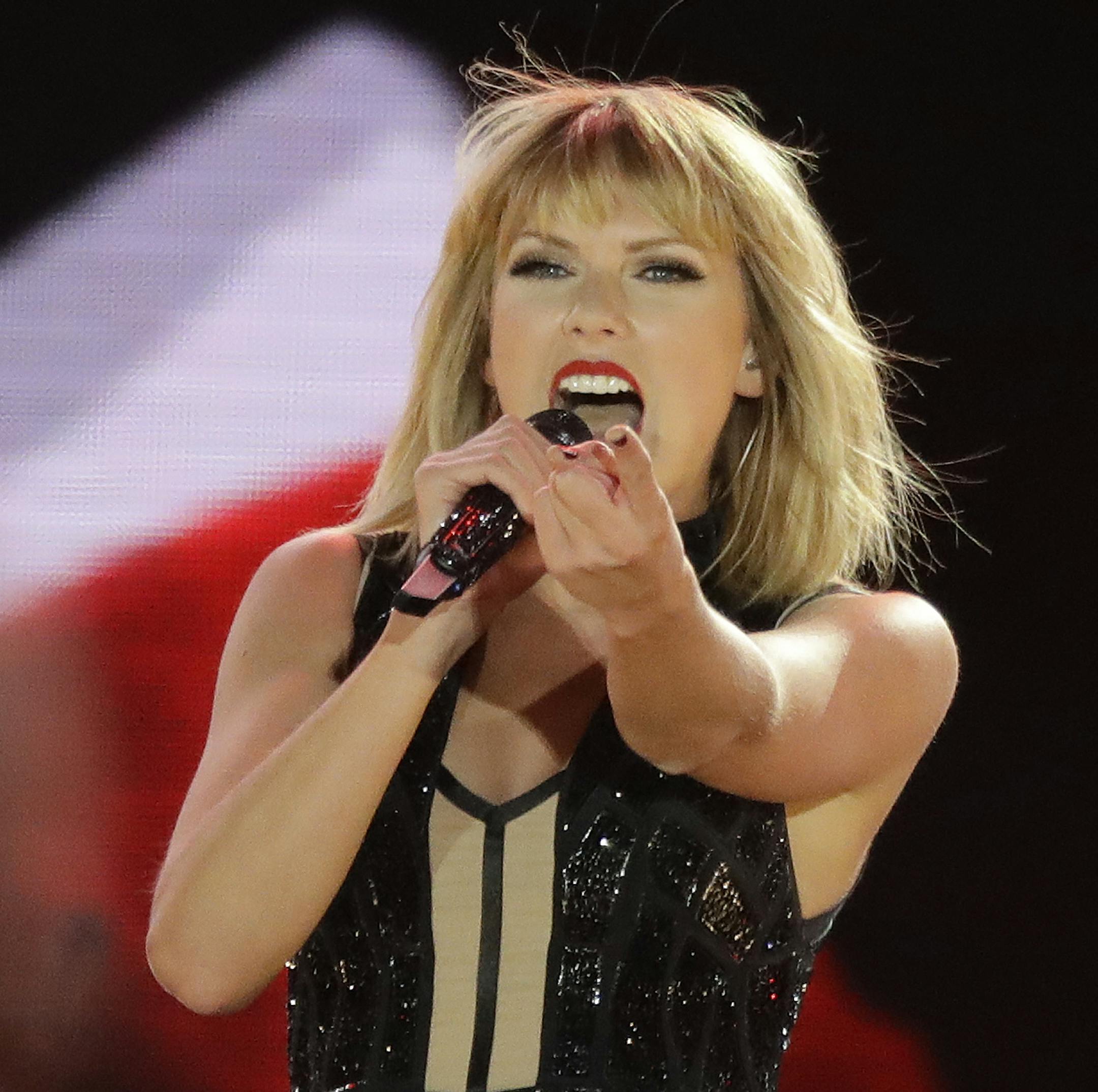
In Washington, an army of UPS trucks is swarming the city plastered with signs promising a TaylorSwiftDelivery: the pop singer's sixth album, "Reputation," fresh out Nov. 10. Four already released tracks tease a darker tone where the "old Taylor" is "dead" and a reinvention of one of the most successful artists in the world. It's not enough to appease feminist critics, however.
It's been quite a year for Swift, who has matured in public in a way few female stars have the courage to, staging a dispute between her different public "selves" in a video for her song "Look What You Made Me Do" earlier this year. Meanwhile, she pursued a lawsuit against a former radio host whom she accused of groping her in 2013, a move heralded by the Guardian as a "universal feminist statement" long before MeToo. Swift has openly embraced feminism since 2014 and tweeted in support of the Women's March in January, so you might think, given our current focus on women's rights and dignity, that "Reputation" would land with a girl-power splash.
But you'd be wrong. Very wrong. In fact, Swift is already under fire from feminist critics. And their attacks reveal something very ugly about modern feminism: While today's feminists claim to champion the rights of all women, they speak only for women who agree with them — vocally, frequently and on demand.
Anticipating "Reputation," Bustle website editor Rachel Simon insisted that the 27-year-old Swift "can't just say that the media has painted her as a fake feminist or a manipulative liar; she needs to say 'I deserved it.' " Even after her sexual-assault lawsuit, feminists pounced on Swift. Salon writer Rachel Leah retorted that Swift is "known to wave the feminist banner only when it directly benefits her." Bustle agreed, decrying Swift's feminism as a "deeply flawed," "self-serving" "white feminism."
As proof of her feminist failures, editor Kadeen Griffiths listed Swift's many faults: not criticizing President Trump, not "publicly support[ing] organizations" like Planned Parenthood and not attending the Women's March (her tweet apparently wasn't enough). Outlet after outlet has pressured Swift to condemn the president in the name of feminism. In January, the Daily Beast went so far as to accuse her of "Spineless Feminism." Swift may be the highest-paid artist in the world, but her decision to speak out on issues as she pleases rather than as others call on her to means she gets little credit for the space she's made for female artists.
In other words, being a feminist requires speaking out on certain things in a certain way.
Yet the feminist movement pretends to include everyone who advocates for women. Gloria Steinem, for instance, describes a feminist as "anyone who recognizes the equality and full humanity of women and men." Hillary Clinton states that a feminist is "someone who believes in equal rights." Facebook's Sheryl Sandberg calls feminism a "belief" that "men and women should have equal opportunity." Actress Emma Watson, a U.N. Women goodwill ambassador, echoes: "If you stand for equality, then you're a feminist." According to Swift herself, feminism is "basically another word for equality."
And yet, according to Guardian columnist Jessica Valenti, feminism means nothing if everyone is a feminist. "Without some boundaries for claiming the word feminist, it becomes meaningless," she declared in 2014. The first boundary she had in mind? Abortion politics. "So once and for all: Can you be an anti-choice feminist? No."


