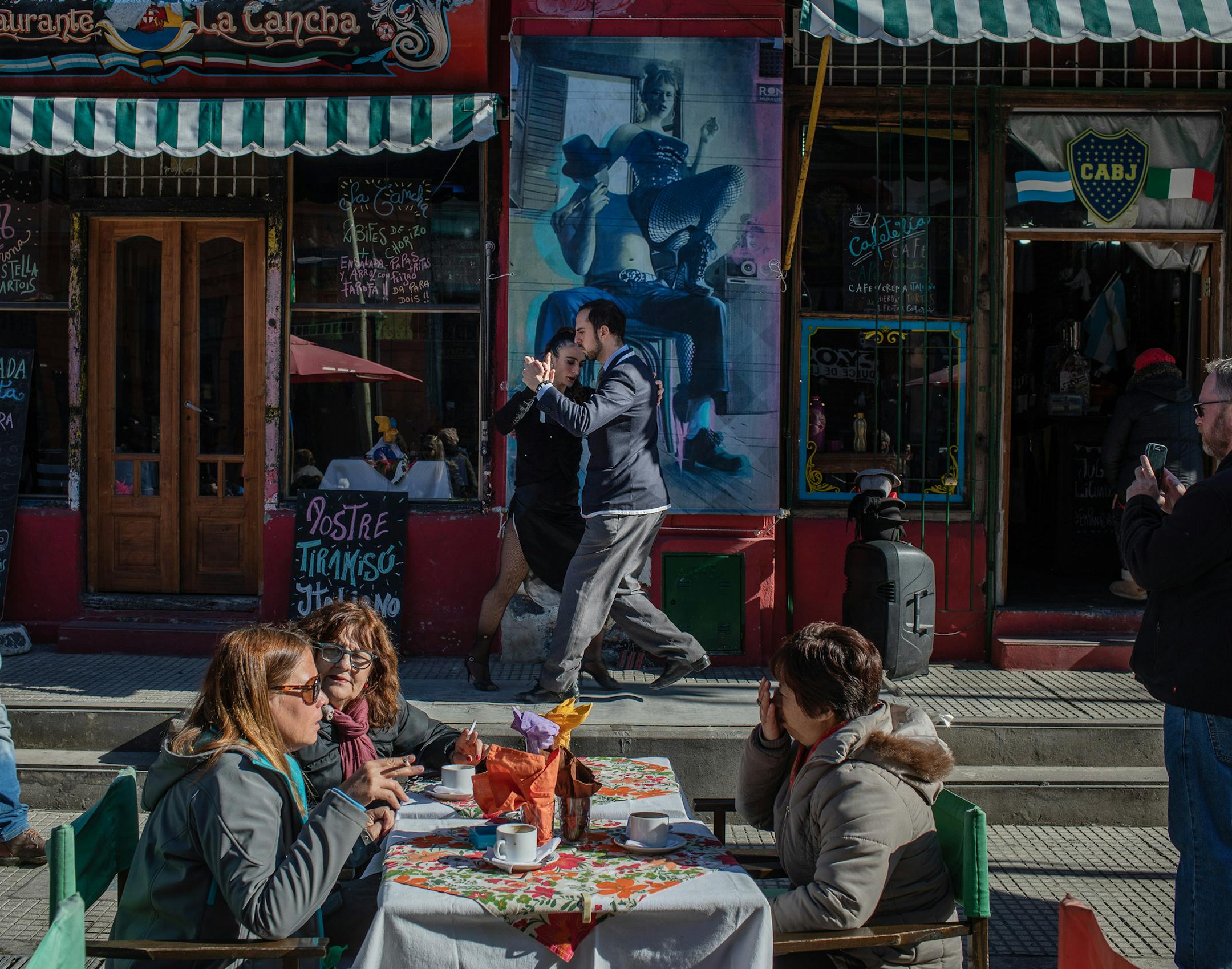
Our taxi rolled to a stop at a grimy intersection in La Boca, which was good. Though the driver seemed to hear my Spanish as hilariously unintelligible, this was the hoped-for destination.
How to make a small start on figuring out what life's like in Buenos Aires? Ditch the tour bus, cruise ship, drive-by snapshots of disconnected details when possible. Maybe pick up a promising thread to follow into some larger tapestry.
That could begin in the Recoleta Cemetery, where Evita and much of Argentina's political innocence are interred. Or among the dismembered beef cattle at the Mercado de San Telmo, where Argentina's role in the world's cow economy can be engaged. Or at the Water and Sanitation History Museum, where a conversation about the state of public health in Buenos Aires could begin.
But the most promising thread, I decided, was the twisting Rio de la Plata. The river forms the border between Argentina and Uruguay, and it's the birthplace of tango, which both nations claim. Here at the mouth of the river, thousands of immigrant Italians, Poles, French, Germans and Spaniards arrived in the late 1800s, joining freed slaves and earlier arrivals to look for work on the docks of one of the world's busiest ports.
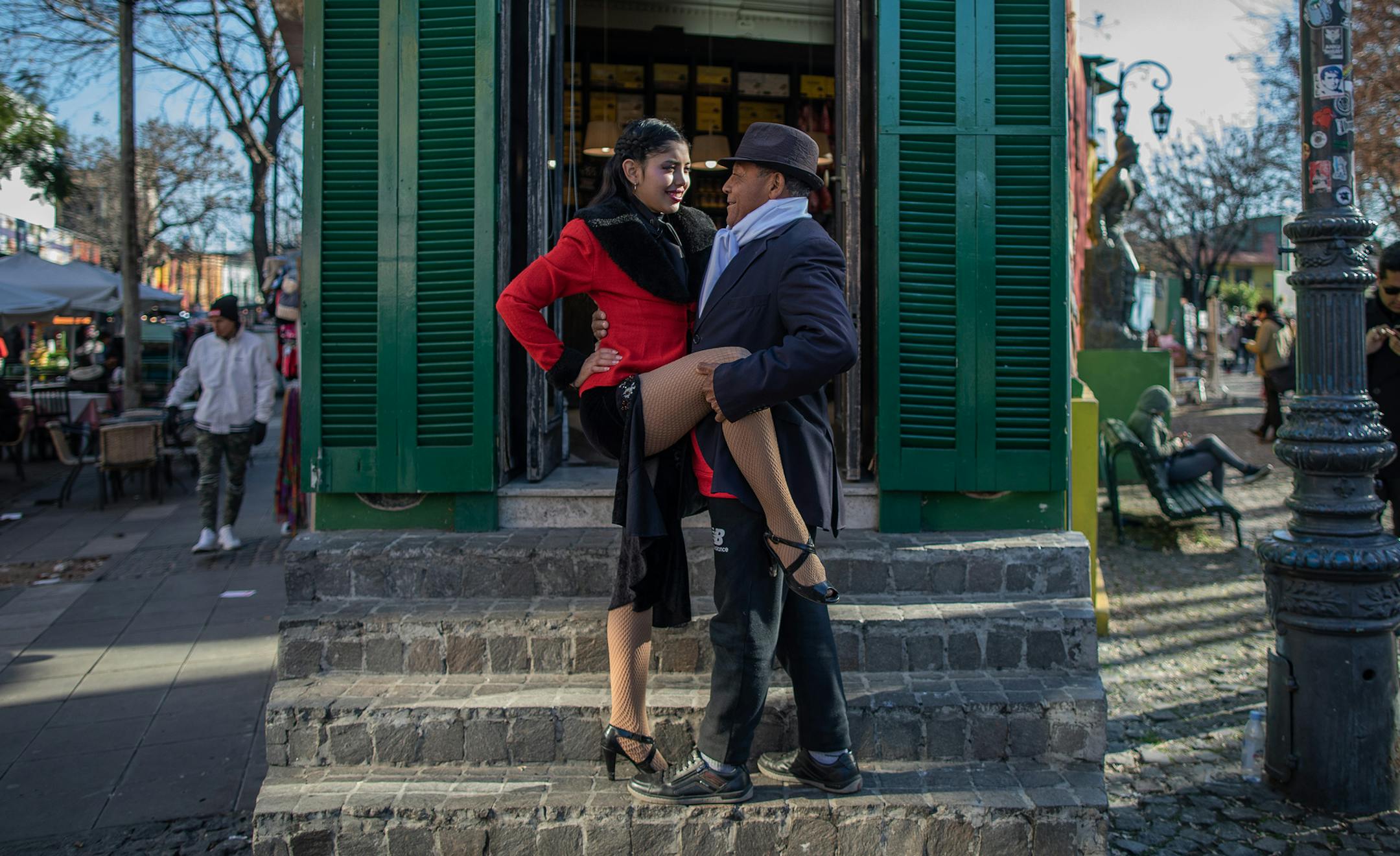
Most were single men, and the boarding houses where they lived along the narrow streets of the neighborhood were called the "convencito," a joking reference to the celibate life they led — except in the bars and bordellos. That's where a scandalous new fusion merged moves from dances like mazurkas, paso dobles and the African-derived candomble. Men often partnered to practice the intricate moves.
All of this was explained as we wandered through La Boca with our guide, the willowy Basak Evran, herself an émigré from Turkey who is also, we learned, a tango pro. Buenos Aires is still a magnet, she noted: "No one is an outsider here. You meet any kind of people with any kind of history."
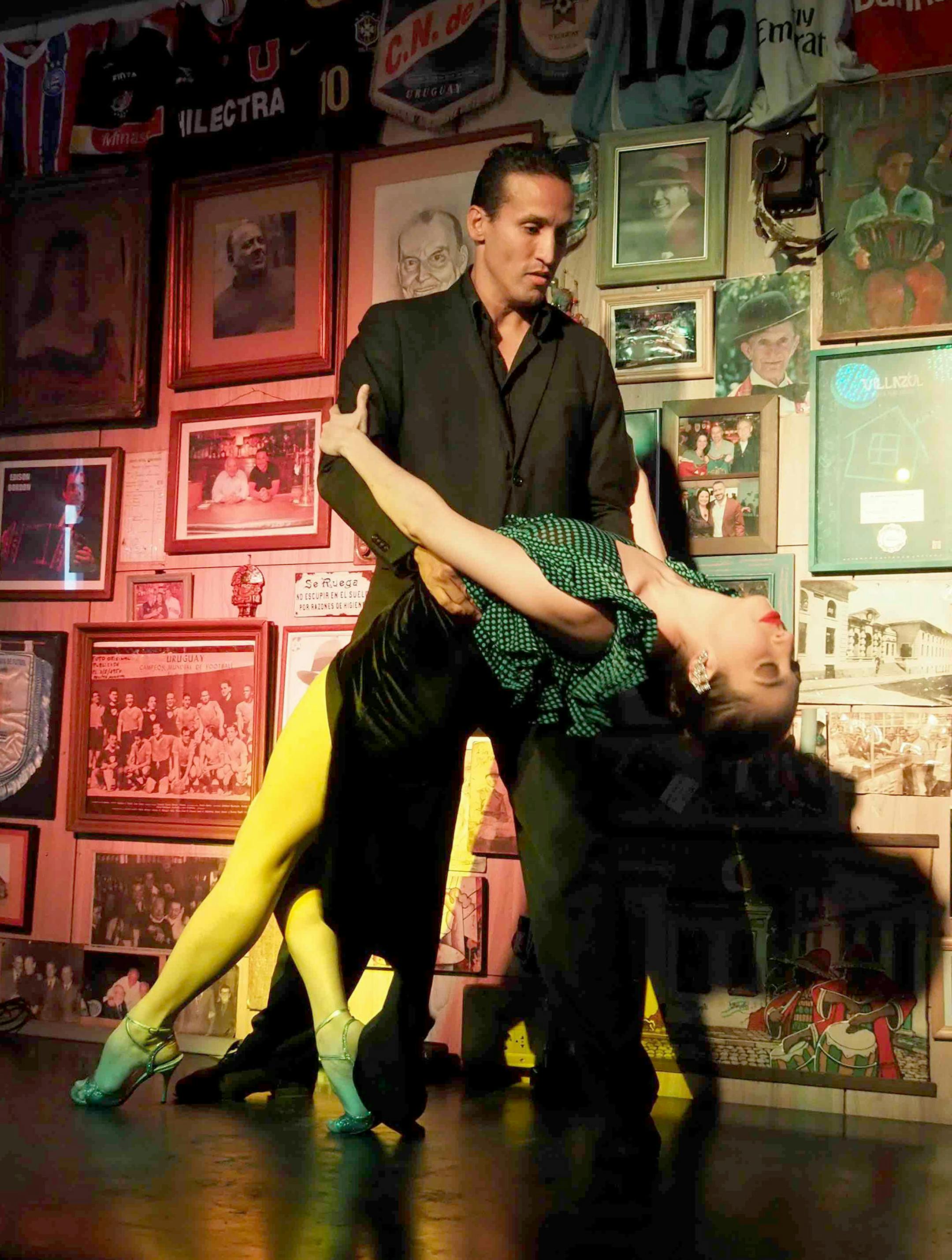
The historic neighborhood she led us through was full of fragrant smoke from roasting asado steaks and the music of a bandoneon, a plaintive concertina. There was tango onstage at an open-air restaurant and lots of tango paintings, photos and trinkets.
What's the fascination? For me, tango was just a melodramatic antique when it came up in conversation during a prior visit here — something out of old movies. Austere but sensual, somehow off-kilter in its intensity. Then an acquaintance — a native and an outspoken feminist — told me she'd taken up tango as "therapy." That seemed even odder as, later that evening, I watched the intricate pivots of a tango show, one at which the female partner ended nude.