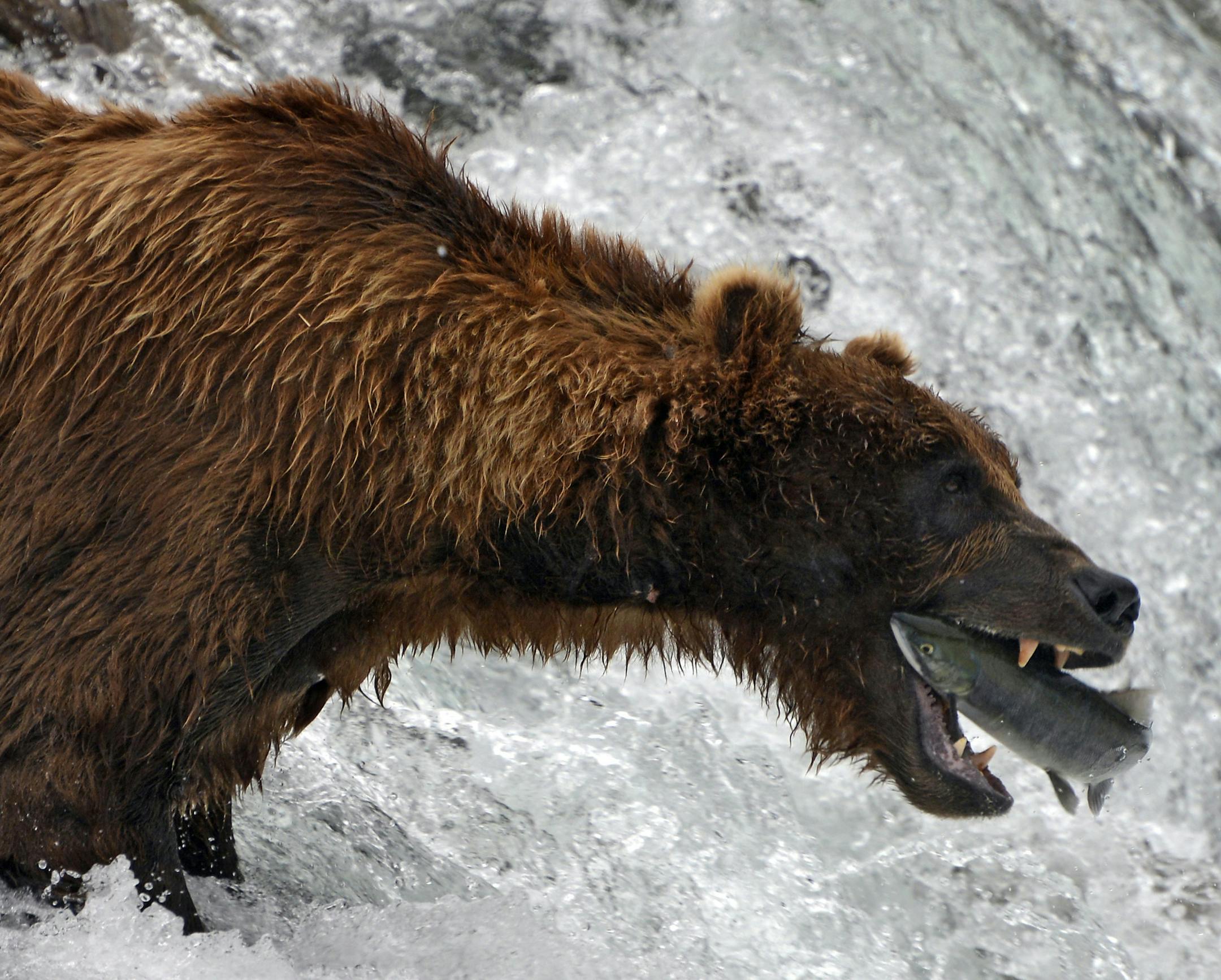
In Alaska's Katmai National Park and Preserve, I hiked through woods dense with spruce, willow and balsam poplar trees. Wildflowers dotted the ground amid stretches of spongy tundra, meadows and marshes. The air, cool and moist, seemed like the cleanest on the planet. Breathe deeply, I thought. Take it in. But be vigilant.
About a mile from my lodge, a gate led to an elevated walkway. In another 50 yards, a second gate — more like a door, 6 to 7 feet tall and reinforced with metal — bore a sign: "Keep door closed."
I slipped through, carefully closing the door behind me, and heard my feet echoing on the wooden planks as my pace quickened in anticipation. Soon I heard the steady roar of Brooks Falls. Then I spotted them: lumbering brown shapes of grizzly bears in the Brooks River above and below the falls. They were huge — and they were the reason I had come.
I had wanted to visit Katmai for years, ever since I had read that visitors can see and photograph grizzly bears feasting on salmon at the falls.
The park is home to an estimated 2,200 grizzlies. One of the largest bears in the world, they can measure 7 to 10 feet long and weigh 1,000 pounds or more. Brooks Camp, where I stayed inside the park, hosts one of the world's highest densities of grizzlies.
I went in July, when salmon return to their home stream to spawn and as many as 60 bears congregate along a half-mile stretch of the Brooks River to fish.
From late June through July, hundreds of thousands of salmon swim from the northern Pacific Ocean up the Brooks River, fighting their way upriver. Brooks Falls acts like a hurdle in their path, and the fish fly out of the water, making desperate leaps to reach the top of the falls.
That's where many grizzlies hang out to feed on the salmon, fattening up for a five- to seven-month hibernation.