Minnesota author Carson Faust’s debut gets an assist from his grandma

Local fiction: “If the Dead Belong Here” draws on stories and secrets from the two-spirit writer’s family.

The Minnesota Star Tribune
October 1, 2025 at 11:00AM
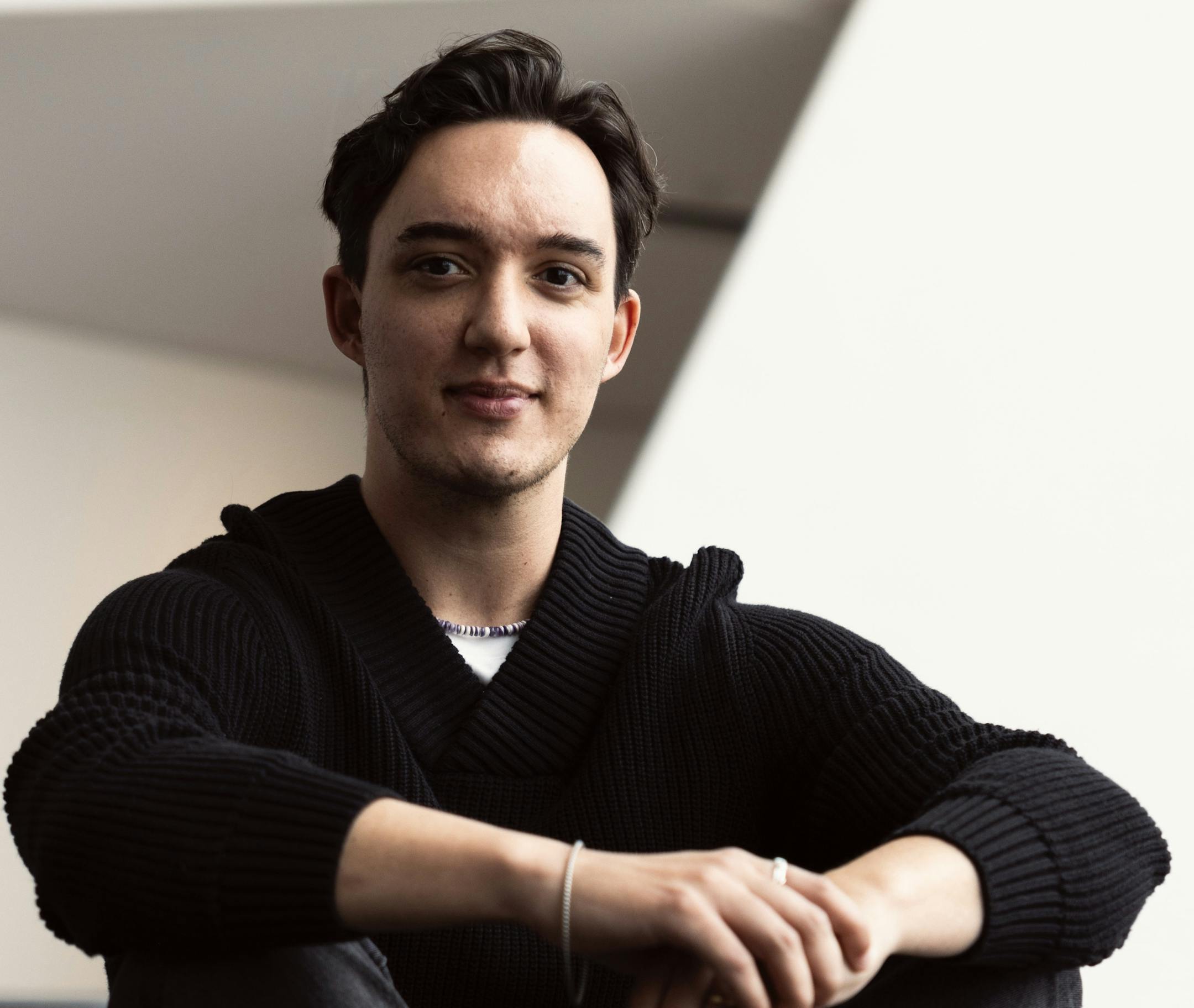
photo of author Carson Faust
Carson Faust (Jaida Grey Eagle/Viking)

Ghosts have more on their minds than sneaking through walls and spooking us, according to novelist Carson Faust.

“I often think of ghosts as just people with communication issues,” said Faust, who lives in St. Louis Park with husband Samuel Farrand. “It’s not that they’re trying to scare us. They’re stuck in one particular moment, a moment they have held onto after they’re gone. And those are not always the most pleasant things to carry, so they might not show up in the most pleasant ways.”

Faust, whose day job is working in philanthropy at the Northwest Area Foundation, has no personal experience with ghosts, but others in his family do. His grandmother Betty — to whom his novel “If the Dead Belong Here” is dedicated — once evicted some.

“She was with her partner for 50-some years and his parents didn’t like her — I think it was racism," said Faust, who is two-spirit and an enrolled member of the Edisto Natchez-Kusso Tribe of South Carolina (he grew up in South Carolina and Mount Horeb, Wis.). “They had died but, if you ask my grandma, they were still in the house, stomping up the stairs at night and messing with the rocking chair. Eventually she said to them, ‘This is my house. You have to go.’ And they did.”

The ghosts in “If the Dead Belong Here” are more dangerous. In the opening chapters, young Laurel Taylor disappears, and her family members spend the rest of the book searching for her, with the help and sometimes hindrance of their late ancestors. Faust is matter-of-fact about those ancestors.

“In a lot of works of horror, ghosts are helping people who are alive survive the things that the ghosts could not. That’s where I operate from,” said Faust, 32. “It has everything to do with rebirth, which is what I think a ghost is: a consciousness that carries on after scientific death occurs.”

That belief is similar to a mentor of Faust’s, Minnesota Book Award-winning writer Mona Susan Power, who has said of a book about ghosts she’s currently writing, “Each of them has a problem in their past that they haven’t addressed, and certainly not healed.”

Faust’s novel began as a master’s degree thesis at Minnesota State University, Mankato. Faust graduated in 2019, with a manuscript about one-fourth the length of its current 391 pages. Since school, he has been working on the book, reaching out to publishers and signing with agent Annie Hwang, whom he contacted after noticing she represented a writer he’d met in grad school, Sequoia Nagamatsu.

You could say Faust’s entire writing process, which involves listening to his characters to such an extent that he doesn’t feel like he’s in control of their story, amounts to attending to the ghosts in his head.

‘Terrified and melancholy’

Faust, who says he grew up a “mall goth,” figures there are plenty of people out there who share his interest in creepy things. But he felt a connection with the book’s editor, Ibrahim Ahmad, because he appreciated both the story’s light and dark elements.

“I want the people who enjoy stuff like this to find the book. I’ve always known I wasn’t going to write a beach read. I’m not out to make everyone pleased with it. But I think if I can find the right folks who enjoy the mixture of being terrified and melancholy at the same time, that to me is the space the book works in,” says Faust.

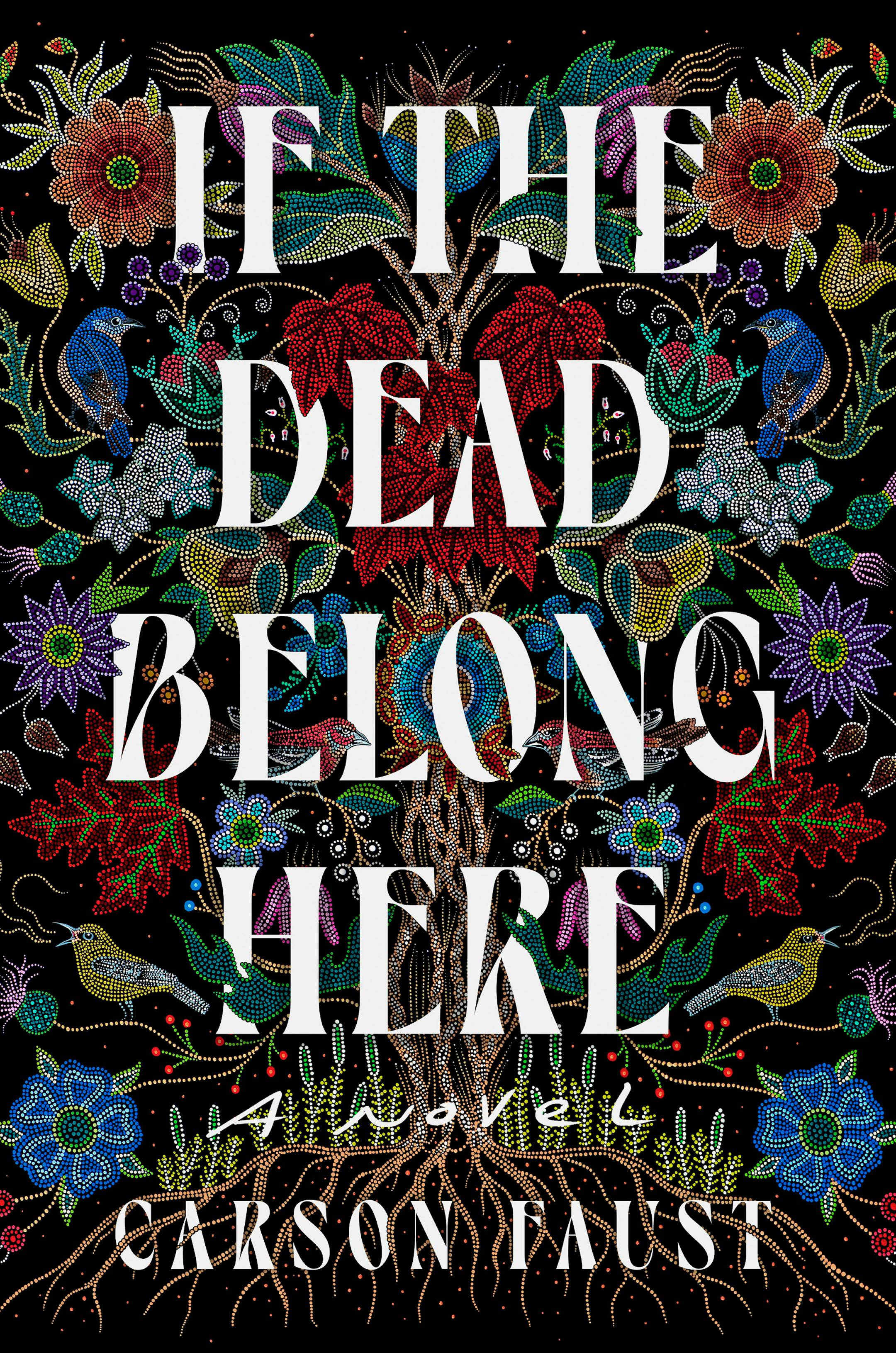
black cover of If the Dead Belong Here features multicolored images of flowers and plants that appear to be beaded
If the Dead Belong Here (Viking)

The author, who jokes that “melancholy is my baseline,” discovered that his characters — both ghost and human — had some things to teach him, including the idea that hope is a muscle that must be exercised.

“If sadness is where I am comfortable, it’s also my job to seek things outside of that and develop the muscles of hope and of optimism. It’s the same thing I guess I’ve learned from my family,” said Faust, who realized his own youthful tendency toward silence (especially about being queer) mirrored his family’s tendency not to talk about painful things such as the death of his uncle, a story that makes its way into the novel.

Faust thinks it’s probably healthy to get some of those voices — and their sad stories — out of his head and into readers’ hands.

“I always wanted to have the book in my grandma’s hands while she’s still here. And she’s still here,” said Faust, recalling many phone conversations with his grandmother to gather material. “So many of the stories and folklore and even the worldview in this book, that’s all very much inherited from her. So I really wanted this book to be in the world with her.”

He’s not sure if she’s read the whole book yet but he agrees that he and his grandmother may have something in common when it comes to ghosts: Just as she yelled at them to force them out of her house, he listened to their stories and put them in a book to get them out of his head.

If the Dead Belong Here

By: Carson Faust.

Publisher: Viking, 391 pages.

Event: Conversation with Mona Susan Power, 7 p.m. Mon., Magers and Quinn Booksellers, 3038 Hennepin Av., Mpls. Free but registration required.

about the writer

about the writer

Chris Hewitt

Critic / Editor

Interim books editor Chris Hewitt previously worked at the Pioneer Press in St. Paul, where he wrote about movies and theater.

See Moreicon

More from Books

See More
The Abbey Church is a landmark on the St. John's University campus located in Collegeville.
The Minnesota Star Tribune

Local nonfiction: “Greater Minnesota” travelogue details a home-grown returnee’s conversion.

photo of author Tilar Mazzeo
card image