

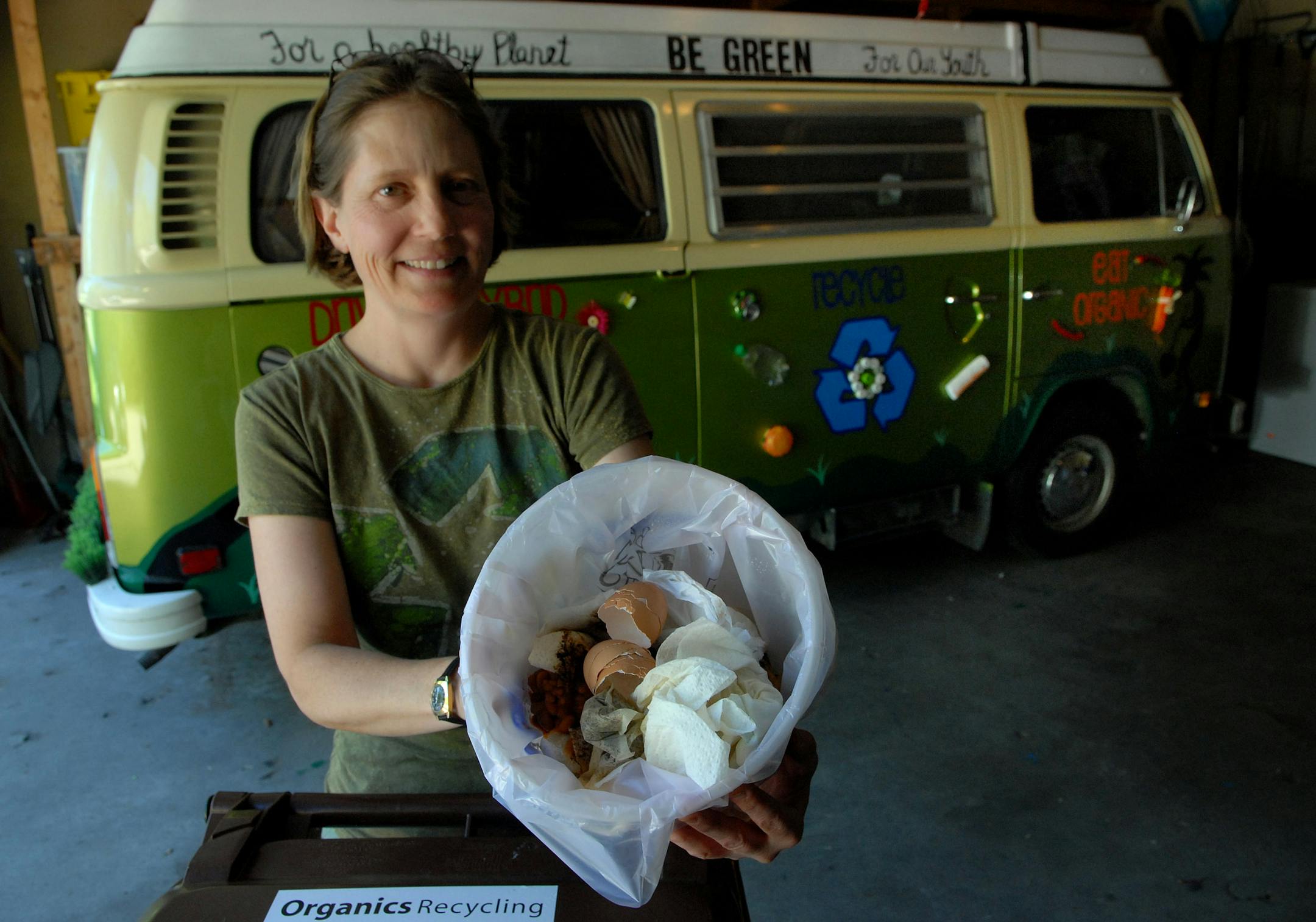
When Minnetonka gave Louise Miller the chance to do the next "green" thing, she jumped at it.
Already known as the "Recycling Queen" by kids in the Hopkins School District, where she set up lunchroom recycling for students' food waste, Miller signed up immediately when Minnetonka started home recycling for food scraps and other organics last year.
Now she's sold on the idea. Separating organics may sound like a lot of work, but it isn't, she said. "You have to throw it away anyhow. It's just a different bin."
Organics recycling is beginning to catch on, driven in part by consumers like Miller who want to go green, by small haulers who see it as a niche market, and by a state law that sets a goal for counties to recycle 50 percent of all household garbage headed for landfills.
But in the second year of the Minnetonka program, only about 550 of Minnetonka's 10,000 households have signed up.
Around Hennepin County, organics recycling "is growing, but it's not growing as fast as we would like to see it," said John Jaimez, the county's organics recycling specialist.
In part, growth is slow because budget constraints have prevented the state from providing money to promote organics recycling as it did curbside recycling for paper, glass and plastic, said Ginny Black, organics recycling specialist for the Minnesota Pollution Control Agency.
Also, cities that might want to require organic recycling by contracting with a single hauler face stiff resistance from competing haulers and from residents who don't want to change haulers, Black said.


