Beneath the road on a snow-dusted mountain in the Hellisheiði region of southwest Iceland, a river of boiling water flows through porous, volcanic rock. Above, thick steel pipes connect to geodesic domes, each of which houses a geothermal well.
Steinþór Níelsson, a senior geologist with ISOR (Iceland Geosurvey), parks his car near one of the rounded huts. He and his team analyze rock samples taken from boreholes to figure out the best way to drill, and then track how the supply of hot water is affected by tapping its steam, which is used to create electricity for this area, as well as the capital, Reykjavik.
Formed 60 million years ago, Iceland is the youngest country on Earth, and it's still growing. The North American and Eurasian tectonic plates form a thick seam up the Arctic country that's pulling apart, releasing fresh magma one ripped stitch at a time.
The repercussions are epic: volcanic eruptions, earthquakes and a massive geothermal resource that, over the past century, has transformed Iceland from impoverished nation to the 15th-richest country in the world. While the rest of Europe worries about turning down the heat or turning back to coal, Icelanders enjoy risibly low energy bills and an enviable quality of life, thanks to an abundance of water, most of which is scalding hot.
Today, every home in Iceland is heated with renewable energy: 90% from district heating systems that tap hot water directly underground and 10% from electricity generated either using steam from that water or hydropower. One hundred percent of the country's electricity is also renewable.
Getting there was neither easy nor cheap. Voters needed to be persuaded to abandon coal, funds raised for new infrastructure, technologies created and then embraced. A big part of Iceland's success comes down to leverage, Níelsson said.
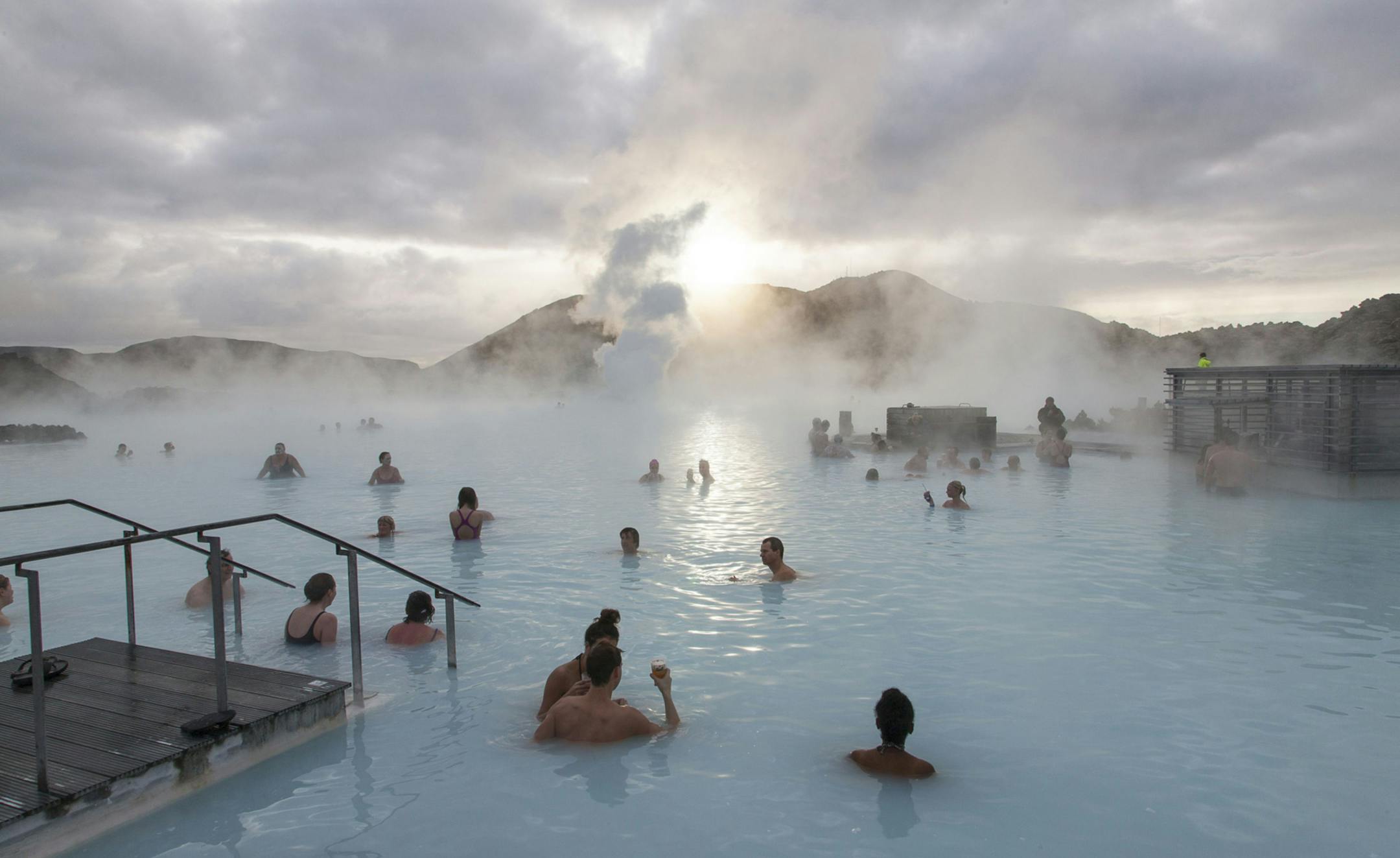
It's taken almost a century, but the country has managed to maximize the social benefits of renewable energy, as well as the economic and environmental ones. Once thick with smog, the air over Reykjavik is now crystal clear. Homes are toasty, heated by naturally boiling water that's also used to warm the many outdoor swimming pools Icelanders consider essential during the cold, dark winters.
"In England, you go to the pub after work," Níelsson says. "Here, you sit in a hot tub, 38 or 40 degrees, and discuss the news and politics and football. This is where a lot of community is taking place."