1:41
1:41When people walk into the St. Paul Curling Club, Jim Dexter tells them to enjoy themselves. It's not a platitude. It's an order.
"If you can't have fun in this building, get out," he said.
Dexter joined the club in 1960 and was still curling until he ran into health problems four years ago. These days, he's listed as the club's assistant manager, where his primary duty appears to be making sure that people are having a good time.
It's not a tough assignment. Curlers pride themselves on their sociability.
"This is the only sport where, after you beat an opponent, you buy them a drink," said Nancee Melby, who has been curling for 10 years. "Don't get me wrong — we're very competitive. But after the game, we're friends."
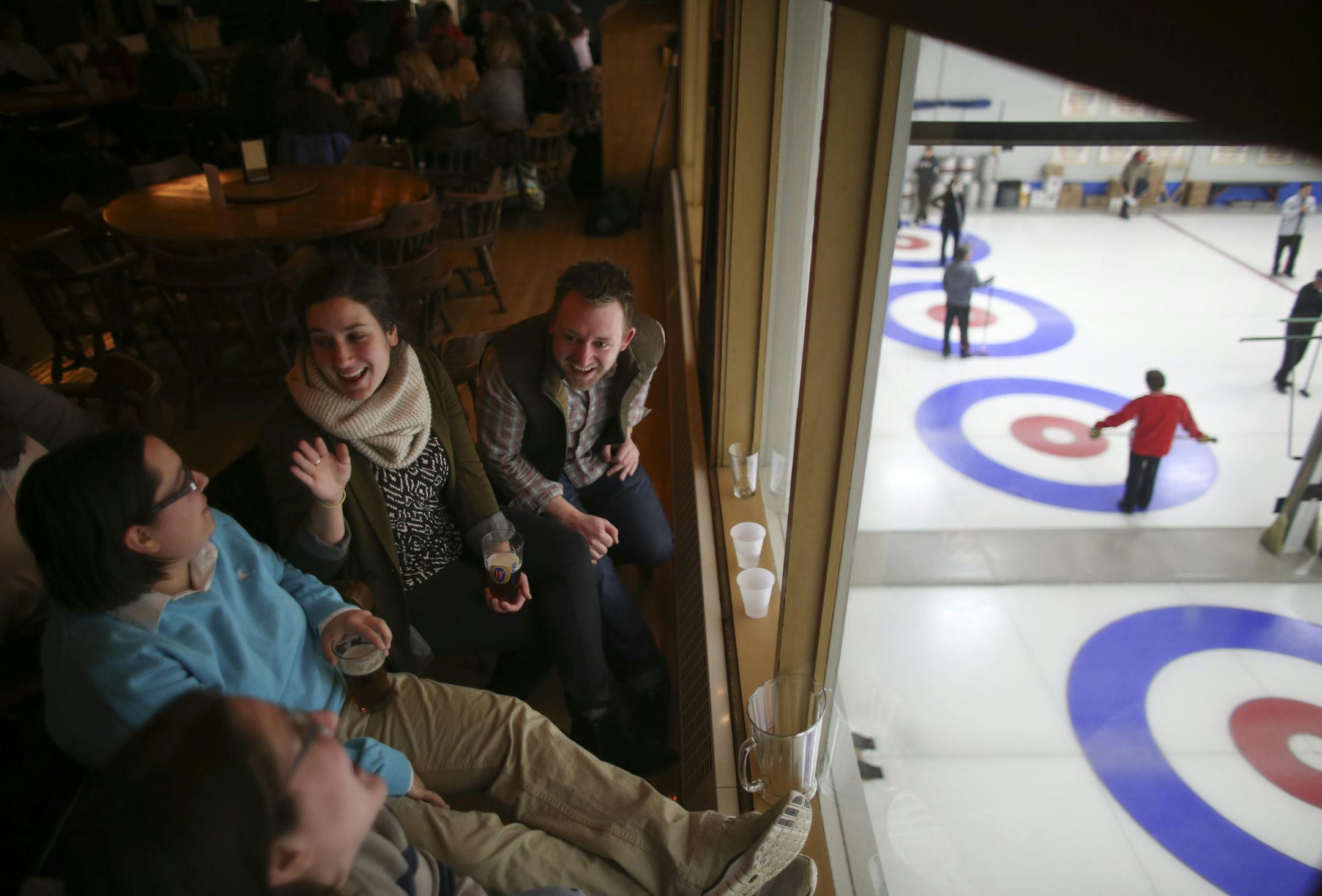
The postgame camaraderie is such an established part of curling that the club's bar is set up with large, round tables, each surrounded by eight chairs. There are four people on a curling team; do the math.
"That interaction is what sets curling apart," said Tim Lindgren. "Sure, softball teams go out for a beer after a game, but each team goes to their own bar. We go upstairs and talk about the game with the team we just played."
That can be an unusual experience for people who are making the transition from less congenial sports.