Ice, fire and smoke

The volcano that disrupted travel throughout Europe draws the curious to an ash-covered glacier in Iceland.

June 27, 2010 at 3:38AM
Jim Buchta photos of Iceland icelandTR0627
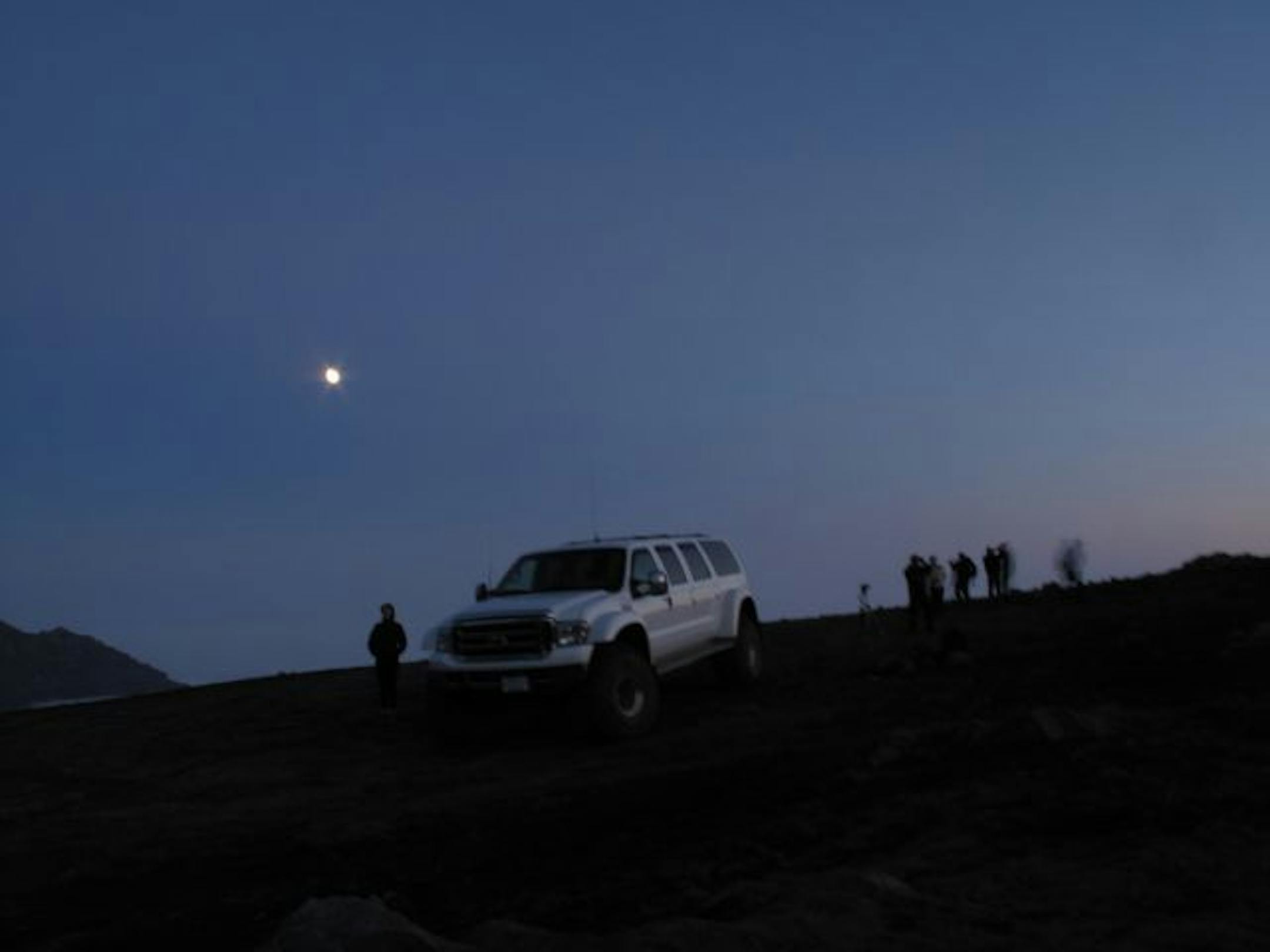
At nearly midnight, tour guide, Jonas Jonasson, and a group of volcano tourists, including a couple from Greenland and a man from Siberia, watch from an ash-covered mountaintop as plumes of steam rise from a nearby volcano. (Star Tribune/The Minnesota Star Tribune)

It took me a week in Iceland to say the tongue-twisting name of its most famous volcano, Eyjafjallajokull, but just a couple hours to get to it from Reykjavik, where a modified white Ford Excursion -- more tank than SUV -- picked me up outside my hotel. ¶ I reached overhead to hoist myself inside. The knobby 46-inch tires growled like an Alaskan bush plane as they rolled over the streets, and the driver, Jonas Jonasson, used a loudspeaker to tell me and other passengers that the volcano had fallen "asleep." ¶ That meant no flames or lava. ¶ That didn't seem to matter; the truck was full. He'd already picked up an insurance worker from Siberia and his friend from Hanover, Germany, and then a retired couple from Greenland. "I had to see that volcano," said Bodil Hansen, who had been stranded in Copenhagen in mid-April by the ash cloud it spewed. At a hostel, we picked up two guys from Ottawa who were touring Europe for the summer. ¶ The eruptions at Eyjafjallajokull have been modest compared with others in Iceland's history, but because the jet stream helped carry volcanic ash over Europe, it caused the biggest disruption in air travel since World War II. ¶ Some people say that it's now the world's most famous volcano - several thousand have already visited it. Iceland itself, however, was barely touched by the ash. ¶ "For us, the volcano could just as well be in Spain," said my hotel clerk. ¶ Friends asked if I'd need to wear a face mask while in Iceland, but that wasn't necessary. In fact, the only face mask I saw during my whole trip was on a mannequin in a woman's shop downtown. ¶ I found the air to be pristine. There are only about 300,000 people on the island and no traffic jams or trains.

The country taps hot volcanic water to heat its houses and water and to fill its many thermal baths. Electricity is generated by hydropower rather than fossil fuels.

Where ice meets fire

A half-hour into the drive, we bounced across a valley covered in lava, the product of an earlier eruption by another volcano, and I could see plumes of stinky, sulfurous smoke rising from the rock.

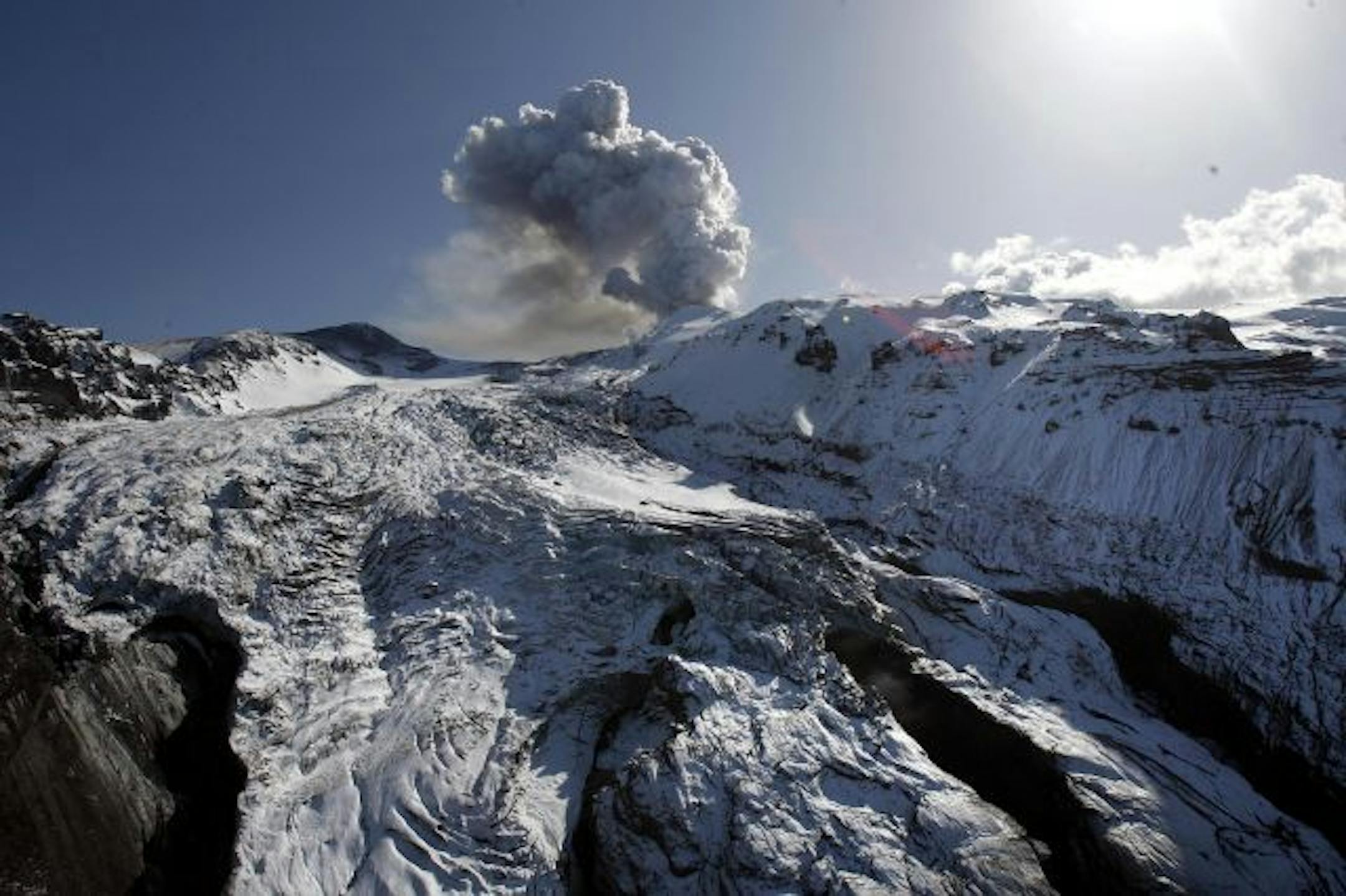
As we crossed the flatlands, Jonasson pointed at the distant horizon to a white plume -- vapor from the melting glacier -- that rose more than a mile into the hazy blue sky. It was Eyjafjallajokull, and even from a distance it was impressive.

Scientists say that the volcano could remain active for up to two years, and Jonasson said that some now predict that nearby Katla will be the next to erupt. Such considerations are the worries of everyday life in Iceland, an island that sits astride the Eurasian and North American tectonic plates.

"I know it's not finished; it will start again soon," Jonasson said. "Nobody knows what will happen."

We grabbed our cameras to take pictures through the windows. We stopped at a lodge to pick up a couple from Montreal, then turned onto a dirt road that led into a valley devoid of color.
Charcoal-colored ash -- several inches deep in places -- covered everything, including the pastures, the sandy river bank and the frozen glacier atop the volcano. What should have been white was gray, and what should have been green was black. The fenced pastures were empty and the wind blew, but the grasses were stilled by the silky ash.

Jonasson said that when the volcano first erupted, herds of Icelandic horses sensed the danger and tried to outrun the water they knew would rush downhill as ice melted from the heat. Farms on the opposite side of the volcano suffered the worst, with many shrouded in darkness for several days under a gray cloud of ash. The animals that couldn't be evacuated were slaughtered.

We passed a tractor and several bales of feed wrapped in white plastic and covered by ash, then came to the edge of a river filled with glacial meltwater rushing down the mountainside. Jonasson paused for a minute, then slowly drove across, passing a group of volcano tourists who'd arrived by car dumbfounded.

We drove to a ridge near the base of the mountain and stopped so that we could get a view of the volcano from below. The ash cushioned my feet as I jumped out of the Excursion, and we watched the plume wander in the hazy blue sky. At one point the smoke seemed darker than it had been.

"And that means there is some fire," Jonasson said.

An eerie moonscape

We piled back into the Excursion and drove past a farmer who was standing atop his barn, hosing ash off the red metal roof. We stopped at a small guest house where we ate local lamb and Arctic char from the nearby Atlantic. Jonasson reduced the air pressure in the tires by about half, so that we'd roll rather than lurch over sharp rocks as we started up a steep wagon road behind the inn.

Gravity held me back in my seat, and we bounced so hard I could feel the seat springs pressing into my backside. Thick fog rolled into the valley. Jonasson kept driving, and I wondered how well the vehicle would tolerate the terrain. Some drivers spend as much as $300,000 on these modified vehicles, called "super jeeps."

After navigating several hairpin turns and crossing more newly formed meltwater streams, we broke though the fog and drove as far as we could. It was near midnight, but still light enough to see the silhouettes of my traveling companions as they wandered to the edge of the plateau. I watched a near-full moon rising in the periwinkle sky, then turned around to see the smoking crater a couple thousand feet away.

Jonasson pointed to the boulder-strewn landscape and said that the volcano spit boulders bigger than a car hundreds of feet into the sky. "Now you just have to use your imagination," he said.

It wasn't difficult. As I looked around the eerie landscape strewn with craggy boulders and trails of shadowy footsteps in the ash, I imaged that this was what it looks like on the moon.

But it was cold and with no trees to block the wind, we didn't last long.

The Excursion's diesel engine rattled the silence and we started back down the way we'd come. Only this time I ran ahead of the truck as it slowly made its way down the path, knowing that this was probably the only chance I'd get to come so close to an active volcano.

"It was a once-in-lifetime experience," said Bodil Hansen, the Greenlander, as we made our way back to Reykjavik in the wee hours with the moon to our left and the rising sun to our right.

On my last day in Iceland I went to the Nordic Store in the old town to buy some volcanic ash. The shopkeeper asked what I'd done on my trip. I told her that I'd come to see the volcano, but I didn't call it by name. I couldn't. And she could tell. She leaned back on the counter and offered to help. She said it slowly, asking me to repeat after her. I did, and for the first time since landing in Iceland more than a week earlier, it didn't sound like a sneeze. She smiled.

Why did it seem to roll off my tongue now? After a week, maybe my ear was more attuned to the language, which hasn't changed much in the 1,000 years since the Icelanders borrowed it from the Norwegians, or maybe it was the experience of coming face-to-face with the volcano. Whatever the case, I could finally say its name: "Ay-uh-fyat-luh-YOE-kuutl-uh."

Jim Buchta • 612-673-7376

Activity is seen from the volcano in southern Iceland's Eyjafjallajokull glacier, Wednesday, April 21, 2010. Geologists continued to keep a close watch on the Iceland volcano Eyjafjallajokull on Wednesday, as observers noticed a change in the eruption pattern. Instead of thick black smoke, the plume was almost white... and more like steam than black ash.
Activity is seen from the volcano in southern Iceland's Eyjafjallajokull glacier, Wednesday, April 21, 2010. Geologists continued to keep a close watch on the Iceland volcano Eyjafjallajokull on Wednesday, as observers noticed a change in the eruption pattern. Instead of thick black smoke, the plume was almost white... and more like steam than black ash. (Associated Press - Ap/The Minnesota Star Tribune)
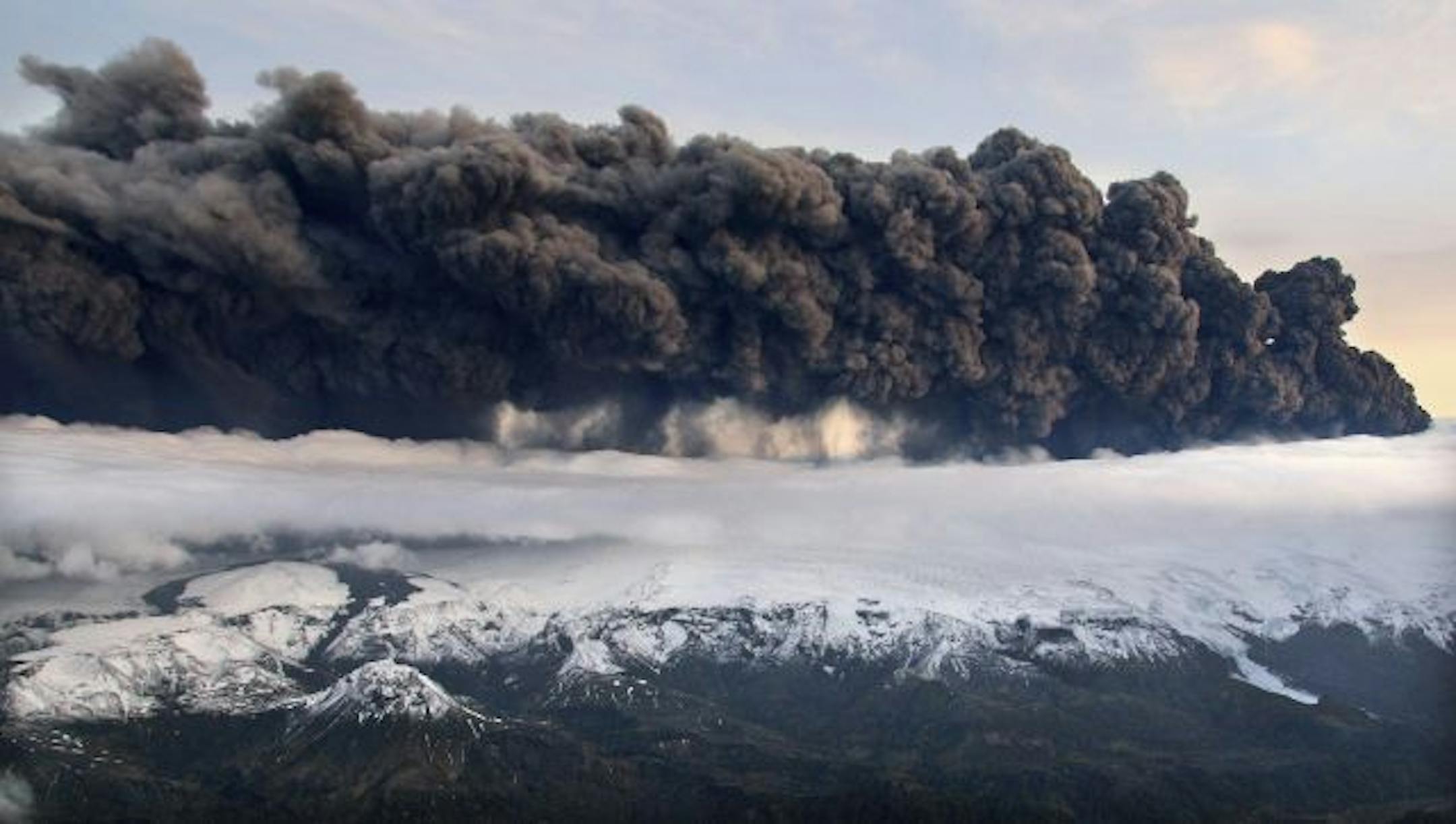
Smoke and steam hangs over the volcano under the Eyjafjallajokull glacier in Iceland, Wednesday April 14, 2010, which has erupted for the second time in less than a month, melting ice, shooting smoke and steam into the air and forcing hundreds of people to flee rising floodwaters. Volcanic ash drifting across the Atlantic forced the cancellation of flights in Britain and disrupted air traffic across northern Europe, stranding thousands of passengers. Flights in and out of London Heathrow, Europe
Smoke and steam hangs over the volcano under the Eyjafjallajokull glacier in Iceland, Wednesday April 14, 2010, which has erupted for the second time in less than a month, melting ice, shooting smoke and steam into the air and forcing hundreds of people to flee rising floodwaters. Volcanic ash drifting across the Atlantic forced the cancellation of flights in Britain and disrupted air traffic across northern Europe, stranding thousands of passengers. Flights in and out of London Heathrow, Europe's busiest airport, were halted, and the shutdowns and cancellations spread to France, Belgium, the Netherlands, Denmark, Ireland, Sweden, Finland and Switzerland. The volcano's smoke and ash poses a threat to aircraft because it can affect visibility, and microscopic debris can get sucked into airplane engines and can cause them to shut down. (Associated Press - Ap/The Minnesota Star Tribune)
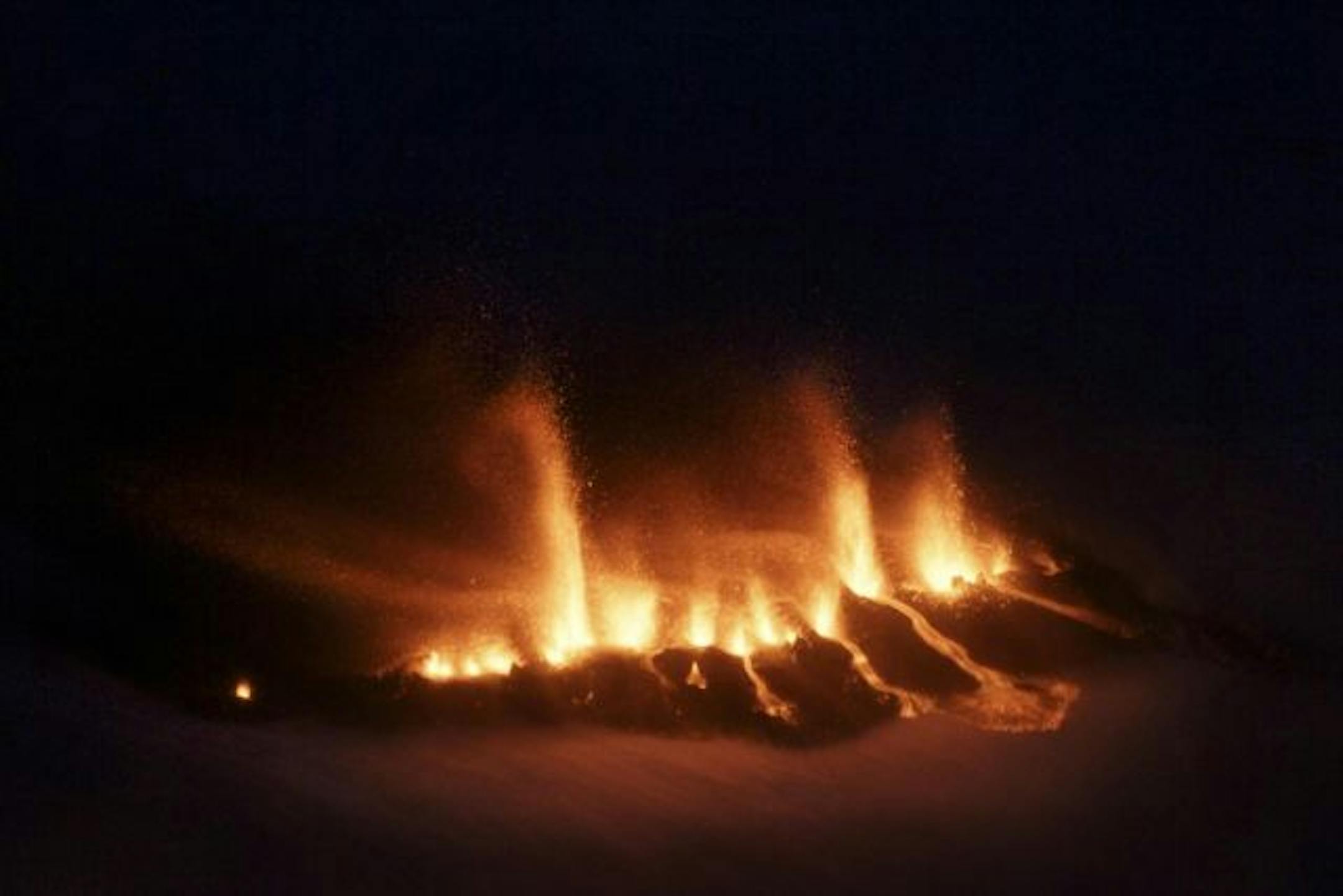
In this aerial photo, showing molten lava as it vents from a rupture near the Eyjafjallajokull glacier in Iceland, as a volcano erupts early Sunday March 21, 2010. some hundreds of people have been evacuated from a small village in southern Iceland on Sunday after a volcanic eruption which shot ash and molten lava into the air, the first major eruption here in nearly 200 years.
In this aerial photo, showing molten lava as it vents from a rupture near the Eyjafjallajokull glacier in Iceland, as a volcano erupts early Sunday March 21, 2010. some hundreds of people have been evacuated from a small village in southern Iceland on Sunday after a volcanic eruption which shot ash and molten lava into the air, the first major eruption here in nearly 200 years. (Associated Press - Ap/The Minnesota Star Tribune)
about the writer

about the writer

Jim Buchta

Reporter

Jim Buchta has covered real estate for the Star Tribune for several years. He also has covered energy, small business, consumer affairs and travel.

See Moreicon

More from No Section

See More
FILE -- A rent deposit slot at an apartment complex in Tucker, Ga., on July 21, 2020. As an eviction crisis has seemed increasingly likely this summer, everyone in the housing market has made the same plea to Washington: Send money — lots of it — that would keep renters in their homes and landlords afloat. (Melissa Golden/The New York Times) ORG XMIT: XNYT58
Melissa Golden/The New York Times

It’s too soon to tell how much the immigration crackdown is to blame.