

Officials at the Apostle Islands National Lakeshore are calling the new $5 ice cave visitor fee a success.
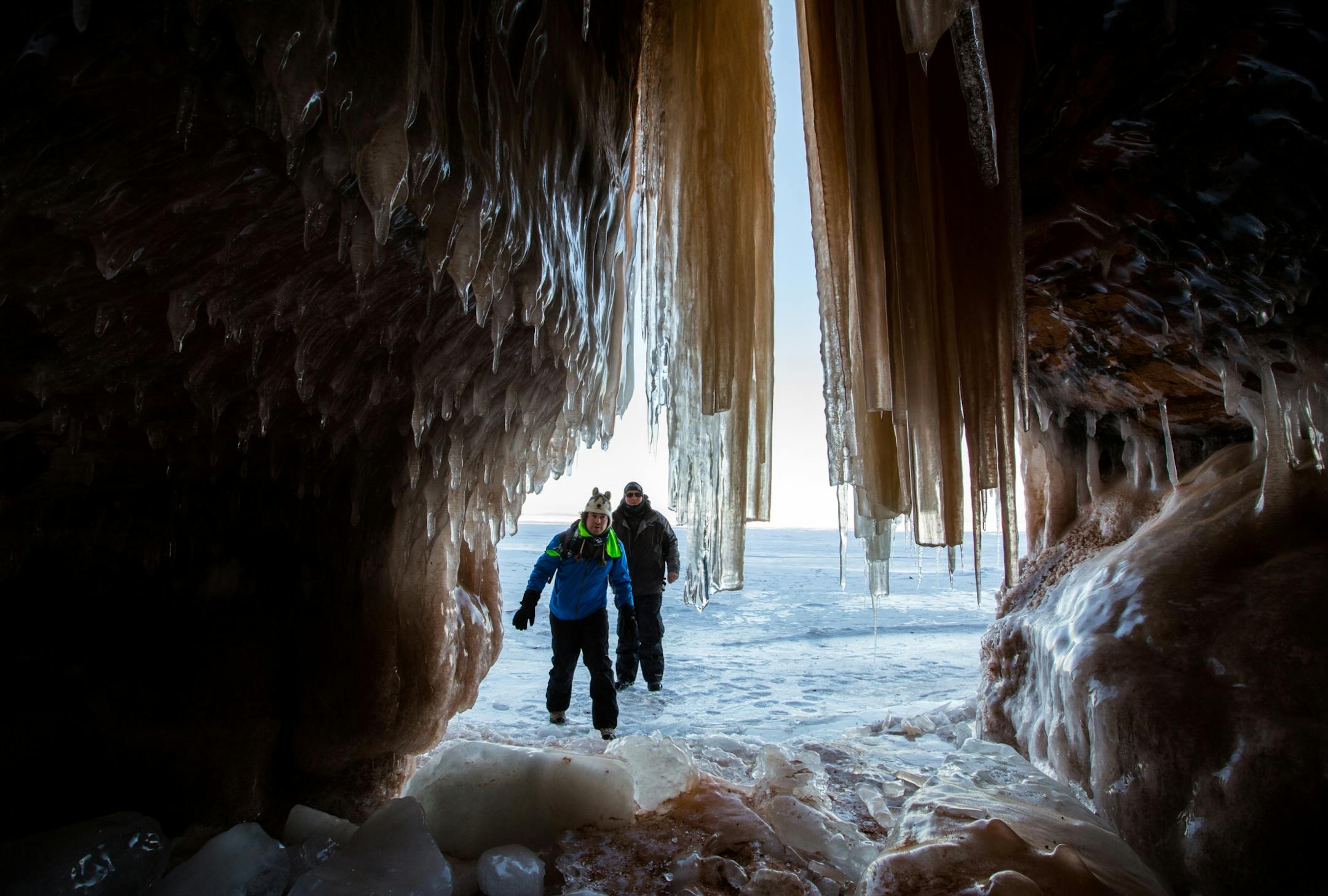
The park took in $140,000 from the daily fee, which was charged this year to every visitor 16 and older during the nine days the caves were accessible on frozen Lake Superior near Cornucopia, Wis. The money covered the cost of the extra staff and equipment needed to host this year's stream of 37,800 visitors, making the operations sustainable, officials said.
Not including the cost of year-round staff, the park spent about $95,000 on this year's ice cave opening to pay for temporary hires, overtime, toilet rentals, emergency rescue equipment, temporary signs and several other expenses.
After paying about $5,300 to the National Park Service's national office for administrative costs, the Apostle Islands will use the remaining money to prepare for the possibility of ice cave accessibility next year as well as install a sign at the entrance to the cave trail and build a 42-foot bridge over a ravine on a wooded trail that meanders atop the caves.
Visits to the caves exploded in 2014 when images of their dramatic ice formations went viral on social media. Last year, 138,000 people trekked to see the natural wonder over 8½ weeks of accessibility, prompting park officials to ask the regional National Parks Office for emergency funding. Officials couldn't ask for emergency funding every year and needed to come up with a way to cover expenses, said Julie Van Stappen, chief of Planning and Resource Management at the park.
"We tried to make (the fee) as low as we could and still cover our costs," she said. "It's going to allow us to provide the same level of operations on a sustainable manner, which is what our hope was."


