

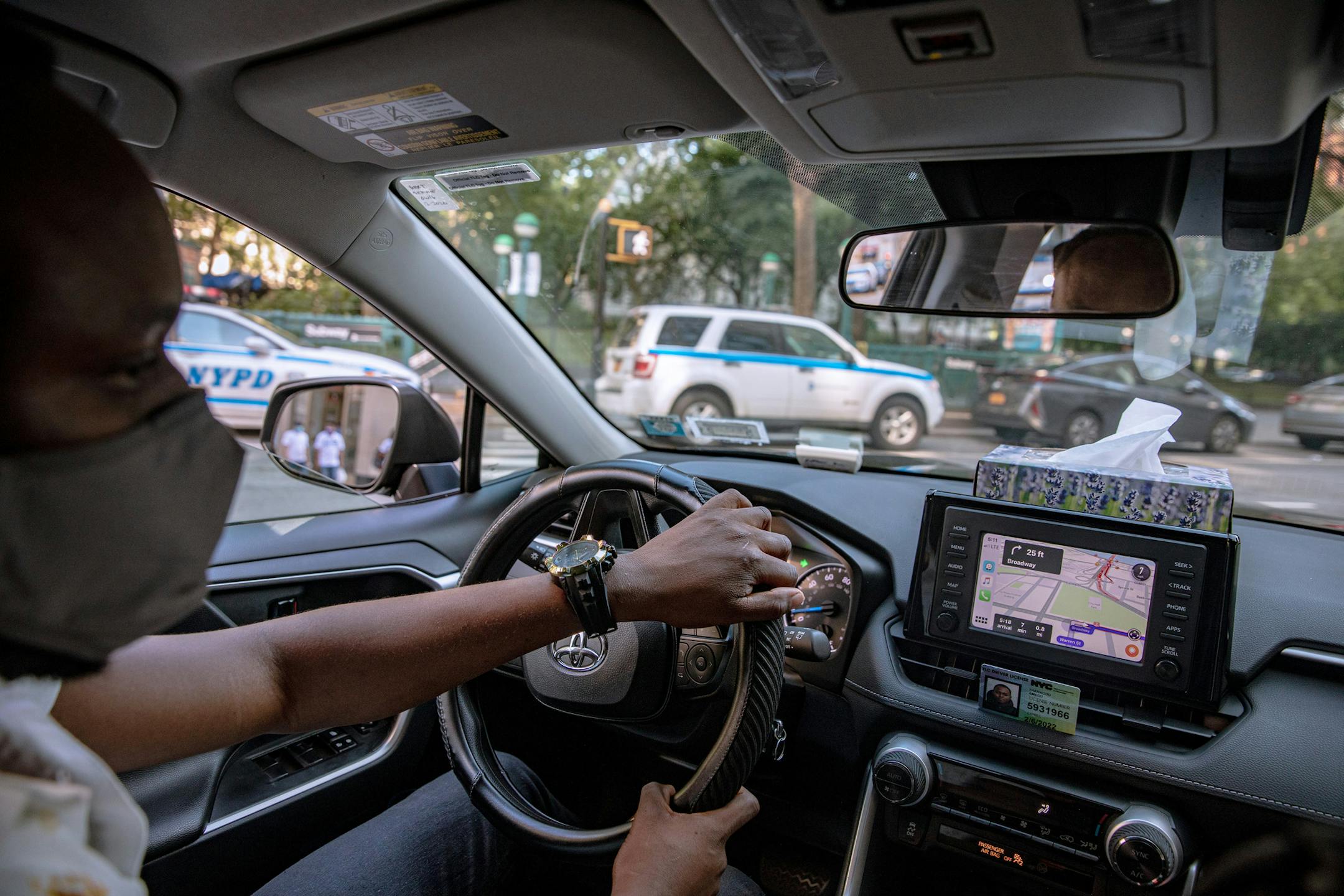
Since the first Uber trip 10 years ago, one existential question has shadowed us: Do we treat drivers well?
Many of our critics believe that Uber and our gig economy peers have failed drivers by treating them as contractors, and that we will do anything to avoid the cost of employee benefits like health insurance. Given our company's history, I can understand why they think that. But it's not true, and it's not what I believe.
Our current employment system is outdated and unfair. It forces every worker to choose between being an employee with more benefits but less flexibility, or an independent contractor with more flexibility but almost no safety net. Uber is ready, right now, to pay more to give drivers new benefits and protections. But America needs to change the status quo to protect all workers, not just one type of work.
Why not just treat drivers as employees? Some of our critics argue that doing so would make drivers' problems vanish overnight. It may seem like a reasonable assumption, but it's one that I think ignores a stark reality: Uber would only have full-time jobs for a small fraction of our current drivers and only be able to operate in many fewer cities than today. Rides would be more expensive, which would significantly reduce the number of rides people could take and, in turn, the number of drivers needed to provide those trips. Uber would not be as widely available to riders, and drivers would lose the flexibility they have today if they became employees.
More important than what I think is what drivers think: In public surveys over the last decade, the vast majority of drivers have said they don't want to be employees because of how much they value flexibility. A recent survey commissioned by Uber and other companies found that 2 of every 3 app drivers would stop driving if their flexibility was compromised.
This is because they understand the trade-offs between traditional employment and app work. Unlike traditional jobs, drivers have total freedom to choose when and how they drive, so they can fit their work around their life, not the other way around. Anyone who's been fired after having to miss a shift, or who's been forced to choose between school and work, will tell you that this type of freedom has real value and simply does not exist with most traditional jobs.
While I disagree with our critics about the solution, I do think they are right about many of the problems. The freedom to work whenever you want comes with a serious drawback: When the worst happens, too often you are on your own. There has historically been little to no paid support for independent workers if they couldn't work — if they wanted to take a vacation or, more important, if they got sick.
There has to be a "third way" for gig workers, but we need to get specific, because we need more than new ideas — we need new laws. Our current system is binary, meaning that each time a company provides additional benefits to independent workers, the less independent they become. That creates more uncertainty and risk for the company, which is a main reason why we need new laws and can't act entirely on our own.


