

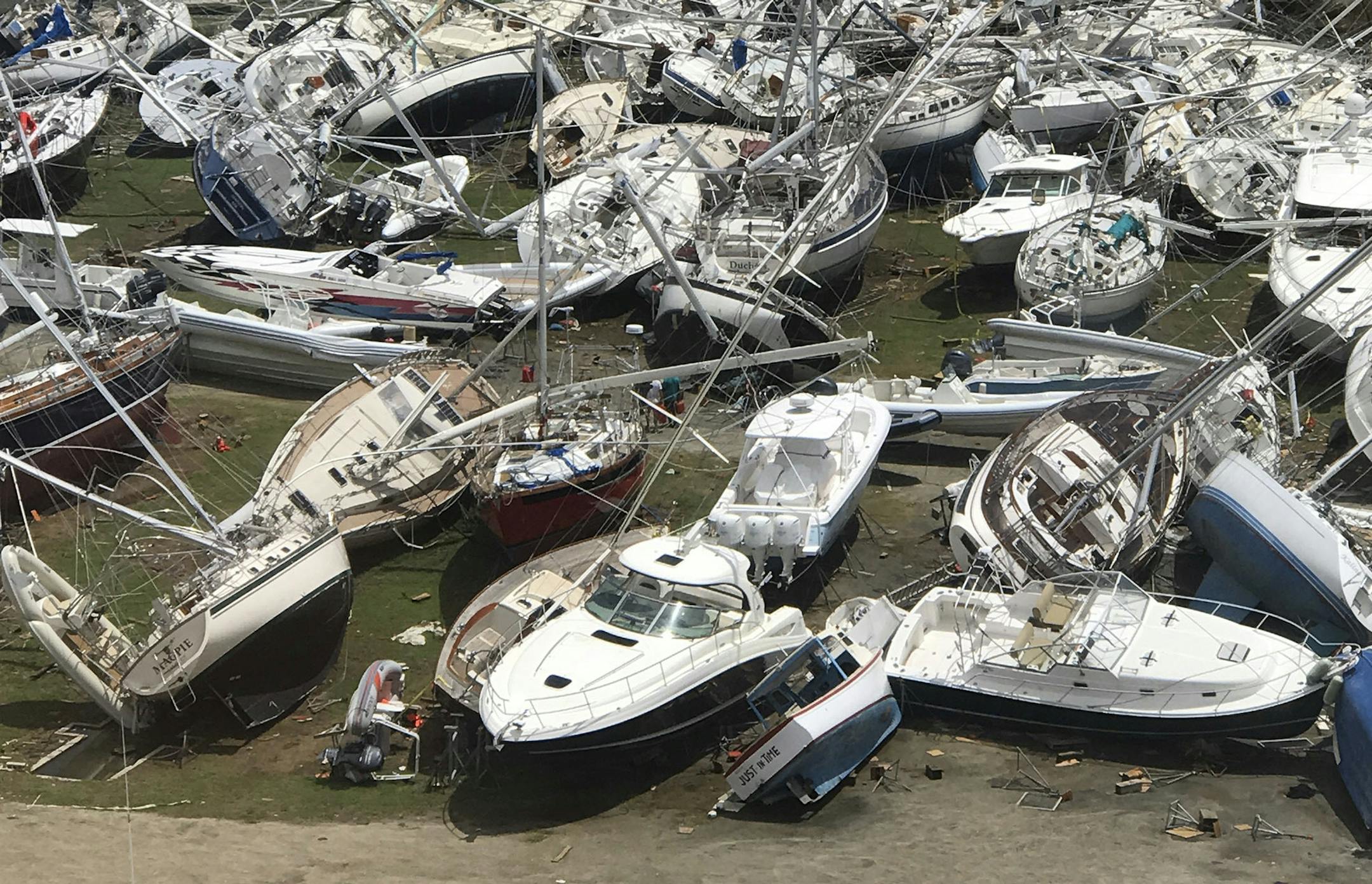
WEST PALM BEACH, Fla. – The 2017 hurricane season will be remembered for its brutality and endurance, but it also goes down in history as having the most accurate storm track forecasts since modern mapping of tropical cyclones began nearly 50 years ago.
While official verification of forecast accuracy won't be released until early next year by the National Hurricane Center, University of Miami storm researcher Brian McNoldy tallied preliminary results to find the smallest track error rates on record.
For every measurement, which includes days 1 through 5 before estimated landfall, the 2017 forecasts topped the hurricane center's running five-year average by as much as 52 miles at the 120-hour mark.
Storm experts said the improvements likely saved lives.
"It's certainly noteworthy that the track forecasts beat the previous record at every lead time," McNoldy said. "It wasn't just that the longer-range forecasts were good, they were all good."
One of the most precise forecasts in terms of path was for the aberrant Hurricane Irma, which raged as a 185 mph Goliath for a record-shattering 37 hours.
The hurricane center's average forecast track error five days out is a 225-mile spread. This season, the average during the same time period was 173.6 miles.
But for Hurricane Irma, the five-day track error was just 155 miles.


