HENRY, S.D. – The high-pitched crying and barking of snow geese blared from speakers hidden on a slope of corn stubble near Indian Springs Lake, echoing into the sky.
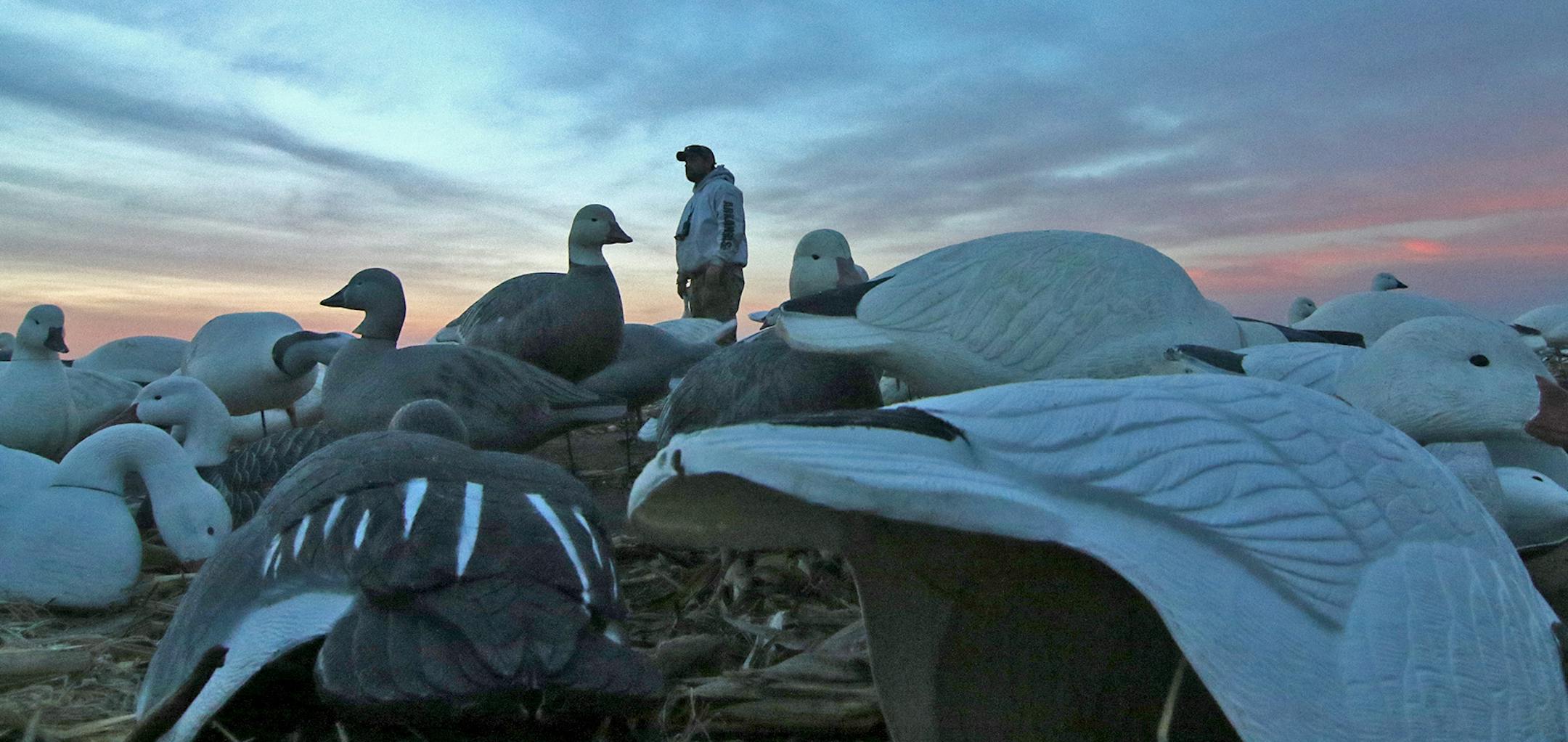
As the day dawned with orange hues on the horizon, a small group of the birds flew lower and lower, side-slipping until they were only a couple of shotgun lengths above our spread of 2,200 decoys.
"Get 'em!" our shot-caller yelled.
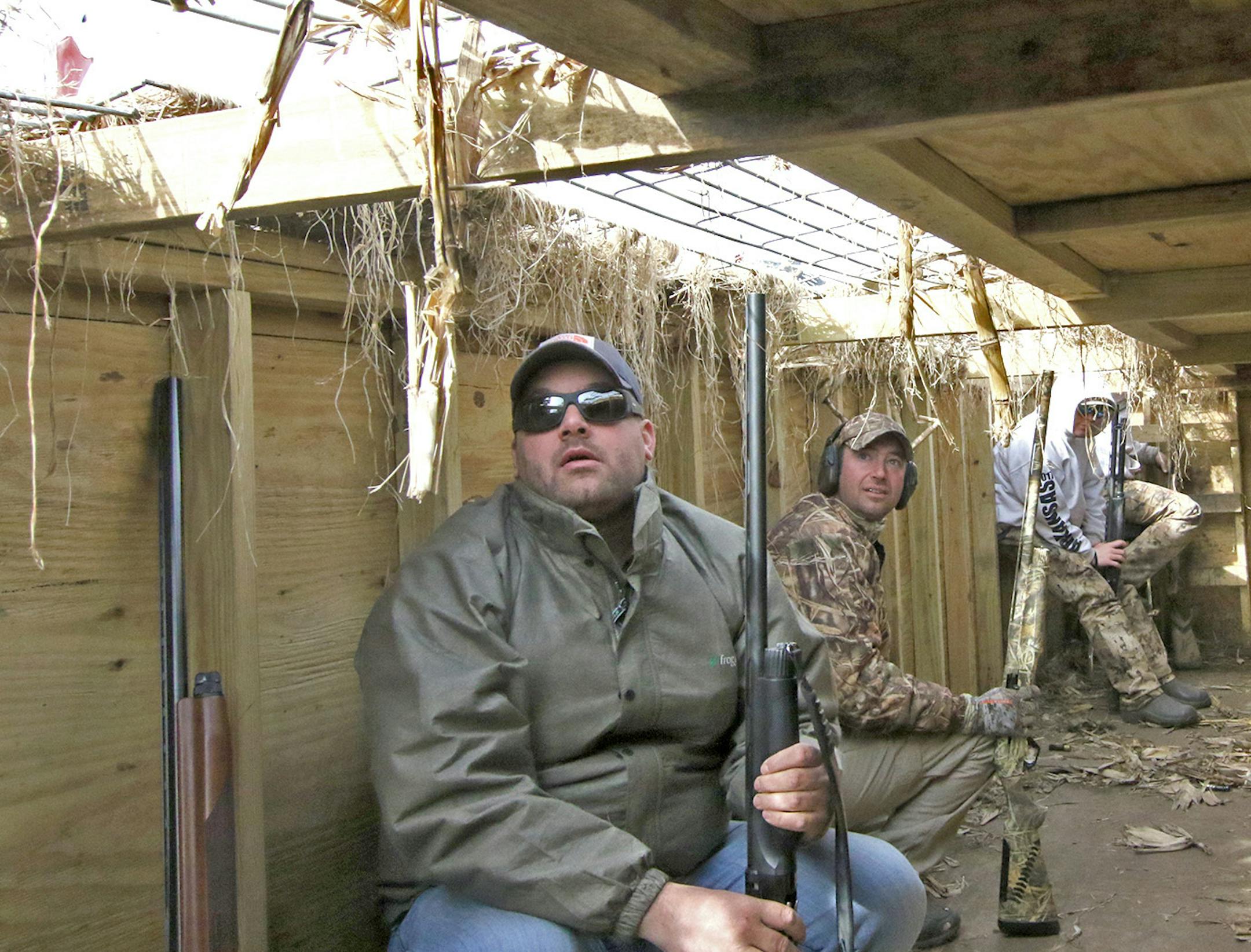
We popped up from a well-camouflaged pit blind and blasted steel BB shot — some of it directly overhead — as the geese butterflied and darted away. In a few instants, the flurry of shooting was done. We had two geese in the bag and that would be it for the day.
That's the risk you take by hunting at the tail end of the spring migration. What was booked as a three-day hunt starting last Friday was instead aborted Saturday at 4 p.m. for lack of shooting opportunities. Heavy rain was forecast for Sunday.
"After you guys leave, we are done for the season," said Josh Craig of Watertown, a guide for Pepper Slough Lodge.
South Dakota's "spring light goose" season officially opened in mid-February and runs until May 2. But every year, the typical window for successfully shooting these overly abundant birds is short, difficult to predict and frequently interrupted by inclement weather. Their seasonal flight en route to arctic Canada and Alaska depends on available roosting areas, food availability and position of the snow line.
Snow geese and blues (a color variation of snow geese) fly with Ross's geese and all three white or light-colored species are legal to hunt in springtime over South Dakota, North Dakota and Minnesota, mostly west of a line from Mankato to Fergus Falls.