

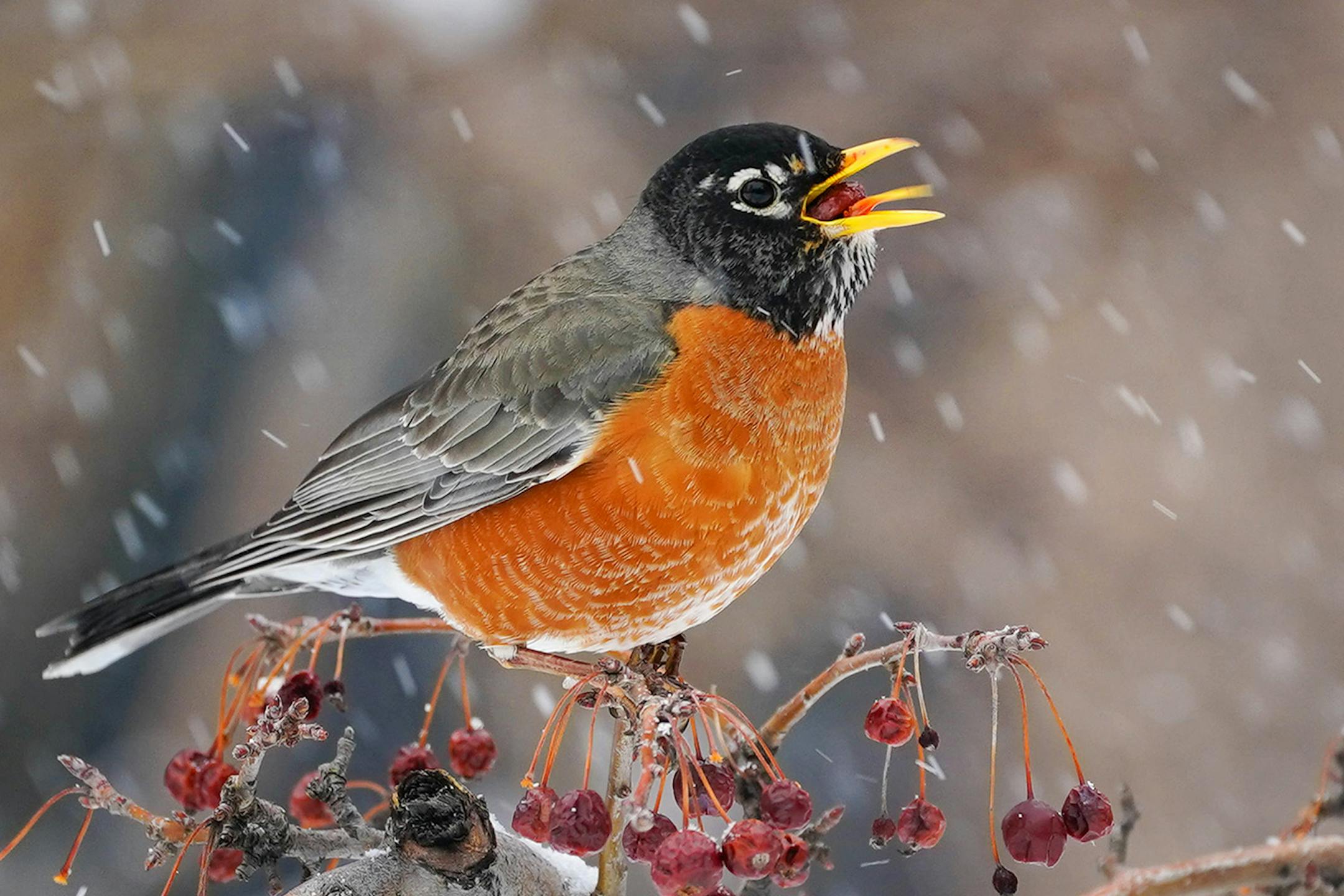
The American robin is the most familiar thrush and songbird, seen in yards and parks from early spring through much of fall. A small percentage of Minnesota's robins don't migrate south; they spend the winter in low swampy areas and valleys where they can escape the cold winds. That's not surprising — they are super-adapters. In winter they search for wild fruit, insect and spider eggs, and other animal matter. Some of the robins will die before spring.
Hundreds of American robins spend winter among ornamental plantings, especially crabapple trees in residential areas around the state. They gather by the dozens in clumps of red cedar trees and groves of hackberry trees when the berry crop is good. Some robins are even known to spend winter along the North Shore, where fruit from native mountain ash trees and other woody plants no doubt sustain them. You can help wintering robins through tough times by using a low tray feeder or clearing an area on the ground. Put out berries, apple bits, raisins, moistened dog food or bits of hamburger or other raw meat.

