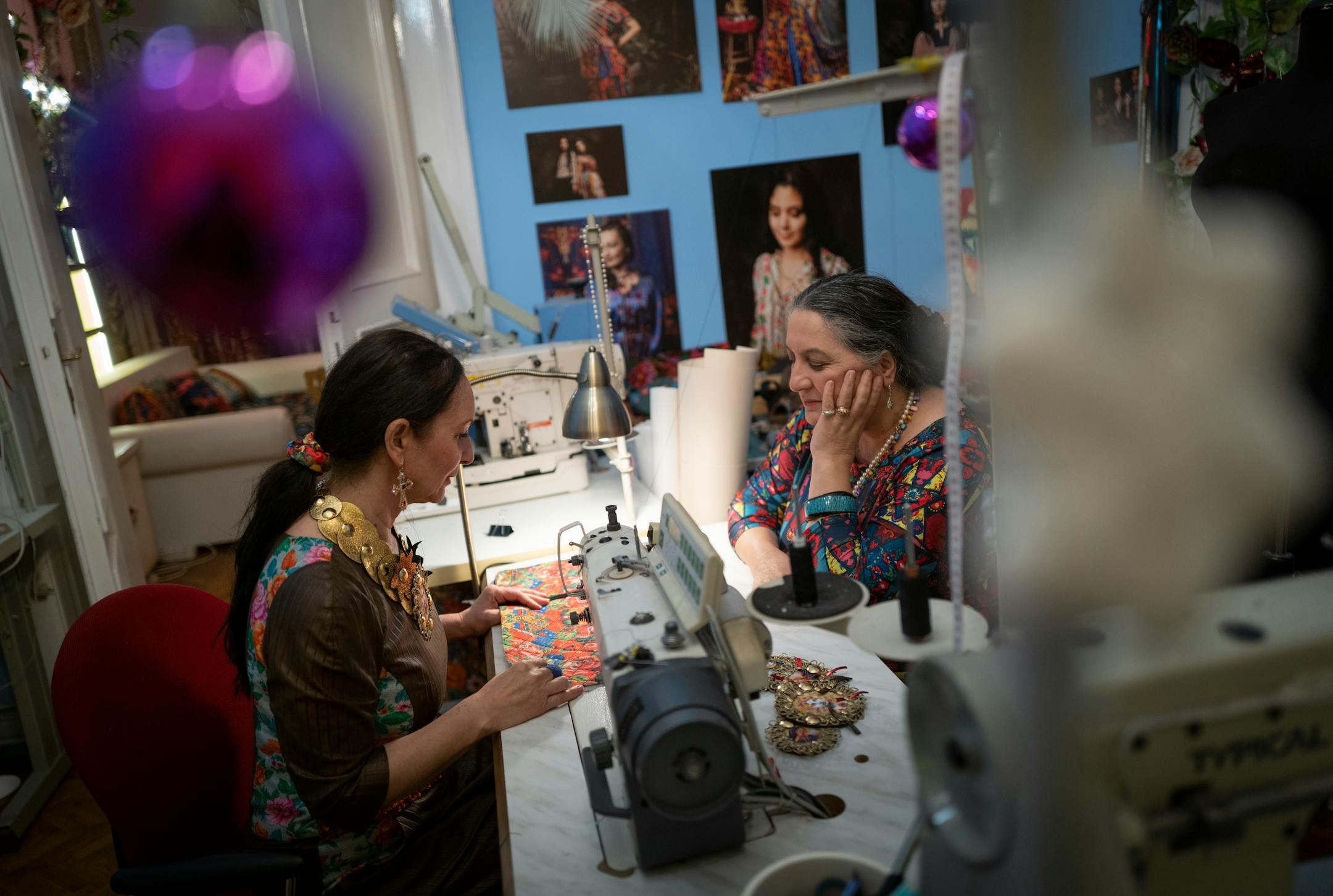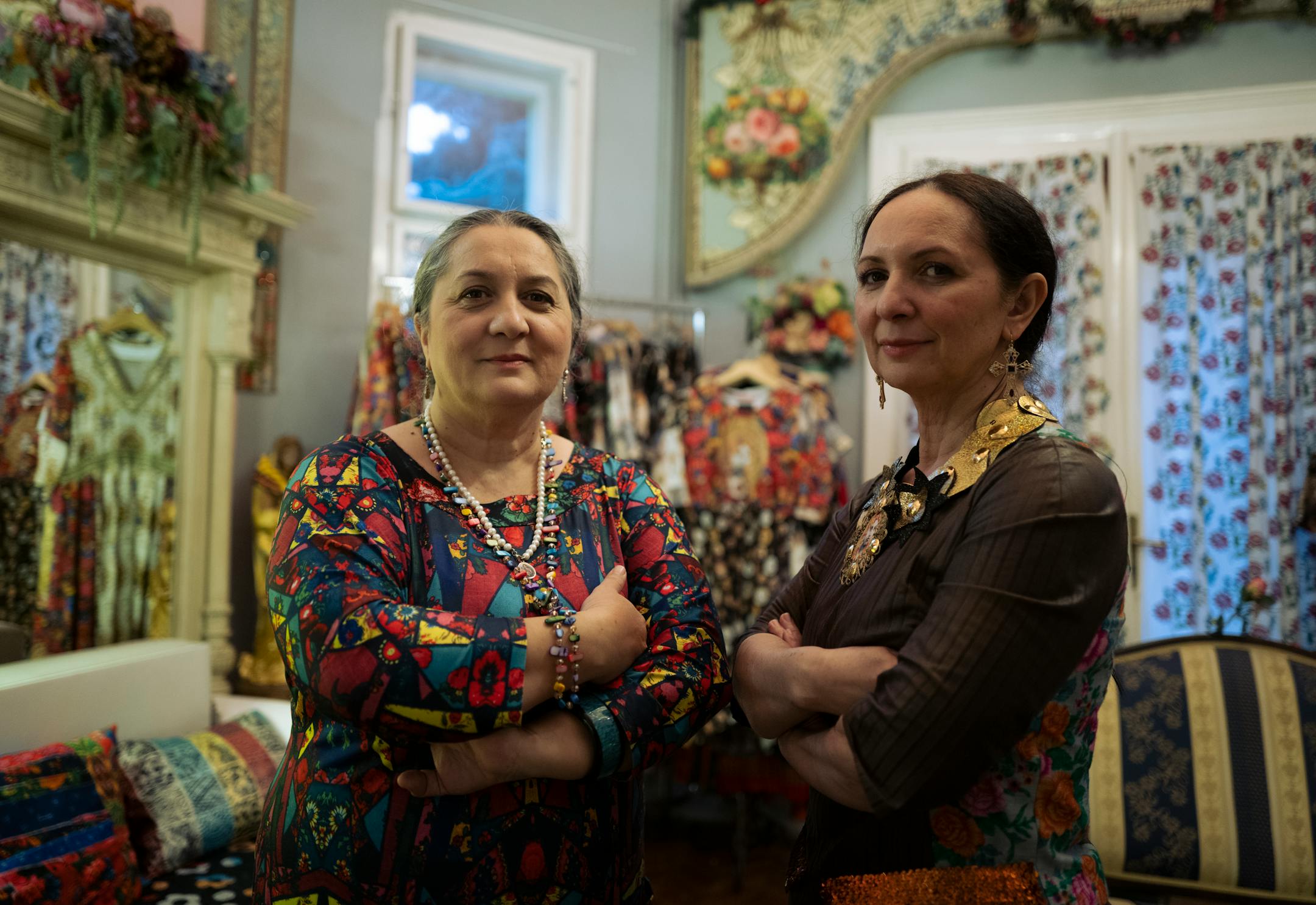
BUDAPEST, Hungary (AP) — A fashion studio in Hungary is challenging the centuries-old stereotypes faced by the country's Roma minority, and asserting a place at the table of high culture for the historically marginalized group.
Established by sisters Erika and Helena Varga in 2010, the Romani Design fashion studio has the declared mission of using fashion and applied arts to build the socio-cultural prestige of the Roma community, and to reestablish Roma culture in a modern context.
"We were one of the first brands that actually gave the answer to how to rebuild (Roma) traditions in a contemporary, modern way," said Erika Varga, co-founder of Romani Design.
The Roma are Hungary's largest minority, and represent as much of 10% of the population in the Central European country. Like their counterparts throughout Europe, Hungary's Roma are often the subjects of social and economic exclusion, and face discrimination, segregation and poverty.
Present in Hungary since the 15th century, many of the Roma's traditions are deeply ingrained in broader Hungarian culture. Yet many of their unique customs and occupations — as well as their language, Romani — have been slowly dying out after centuries of official and unofficial marginalization.
Before starting Romani Design, the Varga sisters worked as jewelry makers and designers. But seeing that the social acceptance long sought by their community had remained elusive, they worried that valuable Roma traditions were being lost, and excluded from conceptions of what constitutes high culture.
"We wanted to sensitize the social majority, including the social elite," Erika said. "This was important because it's the social elite that dictates who is valuable and what position they can occupy in the social hierarchy. ... We also wanted to communicate messages to our own community that we don't have to give up our traditional values."
Reutilizing the floral patterns, colorful fabrics and depictions of the Virgin Mary prevalent in traditional Roma dress and folklore, Romani Design creates modern clothing, jewelry and accessories that place Roma cultural traditions into a contemporary context.