

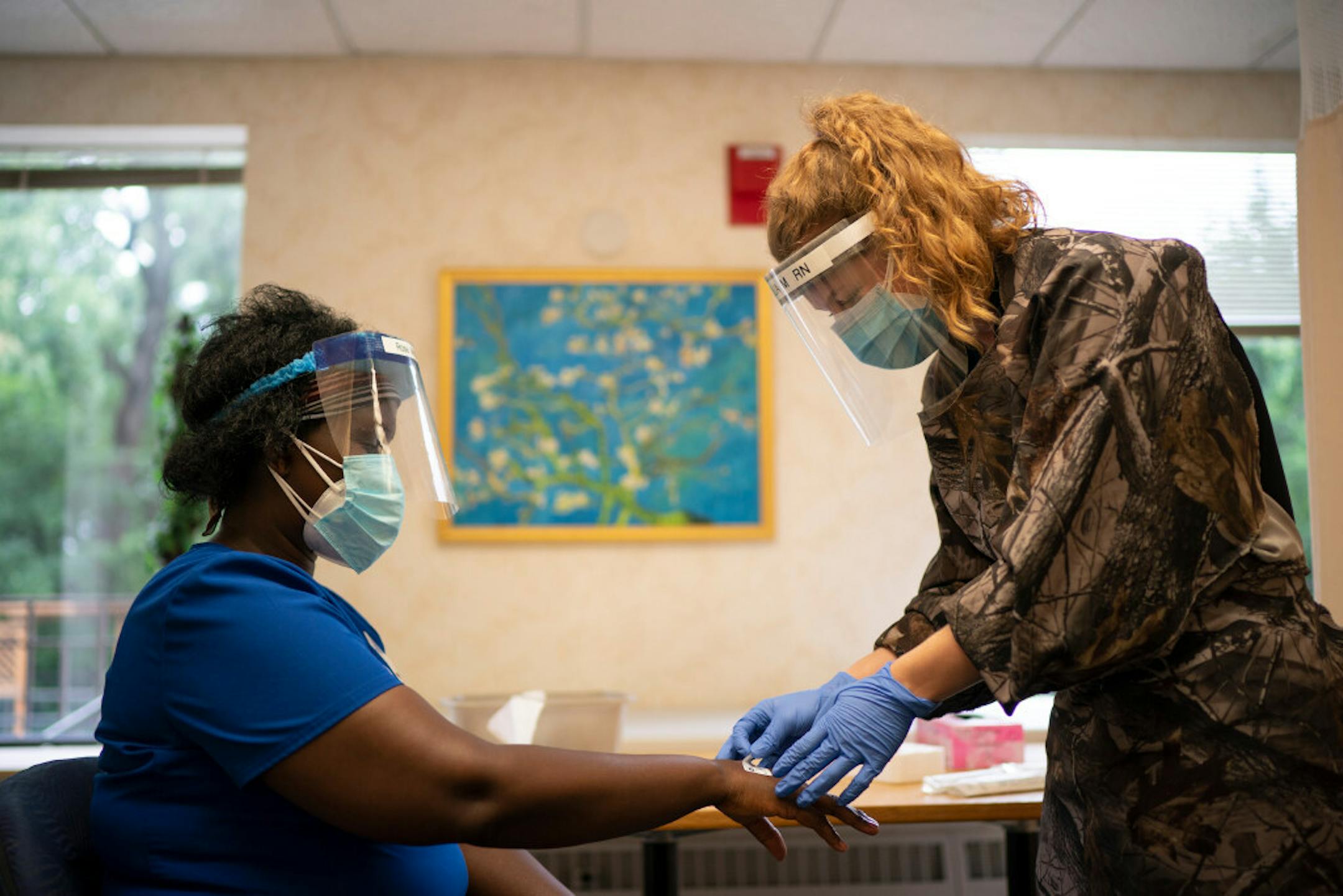
Nearly six months after COVID-19 began ravaging long-term care facilities, nursing homes across Minnesota are slated to receive new testing equipment from the federal government that should help them detect cases of the virus more rapidly.
More than 300 nursing homes statewide are expected to receive machines by the end of September that are designed to detect COVID-19 within minutes, rather than days. The devices, also known as point-of-care tests, should help nursing homes move more quickly to treat infected residents and staff, as well as isolate them sooner before they spread the virus to others.
Across Minnesota, nursing home administrators said they hope the new devices will help them ramp up testing at a time when a resurgence of coronavirus cases has placed new strains on an already stretched testing system.
Testing results have been delayed by a shortage of vital medical supplies and backlogs at the laboratories that process thousands of tests each day. In recent weeks, some long-term care facilities in Minnesota have reported delays of three to six days for COVID-19 testing results, which hinders their ability to isolate infected residents and warn people before they infect others.
The new tests dramatically reduce turnaround times for results because they can be processed on site. Currently, nursing homes that test for the coronavirus take samples from deep inside a person's nasal cavity and send them away to distant laboratories, which can take days to determine if someone is infected.
In contrast, the new tests, known as rapid antigen tests, can quickly detect certain proteins that are part of the virus and produce results within minutes, enabling nursing homes to isolate infected patients sooner and alleviate pressure on testing laboratories, federal officials maintain.
The new tests do have a significant drawback: They are less accurate than the standard tests use, known as polymerase chain reaction, or PCR.
The rapid antigen tests have been found to produce "false negative" results for up to 15% of infected people. The high error rate has caused some infectious disease experts to question the usefulness of the test for broad screening of residents and staff. Even the test's own manufacturers have cautioned that the test should only be used with people with symptoms, which limits its effectiveness given that many people with COVID-19 never show symptoms, according to a report in Kaiser Health News. The U.S. Centers for Disease Control and Prevention recently recommended that a negative result from an antigen test be confirmed by a laboratory test for those who have symptoms.


