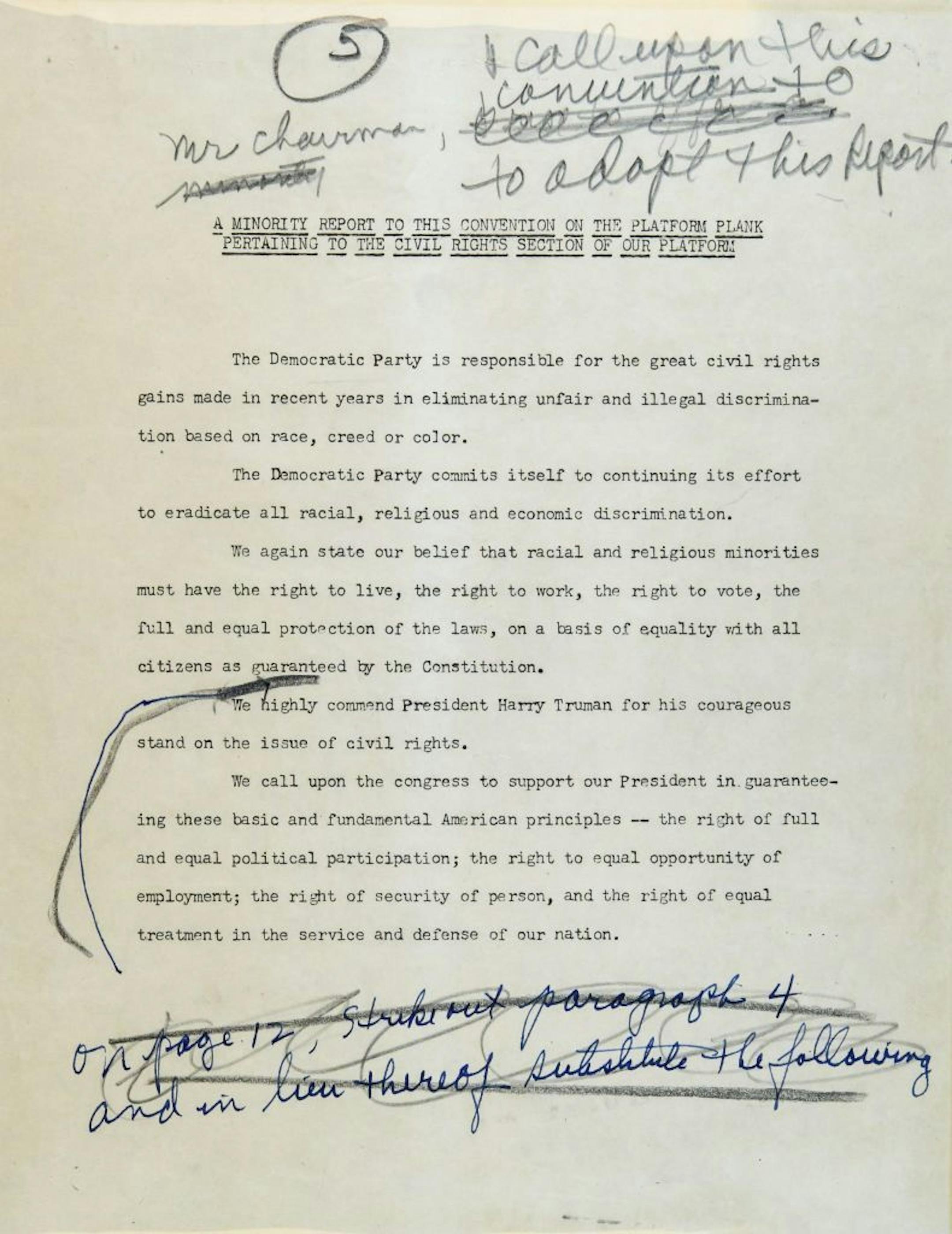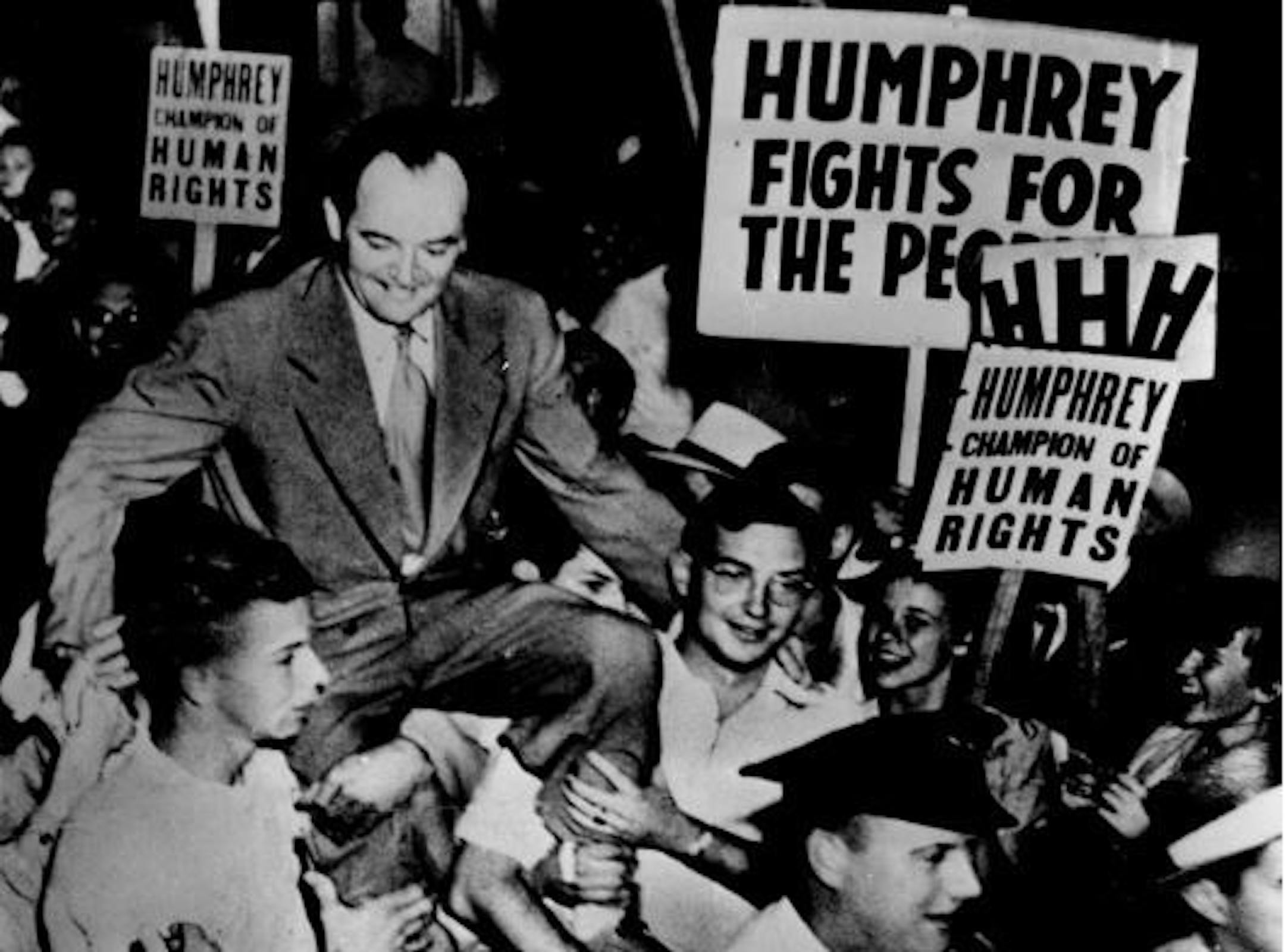
PHILADELPHIA – The young mayor from Minneapolis had only minutes to make his case to Democratic National Convention delegates gathered here in 1948. He used them to deliver a speech that steered his party away from support for government-sanctioned segregation and toward an embrace of civil rights that continues to reverberate in an American political system still grappling with race.
"My friends, to those who say that we are rushing this issue of civil rights, I say to them we are 172 years too late," Hubert H. Humphrey proclaimed from the floor of Philadelphia's Convention Hall, in a voice that sounds confident but ragged in a scratchy 68-year-old recording.
He went on: "To those who say that this civil rights program is an infringement on states' rights, I say this — the time has arrived in America for the Democratic Party to get out of the shadow of states' rights and to walk forthrightly into the bright sunshine of human rights."
This week, Democrats are back in Philadelphia for their national convention for the first time since 1948. They meet at a time of renewed racial unrest in the country, making Humphrey's successful push for the first civil rights plank in the national Democratic platform seem as pertinent as ever.
"Dad knew, he knew even after they passed the Civil Rights Act in 1964, that this was a deeper problem. That's why he continued to work on it until the end of his life," said Skip Humphrey, who followed his father into politics and served three terms as Minnesota's attorney general. "He knew you had to help people help themselves, to make sure everybody had the same opportunities and freedom."
A future U.S. senator, vice president from 1965 to 1969 and Democratic candidate for president in 1968, Hubert Horatio Humphrey Jr. in 1948 must have seemed an unlikely vessel for civil rights progress. The South Dakota native walked away from his father's pharmacy business to study political science and then pursue a political career in Minnesota. He was elected mayor of Minneapolis in 1945 at 34.
At that time, blacks made up only about 1 percent of the population in Minneapolis. Civil rights issues were hardly at the forefront, although there are documented cases from that era of white homeowners in certain neighborhoods banding together to repel black buyers. The city was also trying to transcend its recent history as a haven for anti-Semitism.
Some U.S. cities including Detroit had seen race riots at the end of World War II. "This was not going on in Minneapolis, but Humphrey latched onto it as something the country's leaders had to pay attention to," said Jennifer Delton, a Skidmore College historian and St. Paul native who wrote a 2002 book about the early Humphrey era in Minnesota politics.