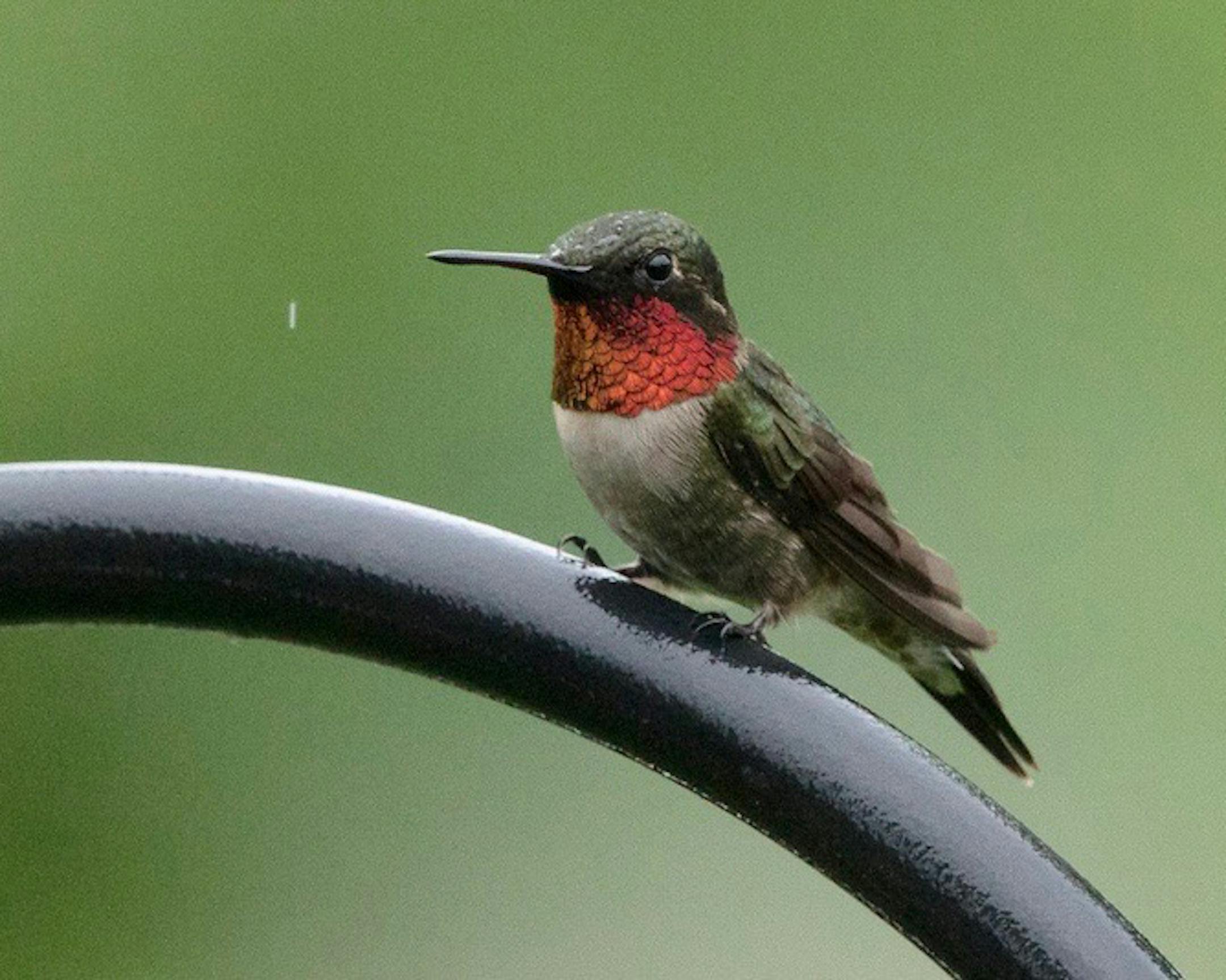
Q: Recently, when I was watering the garden with the hose, I noticed a hummingbird sitting on a tomato cage, seeming to enjoy the fine spray and shaking its feathers as if bathing. Have you seen or heard of this before?
A: I've never seen a hummingbird bathing, but that's exactly what this sounds like. These little birds don't immerse themselves in water, as songbirds do, but they like nothing better than bathing in a water feature putting out a fine spray in a pond or birdbath. They've also been observed flying through lawn sprinklers and "surfing" across wet tree leaves after a rain.
Bald birds
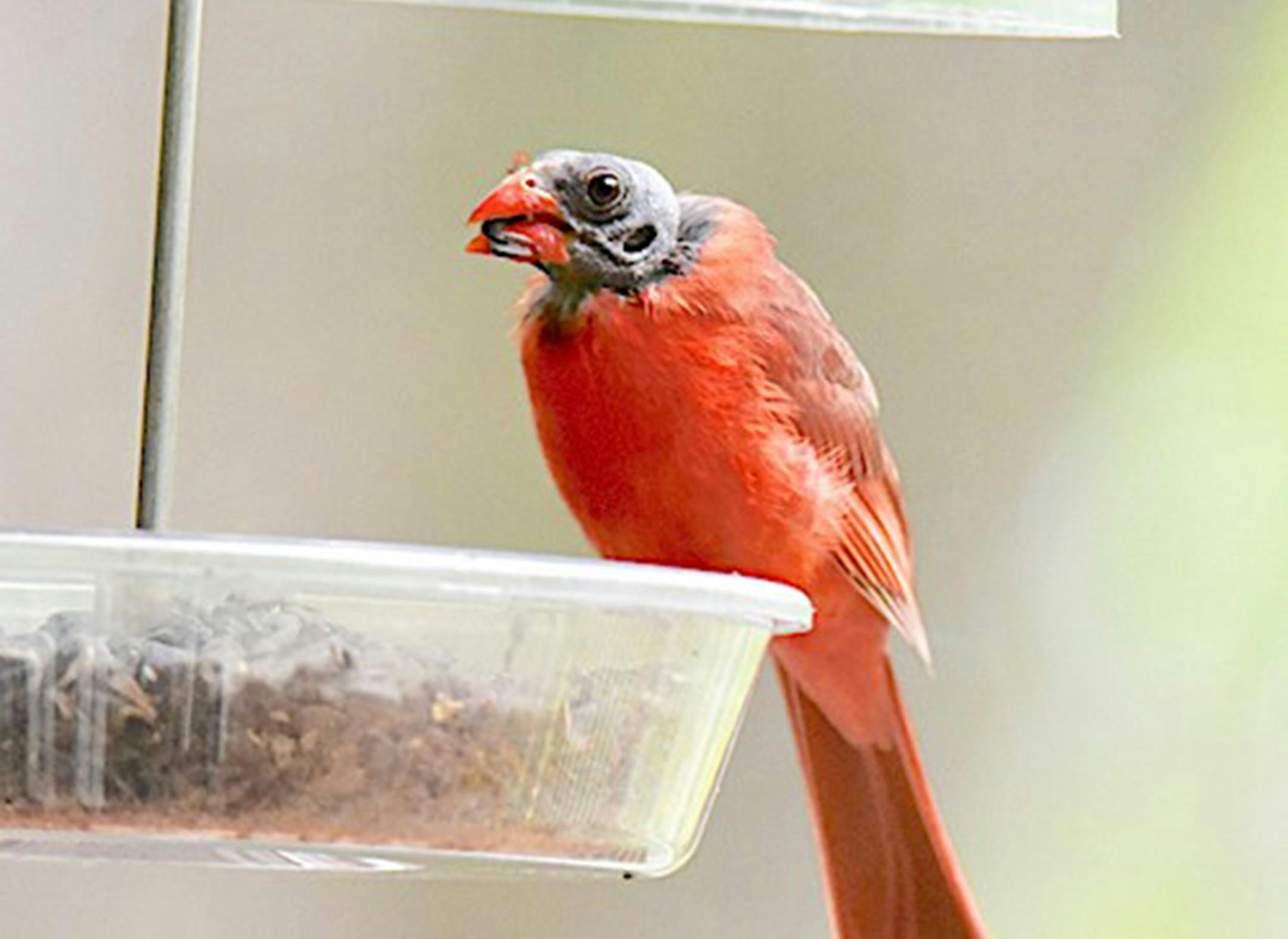
Q: Last year we had a male cardinal at the feeder with no feathers on his head, then this year it's both a male and female. I'm concerned that they have mange, or are they molting?
A: It's not unusual for cardinals (and blue jays) to lose all their head feathers at once, instead of the slow process typical of most birds, where it doesn't come to our attention. The Cornell Lab of Ornithology says that this occurs frequently enough in blue jays that it's considered normal and the same is true for cardinals — it's regarded as within the normal range of molting.
No one is quite sure of the cause. It could be due to genes dictating a fast molt, or it could be caused by feather mites or lice. Cardinals with bald heads really stand out because their black skin contrasts with their red body feathers.
To dye or not to dye
Q: Quick question: Is putting red dye in hummingbird feeders harmful to them?
A: I've read that even vegetable-based red coloring can be tough on hummingbirds' kidneys, so that's a good reason to not add it to the sugar syrup. The tiny birds will find your feeder without coloring in their food.
Bird makes P and J
Q: A common grackle comes into my feeder and picks up a shelled peanut, then flies to the jelly dish 30 feet away and smooshes it around in the jelly, before flying off with a messy beakful of peanut and jelly. Any idea what's going on, is it feeding young or itself?