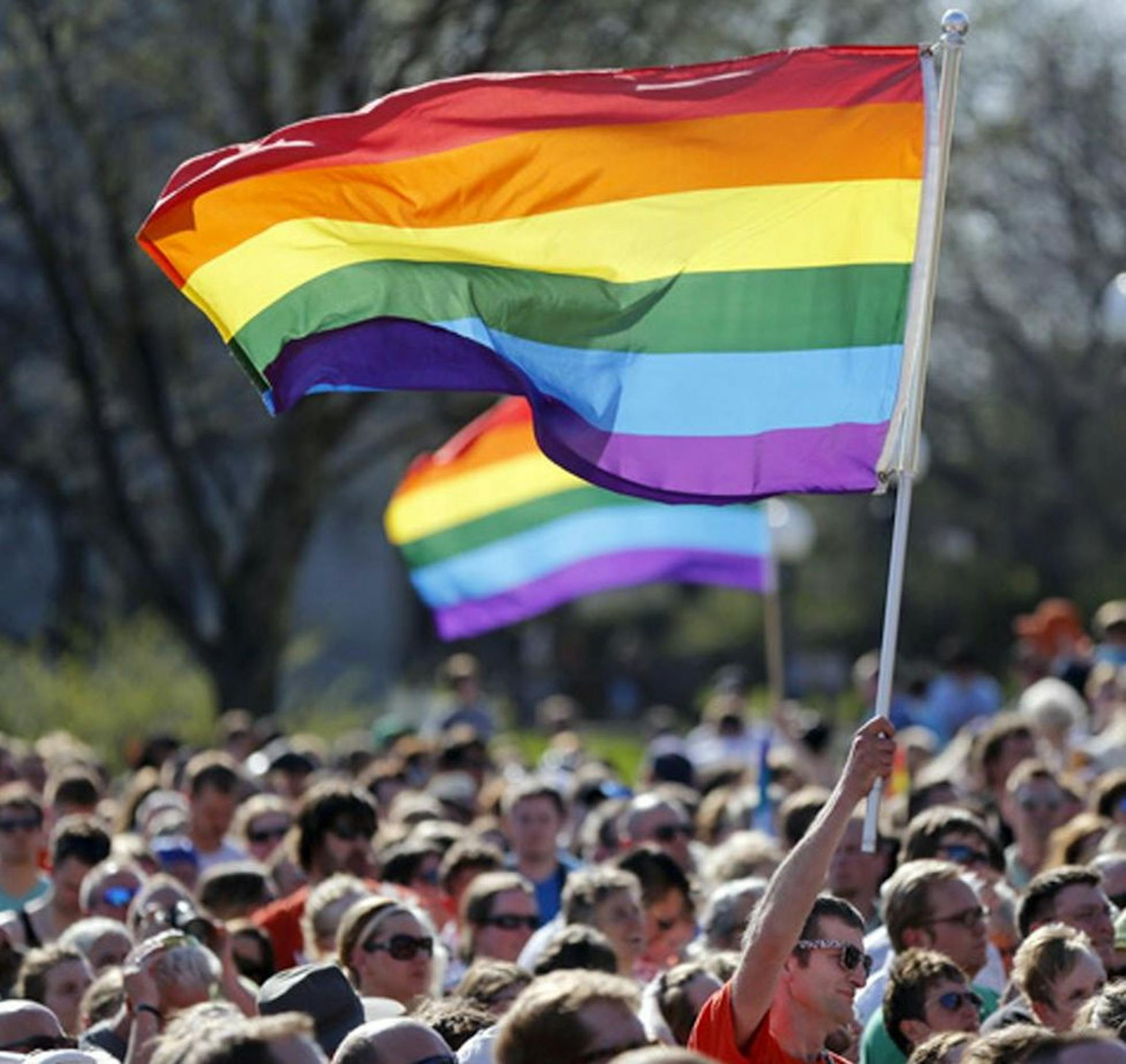
![In downtown St. Paul at the EcoLab Plaza, Tamara Simonich and Jennifer Conrad enjoyed the celebration of gay marriage being legalized in Minnesota. "It's a huge deal," says Simonich.]rtsong-taatarii@startribune.com ORG XMIT: MIN1305142159070164](https://arc.stimg.co/startribunemedia/TGMUNPNYOCLGSVWRL3TCMW3NCY.jpg?&w=1080)
More Minnesota cities are incorporating gay, lesbian and transgender rights into city policies, policing and health plans.
The Human Rights Campaign surveyed the six largest cities in Minnesota for its annual Municipal Equality Index, and found a lot to like in the land of lakes. Both Minneapolis and St. Paul earned perfect scores on the 2015 surveys, for policies on everything from housing discrimination to transgender health care coverage. Outstate cities also ranked higher than the national average: Duluth scored a 71 on a scale of 100, Rochester scored 69, and St. Cloud and Bloomington scored 59.
The group, which advocates nationally for LGBT rights, surveyed 408 U.S. cities this year and awarded an average score of 56. The annual index awarded points to cities with nondiscrimination laws and employment policies, as well as active community outreach.
Minneapolis and St. Paul issued joint news releases, cheering their perfect scores, but the study's author, Cathryn Oakley, who serves as senior legislative council for the Human Rights Campaign, said Minnesota's other cities also have reason to be proud of their ranking.
"This is not your seventh-grade math test," Oakley said. "A score of 60 is still above average."
The group looked for cities with human rights commissions, LGBT outreach programs in schools and in police departments, and city health insurance policies that cover transgender health care. The more outreach and policy initiatives, the higher the score. "Across our country, cities and towns both big and small aren't waiting for state or national leaders to move LGBT equality forward," said Chad Griffin, president of the Human Rights Campaign. "They are making a powerful statement that no one should have to wait for full equality — the time is now."
"From marriage equality to transgender rights, the progress we have made in the fight for equality for people of all sexual orientations is amazing," St. Paul Mayor Chris Coleman said. "I could not be more proud of our efforts to support freedom and fairness for all residents and families."
"We should all take pride ... but we must not rest on our laurels," said Minneapolis Mayor Betsy Hodges. "There is much work to be done and much progress to be made. ..."