

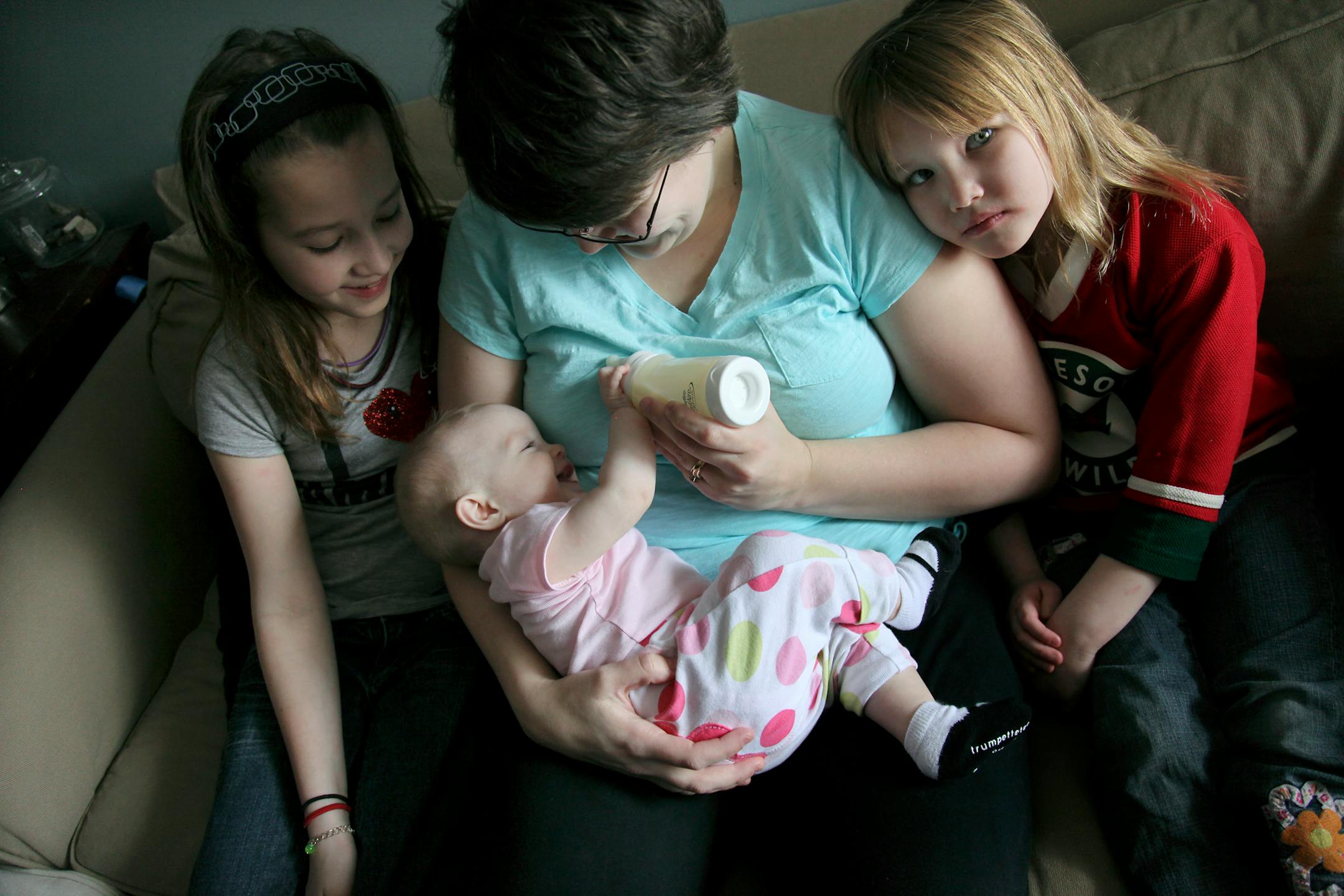
What's the kindest thing a stranger has ever done for you? For Sarah Landis, the answer comes in the form of "liquid gold," neatly stored in bags or bottles, labeled with a date and frozen solid.
The 30-year-old Coon Rapids mother of three has breast cancer and is unable to nurse her youngest daughter, Olivia, who was born 8 weeks premature. Instead, Landis provides the 8-month-old with the milk of 15 different mothers -- all strangers she met over the Internet.
"These women are giving a great gift," said Landis, who's now in remission.
One of those donors is Christa Johnson of Crystal, who has "freezers full of milk" and said it would be "incomprehensible" not to donate her extra milk to families in need of it.
They are part of a growing number of mothers who are using social networking to facilitate connections between women in need of breast milk and those who have milk to spare, despite warnings from the federal government, health care professionals and even breastfeeding advocates about the unregulated practice. They advise families to turn to regulated milk banks, where the donated milk is screened for disease.
In December, after a number of milk-sharing networks popped up online, the Food and Drug Administration issued a warning "against feeding your baby breast milk acquired directly from individuals or through the Internet."
The FDA states that such milk is unlikely to have been adequately screened for infectious disease or contamination risk, and that it's unlikely that the milk has been collected, processed, tested or stored in a way that reduces possible safety risks to the baby.
Shelly Boyce, a registered nurse and lactation consultant for Children's Hospital in Minneapolis, said she understands a woman's desire to get human milk for baby when she is unable to provide it herself.


