

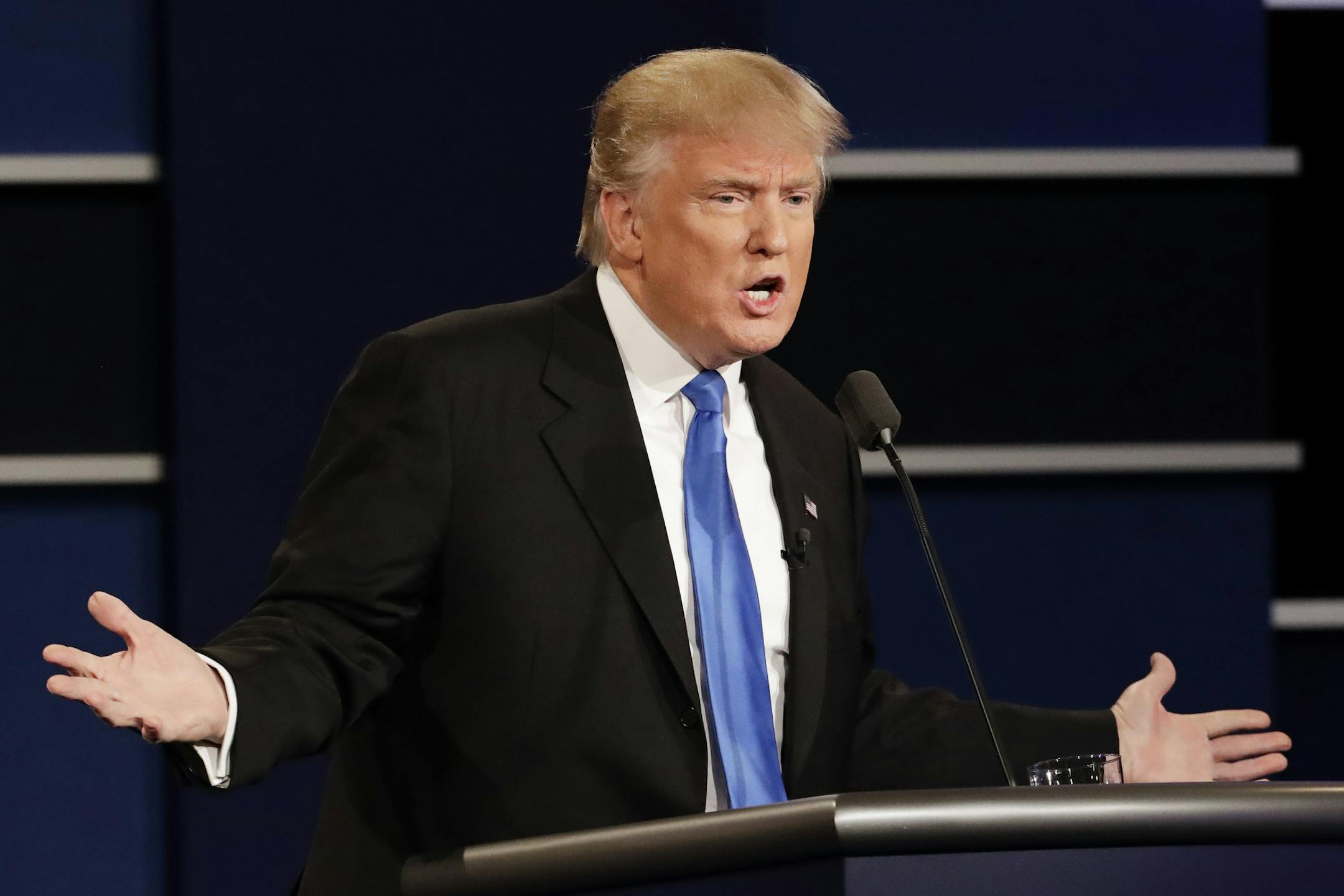
HEMPSTEAD, N.Y. – The moment when Donald Trump's fortunes turned sharply south in the first presidential debate began like any other moment in his confident, loose-tongued campaign. Moderator Lester Holt asked why it took Trump "so long" to assess that President Obama was born in the United States. "I'll tell you," said Trump, "it's very simple to say."
What followed was anything but simple. "Sidney Blumenthal works for the campaign and a very close friend of Secretary Clinton," Trump began. "And her campaign manager Patti Doyle went to, during her campaign against President Obama, fought very hard, and you can go look it up, and you can check it out, and if you look at CNN this past week Patti Solis Doyle was on Wolf Blitzer saying that this happened."
As Holt would point out, Trump had spent a few months in 2011 — and a few days every following year — speculating that the president was hiding something about his citizenship. But over several excruciating minutes, Trump struggled to explain himself. Within an hour, allies of his campaign were criticizing Holt for asking the question at all.
Trump's stumble featured two habits that had worked on the campaign trail but melted in the direct light of the debate. The first was his attempt to frame old quotes or events in a more flattering way. The second was a reliance on sympathetic conservative news sources to accept his framing. What had worked in primary debates and countless phoned-in Fox News interviews came across onstage as gibberish.
"Blumenthal sent McClatchy, a highly-respected reporter at McClatchy to Kenya to find out about it," Trump sad of the birth certificate. "They were pressing it very hard, she failed to get the birth certificate. When I got involved, I didn't fail. I got him to give the birth certificate. So I'm satisfied with it, and I'll tell you why I'm satisfied with it."
Trump was referring to a claim by a former McClatchy journalist that Blumenthal, a close Clinton friend who did not work for her campaign, had pushed the rumor that Obama, then competing against Clinton for the 2008 Democratic presidential nomination, was born in Kenya. But Solis Doyle had not confirmed any 2008 "birther" rumor-mongering. As she quickly tweeted, she'd done the opposite — and had fired a Clinton volunteer who spread a rumor.
At no point during the debate did Trump actually explain what either Clinton ally did. What was clear is that he was unready to explain himself to a skeptical audience. In the weeks since he called a news conference to insist that Clinton "started" the birther movement, Trump had only defended himself with sympathetic media, including Fox News. When Holt began to ask what Trump would say to people who were offended, Trump was blunt: "I say nothing because I was able to get him to produce it."
Clinton's counterpunch was as direct as Trump had been rambling. Three times, she said that Trump had engaged in "racist" behavior — an anvil-drop of an accusation never before made in presidential debates. Clinton worked in a 1973 case brought against Trump's company for racial discrimination, one of many damaging stories that had been lost in campaign coverage. Trump's response was another ramble, indulging his bad habit of laboriously explaining his company's legal battles. "We settled the suit with zero — with no admission of guilt," he said. "It was very easy to do. But they sued many people."


