

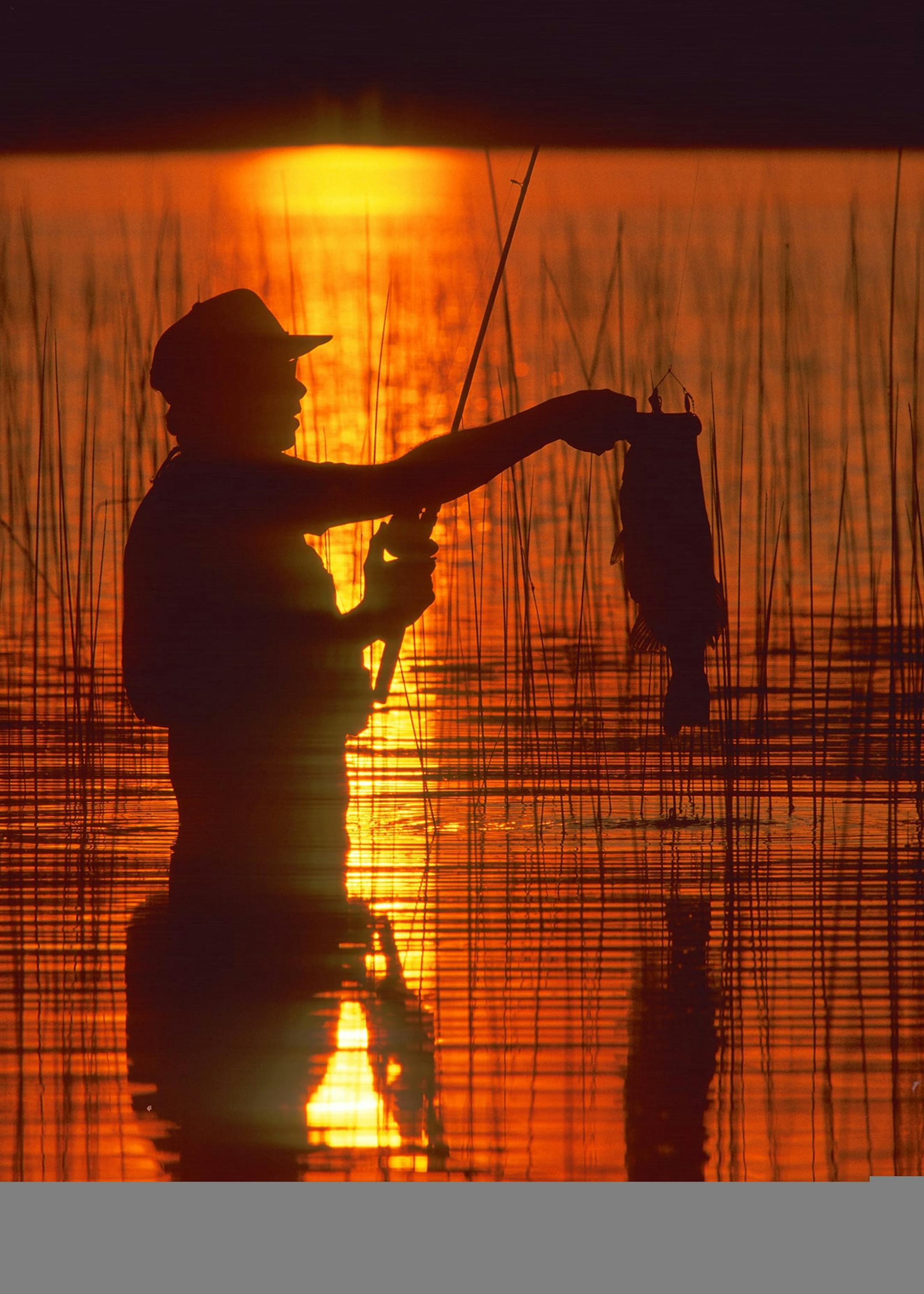
The Land of 10,000 Lakes isn't just for boat owners. Good fishing is available to anyone willing to don a pair of waders or hip boots.
When I was a kid, my family didn't own a fishing boat. So I learned to fish on my feet. Wade fishing is an affordable option because minimal equipment is needed. It's also a simple, back-to-nature way of fishing. When the sun sinks low and the water goes flat, your only company will be beautiful scenery and wildlife.
Just last week I slipped into my waders on a warm evening and eagerly splashed into a lake not far from my home near Brainerd. Within minutes I had already caught my first fish, a feisty largemouth bass that weighed close to 3 pounds. I caught the bass using a floating frog imitation. A few minutes later, another fish blasted my surface lure. I set the hook and reeled in a similar sized largemouth.
Most wading anglers seek largemouth bass, although panfish, pike and even walleyes can be caught without the aid of a boat. I prefer to wade fish for largemouth bass. There's something special about sneaking among the bulrushes, waist deep in a bass haunt, while attempting to place accurate casts and anticipating a big bass gulping your offering.
In shallow hard-to-reach areas, a wading angler actually has an advantage over those in a boat. Trolling motors bog down in heavy vegetation (only the most die-hard anglers are known to pack push poles). Maneuvering a boat quietly into secluded bass haunts is nearly impossible whereas a wading angler can easily approach without spooking the fish.
Another attractive aspect of wade fishing is the wildlife watching. On my recent evening foray, I jumped several species of ducks from the bulrushes. Other wildlife flourished along the lakeshore. Red-winged blackbirds were my constant companions. The males flashed their scarlet wing patches as they sang their territorial song from swaying perches. I encountered herons, loons and, of course, those noisy red-necked grebes.
To increase my odds of catching fish, I always watch for signs of feeding bass. Minnows or small panfish hurtling through the air like tiny sailfish are usually being chased by a predator — most likely a bass. Listen for largemouth as they break the water's surface in pursuit of dragonflies, or loudly slurp down a frog or other prey.
I cast my lure toward any action. Those disturbances can be as obvious as a huge boil or as subtle as a slight twitch of a bulrush.


