

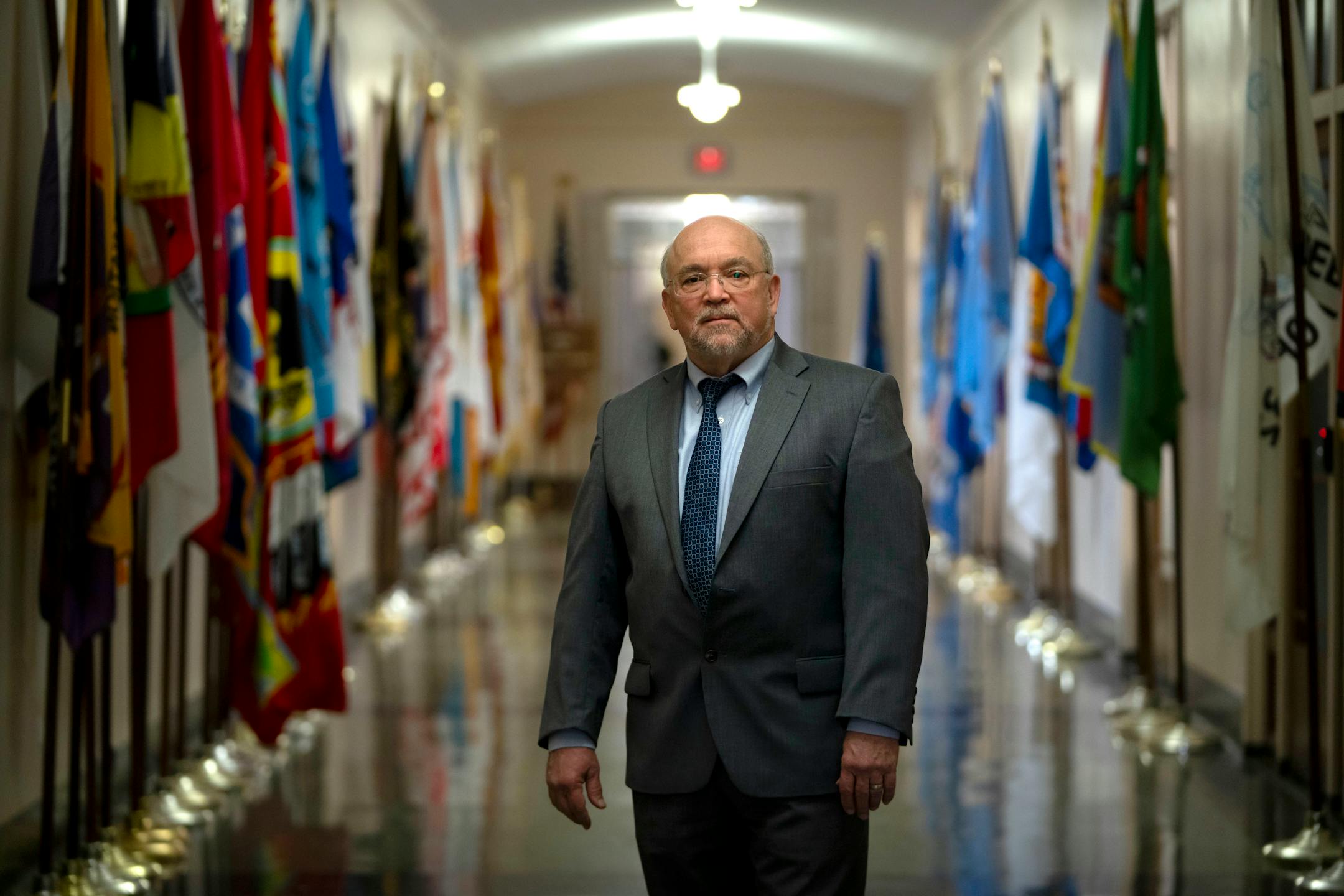
WASHINGTON — A quarter-century ago, the Justice Department had few meaningful relationships with Native American tribes.
While the federal government worked with state and local police and courts, tribal justice systems did not have the same level of recognition, said Tracy Toulou, who oversaw the department's Office of Tribal Justice from 2000 until his recent retirement. ''They were essentially invisible,'' he said.
Attorney General Merrick Garland said Toulou built the office from an idea into an ''institution within the Justice Department."
Its relationships with the nation's 574 federally recognized tribes are important, in part because federal authorities investigate and prosecute a set of major crimes on most reservations.
Public safety statistics reflect the serious challenges. Native Americans and Alaska Natives are more than twice as likely to be victims of a violent crime, and Native American women are at least two times more likely to be raped or sexually assaulted compared with others.
For Toulou, a descendant of the Washington state-based Confederated Tribes of the Colville Reservation, part of addressing those grim realities is expanding the power of tribal justice systems.
Tribes had been barred, for example, from prosecuting non-Natives under a 1978 Supreme Court decision, even if the crime happened on reservations, making it harder to seek justice in many cases. That changed somewhat in 2013 with a federal law that allows tribes to prosecute non-Natives in a limited set of domestic violence cases. The authority was expanded in 2022 to include cases such as violence against children and stalking.
''That was a key change … tribes were now viewed as participants in the justice system on a more or less equal basis with everybody else, which should never have changed,'' said Toulou, who was a federal prosecutor in Montana early in his career.

