

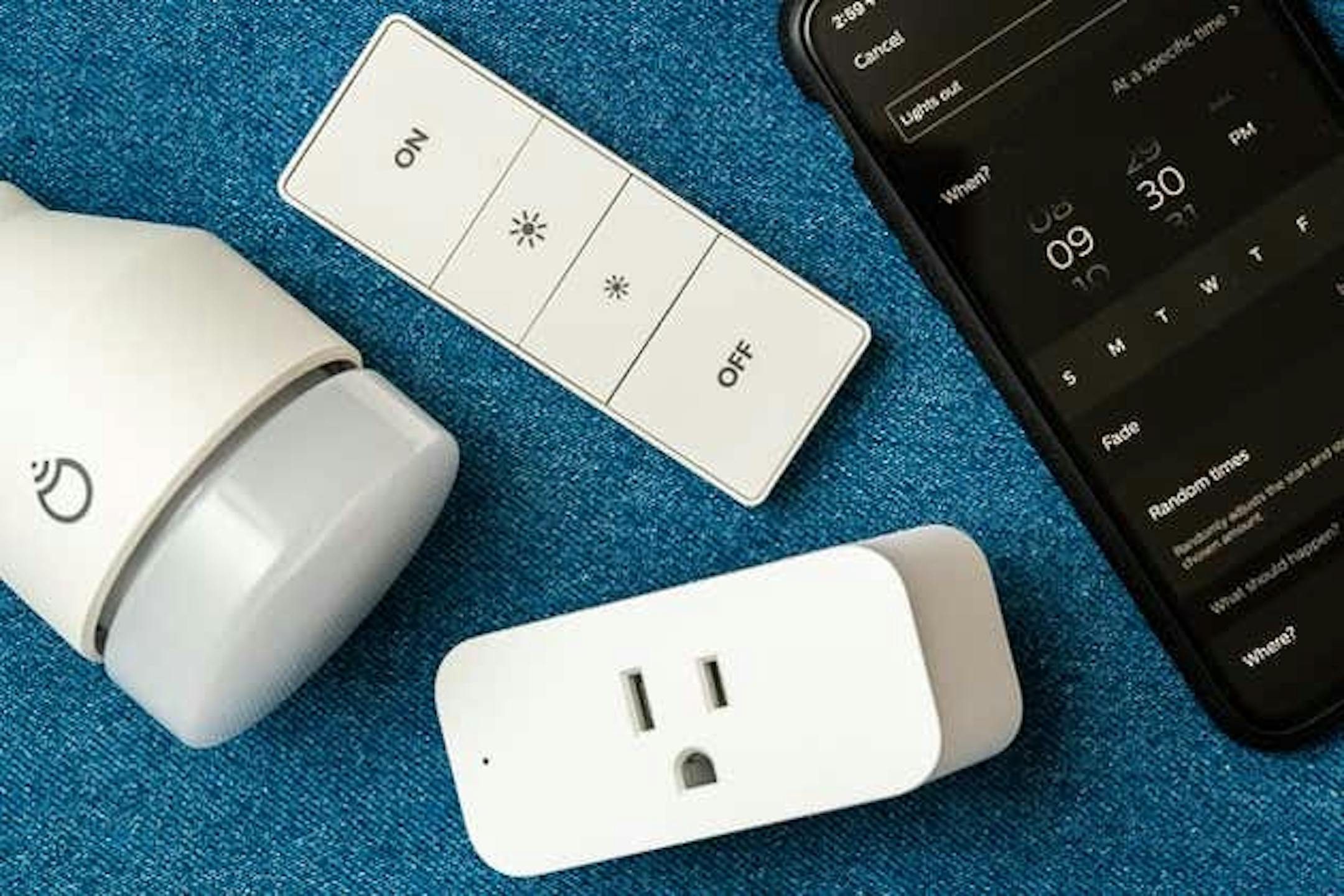
Smart-home devices don't just make it easier to close the garage door or secure your home. They can also help you save energy and money, if you use them properly. And seeing how Americans spend $130 billion a year on wasted energy, people can use all the help they can get.
You set up smart-home devices using a smartphone, and you can control them remotely, put them on a schedule, connect them to a smart speaker, or even set them up to perform actions on their own. By giving you more control over the things in your home that use energy, smart-home devices can be part of an energy-saving plan.
Here are a few ways to use smart-home devices to cut down on energy and water waste while also saving money:
When someone in my house leaves the lights on, I can almost feel my energy bill going up. (Maybe it's just my blood pressure.) Smart lighting foils energy hogs by adding remote control, scheduling, and automation to an everyday fixture.
Smart bulbs are the simplest way to save money because all you have to do is screw in a light bulb. And all smart bulbs are LED bulbs, which use at least 75 percent less energy than incandescents yet last 25 times longer. They also bring extra savings by adding dimming, which can save another 40 percent.
Smart bulbs can trigger in reaction to other smart devices, motion sensors, or your location (aka geofencing), so they'll operate efficiently without you having to turn them off. We like the Philips Hue line, which offers a number of smart-bulb kits for both inside and outside the home.
Another option, for the person who knows how to wire an outlet, is a smart in-wall light switch, which replaces your existing light switch to control lighting fixtures. My husband leaves in the dark every morning, so we use a Lutron Caséta in-wall dimmer (Wirecutter's upgrade pick) to automatically make sure he has a lighted path—and then turn it off when he's gone, so it doesn't stay lit all day.
If you're clinging to the bulbs and switches you already own, a smart plug tackles the same on/off and scheduling functions for lamps and small appliances, and you can still add regular money-saving LED bulbs. A smart plug offers an inexpensive way to control lights: Our favorite, the Wyze Plug, costs under $30 per lamp. Smart plugs are also great for controlling holiday lights.


