

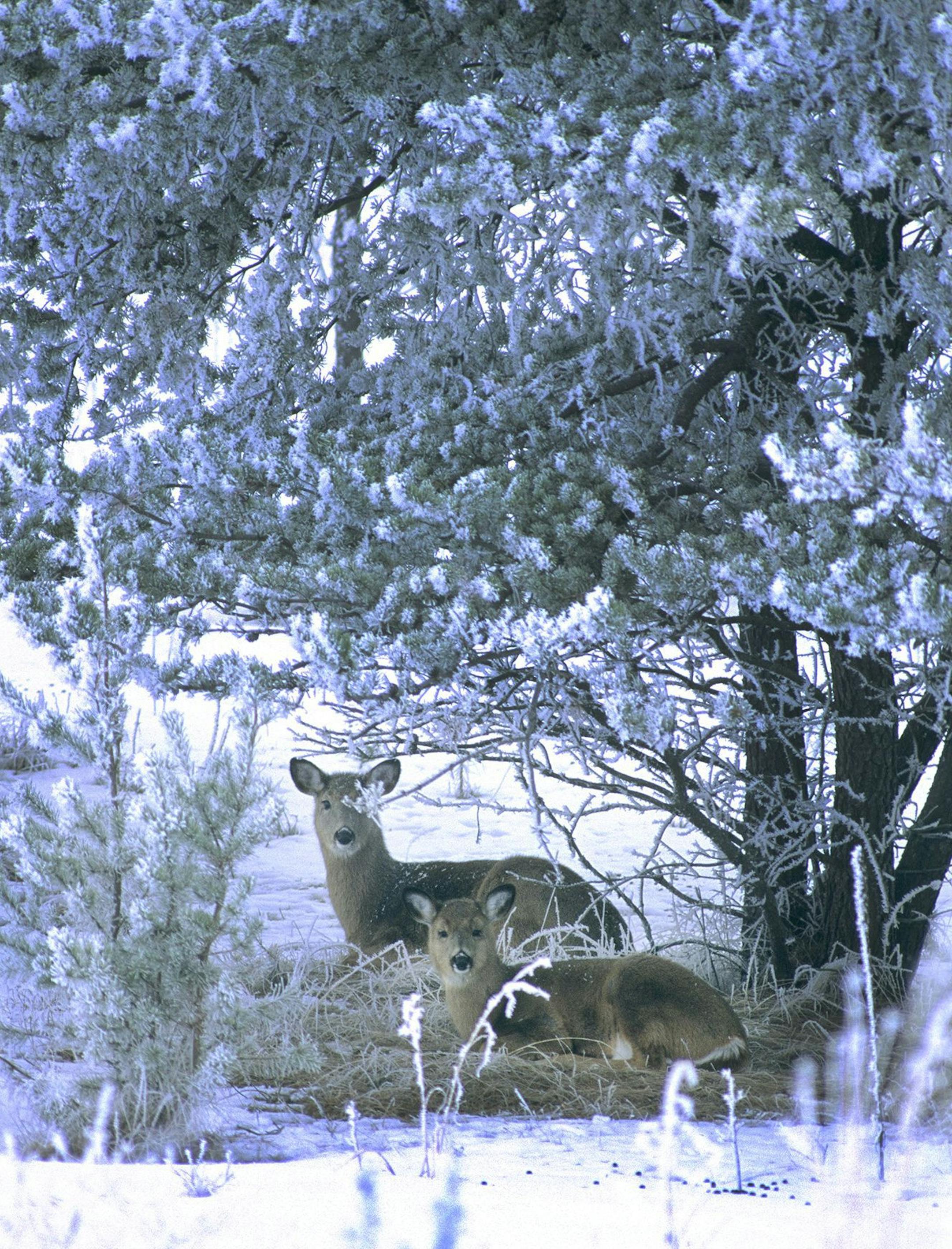
If you want to provide winter cover for deer and other wildlife, consider planting evergreens — any species of spruce, pine or fir trees that retain their needles during winter.
For more than two decades I've managed my 70 acres of land located near Brainerd for wildlife.
Each spring, I have planted a variety of evergreens. Sometimes these plantings have been for sight barriers, hiding wildlife from nearby roads. Once the evergreens have grown to about 6 feet, a passerby cannot see past the trees planted in rows along the road.
But mostly I plant evergreens to give deer and other wildlife a place to escape the winter weather. An evergreen planting as small as a quarter acre will not only provide a windbreak, but the overhead canopy will catch falling snow, lessening the depth below.
In fact, sometimes there is little or no snow under the thickest stands of evergreens.
On cold winter days, especially when the wind is blowing from the north, deer and other wildlife will often gather on the downwind side of my evergreen plantings. If the sun is shining, wildlife will usually be on the south-facing side of an evergreen stand, soaking in as much of the warmth as possible.
Deer, ruffed grouse, wild turkeys, cottontail rabbits, ring-necked pheasants, as well as a variety of songbirds — all have taken advantage of my evergreen stands to escape Old Man Winter. I've even witnessed various species of owls perched in my evergreens as they while away the daytime.
In spring, many species of birds choose to nest among the thick confines of my plantings. Some years, when spring arrives late, evergreens provide the only cover for early nesting birds like robins, cardinals and mourning doves.

