

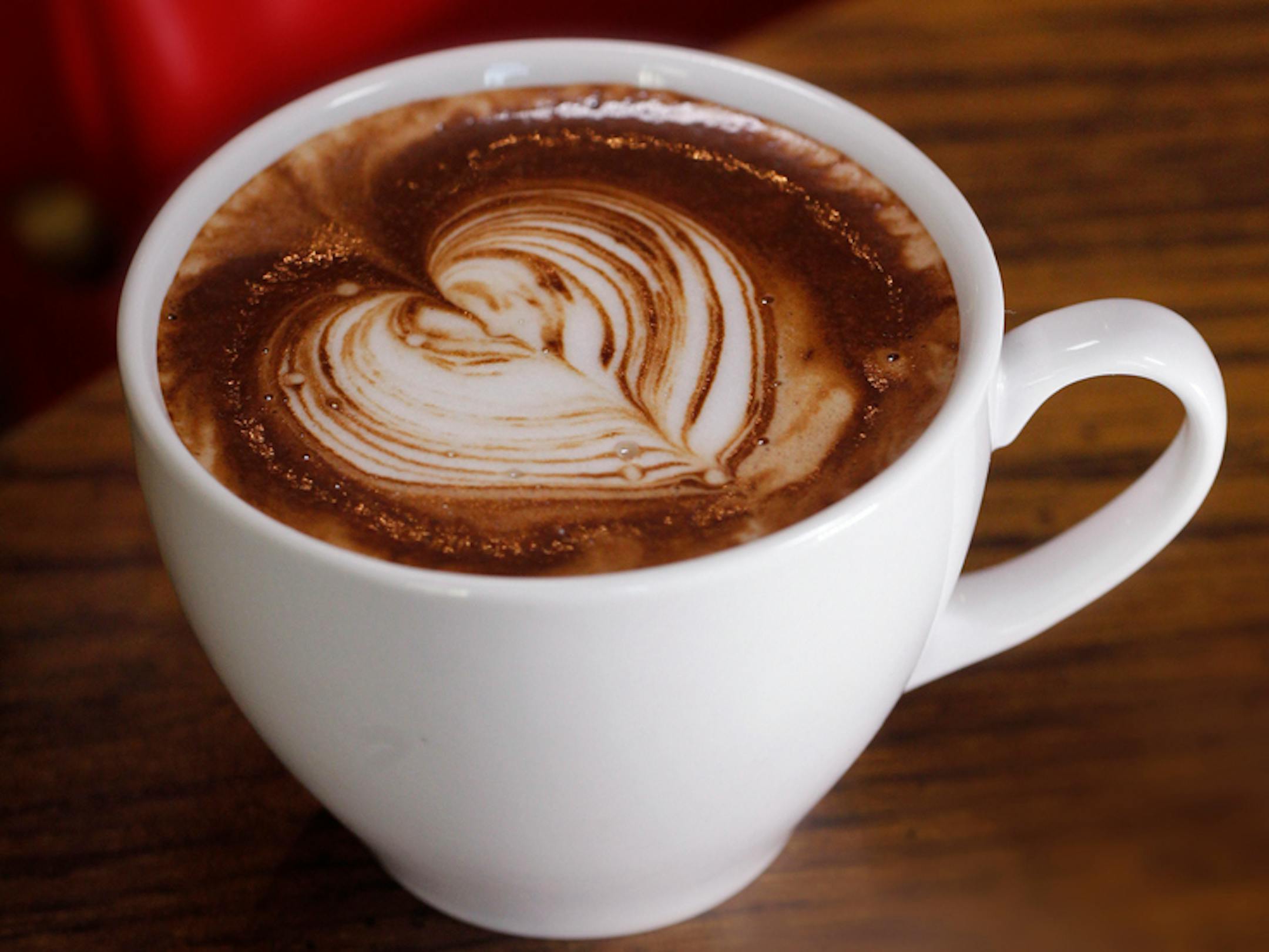
Eight years ago, we approached coffee-obsessed Andrew Kopplin to walk us through the creation of a superior cup of hot chocolate. The recent polar vortex convinced us that it was time to revisit this important topic.
At his eponymous St. Paul coffee bar, the mornings are all about meticulously brewed lattés, macchiatos and cappuccinos. But as the day progresses, the clientele at Kopplin’s Coffee (2038 Marshall Av., St. Paul, 651-698-0457, kopplinscoffee.com) tends to focus on the shop’s meticulously prepared hot chocolate.
“In the afternoons, it’s just about all we sell,” Kopplin said. “That, and chai.”
Unlike the shop’s coffee beverages, which require the kinds of intricate equipment that few consumers keep in their kitchens, the hot chocolates on the Kopplin’s menu — a semisweet version and a dark, bittersweet variation — are easily replicated at home. His affinity for hot chocolate began in 2006, as he was getting ready to open his coffeehouse.
“I’d been reading a lot about mochas,” said Kopplin. “They were originally made with darker chocolate. I like dark chocolate, and mocha is how I got into coffee. It’s my gateway drug. As I got into finer coffees, I got away from mochas, and realized that the reason why is because most mochas are so sweet. I mean, Hershey’s syrup is the norm. So I wanted to make a mocha that a coffee lover would love. And of course, once you do that, you really have a great hot chocolate, once you take out the espresso.”
Here’s his quick course on the art and science of perfect hot chocolate.
Buy the best. Kopplin relies upon a 54 percent Callebaut semisweet chocolate, and an organic, 70 percent Valrhona dark chocolate. Both have an intense, rich flavor. “They’re premium products without being ridiculously expensive,” he said. “Nothing at Kopplin’s is cheap, but in the end, you get what you pay for.” (Callebaut and Valrhona products are available at Kitchen Window, 3001 Hennepin Av. S., Mpls., kitchenwindow.com and Cooks of Crocus Hill, three Twin Cities locations, cooksofcrocushill.com).
Break it up. At the shop, Kopplin pulses the chocolate in a food processor, “until it’s basically a powder,” he said. “But small pieces, or chips, will work just fine. The reason we chop it small is because we have to make the drink in less than a minute.”


